As Kenya’s education sector continues to evolve, a new proposal addressed to the (TSC) is gaining attention among educators and stakeholders alike. Framed as an “Easter prayer,” the submission reflects the hopes and frustrations of thousands of teachers across the country, particularly those who have endured years of stagnation under previous promotion structures.
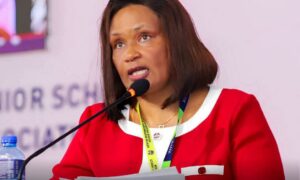
The statement, attributed to , a key official from the (KUPPET) in Trans-Nzoia County, lays out sweeping recommendations targeting the current Career Progression Guidelines (CPG) and the administrative structure of Junior Secondary Schools (JSS). If implemented, these changes could significantly reshape career mobility and leadership structures within Kenya’s education system.
A Long-Awaited Reform
The proposal begins by acknowledging the TSC’s willingness to review the current CPG, describing the move as timely and necessary. For many teachers, particularly those employed under the previous Scheme of Service, career progression has been painfully slow.
According to the submission, a large number of teachers spent over a decade stagnating at Job Group L—now equivalent to C3—before the introduction of the CPG. This stagnation not only affected their earnings but also limited their professional growth and morale.
When the CPG was eventually introduced, these teachers became pioneers of Job Group C4 after undergoing interviews. However, progression did not come easily. Many had to undergo yet another round of interviews to reach Job Group C5, often at an advanced age.
“Majority are above 48 years,” the statement notes, highlighting the delayed career advancement that has characterized the teaching profession for years.

The Push to Scrap Job Group C5
One of the most striking recommendations in the proposal is the call to scrap Job Group C5 entirely. The reasoning behind this suggestion is rooted in fairness and efficiency.
By eliminating C5, teachers currently in this job group would automatically transition to Job Group D1. This, according to Nasimiyu, would not only reward long-serving teachers but also create a smoother progression pathway for others.
Under the proposed structure:
- Teachers in C5 would move directly to D1.
- Teachers in C4 would then transition to D1 in subsequent promotions.
- Those already moved to D1 could advance further to D3.
This restructuring is seen as a way to correct historical injustices and ensure that teachers who have dedicated decades to the profession are not left behind due to systemic bottlenecks.
Eliminating Job Group D2: A Radical Suggestion
The proposal doesn’t stop at C5. It also calls for the scrapping of Job Group D2, another bold move aimed at simplifying the career progression ladder.
Currently, the transition from Deputy Principal (D1) to Principal roles involves passing through D2. However, Nasimiyu argues that this step is unnecessary and slows down career growth.
By removing D2:
- Deputy Principals (D1) would transition directly to Principals (D3).
- The leadership pipeline would become more efficient.
- Experienced educators would assume senior roles faster.
This streamlined approach is expected to benefit not just individual teachers but also the overall management of schools.
Proposed New Career Structure
If all the recommendations are adopted, the CPG would be significantly simplified. The proposed job group structure would be as follows:
- D5
- D4
- D3
- D1
- C4
- C3
- C2 (Entry for Graduate Teachers)
- C1 (Entry for Diploma Teachers)
This revised hierarchy aims to eliminate redundancies and create a more logical progression system. It also aligns better with teachers’ qualifications and experience levels.
JSS Autonomy: “Long Overdue”
Beyond career progression, the proposal also tackles a critical issue in Kenya’s Competency-Based Curriculum (CBC) rollout—the management of Junior Secondary Schools.
Currently, JSS institutions are largely managed under primary school leadership, a structure that has drawn criticism from many educators. Nasimiyu describes this arrangement as outdated and calls for immediate autonomy for JSS.
“It’s long overdue,” the statement emphasizes.
Why JSS Needs Independence
The argument for JSS autonomy is based on several key points:
1. Academic Complexity
Junior Secondary Schools handle a curriculum that is more aligned with secondary education than primary. This requires specialized leadership and management.
2. Professional Qualification
There are already qualified Deputy Principals and Principals capable of managing JSS institutions effectively. Keeping JSS under primary school leadership undermines this expertise.
3. Structural Consistency
Nasimiyu points out that JSS should be treated similarly to Senior Secondary Schools. Both levels require similar administrative structures and professional standards.
Proposed Leadership Changes
Under the new proposal:
- JSS institutions would be headed by Principals and Deputy Principals.
- These administrators would be appointed based on the CPG.
- Leadership would be independent of primary school headteachers.
This shift is expected to enhance accountability, improve learning outcomes, and align JSS with the broader secondary education framework.
Flexibility for Teachers
Another important aspect of the proposal is the flexibility it envisions for teachers.
Nasimiyu notes that teachers in Junior Secondary Schools (JSS) and Senior Secondary Schools (SS) are equally qualified and should be allowed to:
- Teach in either level.
- Serve as administrators in both JSS and SS.
This approach would maximize the use of available human resources and reduce staffing challenges, especially in underserved areas.
Mixed Reactions Expected
While the proposal has been welcomed by many teachers, it is likely to spark debate among policymakers and education stakeholders.
Supporters argue that:
- The changes address long-standing injustices.
- They improve efficiency in career progression.
- They enhance the management of schools.
Critics, however, may raise concerns about:
- The financial implications of mass promotions.
- The feasibility of restructuring the entire CPG.
- The transition process for existing administrators.
A Defining Moment for TSC
The ball is now in the court of the . As the body responsible for teacher management in Kenya, TSC’s response to these proposals will be closely watched.
The Easter-themed submission is more than just a plea—it is a reflection of the collective voice of educators seeking fairness, recognition, and a more efficient system.
Conclusion
Cecilia Nasimiyu’s proposal represents a bold vision for the future of Kenya’s education sector. By addressing both career progression and institutional management, it offers a comprehensive roadmap for reform.
Whether TSC will adopt these recommendations remains to be seen. However, one thing is clear: teachers across Kenya are eager for change, and they are not afraid to speak up.
As the education landscape continues to evolve, proposals like this could play a crucial role in shaping policies that better serve both teachers and students.
For more updates on education reforms and teacher policies in Kenya, stay tuned.