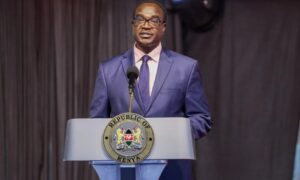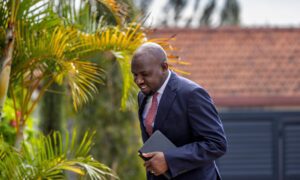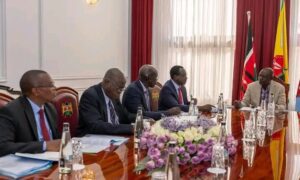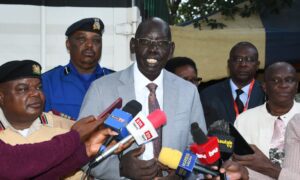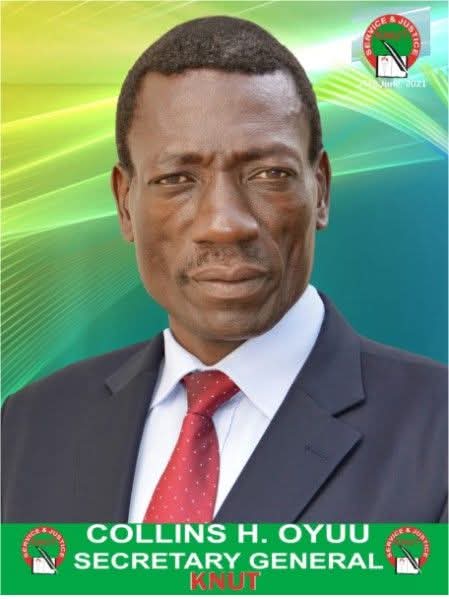
The journey of from a modest upbringing in Siaya County to becoming one of Kenya’s most influential union leaders is a story of persistence, strategy, and controversial political alignment. Now serving as the Secretary General of the (KNUT), Oyuu’s rise has been marked by both admiration and criticism, with many describing him as a “government darling” while others see him as a pragmatic reformer.
Early Life and Education
Born in 1965 in Uyoma, Bondo, Siaya County, Oyuu’s early life reflected the realities of rural Kenya in the post-independence era. He began his primary education in 1972 at Kasarani Primary School. His academic journey briefly took a different direction in 1983 when he attended the Kenya Police Training College in Kiganjo, suggesting an early interest in disciplined public service.
However, his path would shift yet again when he enrolled in seminary studies at Queen of Apostles in Mabanga. Though he spent several years there, Oyuu eventually abandoned the religious path—an early sign of his willingness to pivot when necessary.
From Seminary to Classroom
After leaving the seminary, Oyuu transitioned into teaching, a move that would define his career. He trained as a teacher and began his professional journey at Shanzu Teachers Training College in Kilifi in 1987.
His first posting came at Ruma Primary School in Siaya County, where he spent many years teaching. It was during this time that Oyuu began to understand the challenges facing teachers—poor pay, limited benefits, and strained relations with the government. These experiences would later shape his union activism.
Entry into Union Leadership
Oyuu’s entry into union leadership came in 1996 when he was elected as a Branch Executive Committee member in Siaya County. This marked the beginning of a steady climb through the ranks of KNUT.
By 2002, he had risen to become the chairperson of the Bondo Branch, solidifying his influence at the local level. His leadership style—seen as calm yet calculated—helped him gain the trust of teachers and union members alike.
In 2008, Oyuu became secretary of the Rarieda branch, further strengthening his foothold within KNUT structures. His growing reputation eventually earned him a spot on the KNUT National Steering Committee in 2013.
National Prominence and Strategic Positioning
Oyuu’s national profile rose significantly when he was appointed acting Assistant Secretary General of KNUT. In 2015, he was confirmed to the position, marking his formal entry into the union’s top leadership.
By 2018, he had ascended to the role of KNUT Vice Chairperson. At this point, Oyuu was no longer just a regional figure—he had become a key player in national union politics.
His rise coincided with a turbulent period in KNUT’s history, particularly during the tenure of , whose leadership was marked by intense confrontations with the (TSC).
The Sossion Era and KNUT’s Crisis
Under Sossion, KNUT engaged in a prolonged and often bitter standoff with the TSC that lasted nearly five years. The conflict led to financial strain, declining membership, and what many observers described as the near collapse of the once-powerful union.
Sossion’s combative approach won him support among hardline unionists but alienated sections of the government and some teachers who were weary of constant confrontations.
On June 25, 2021, Sossion resigned as KNUT Secretary General, leaving a leadership vacuum—and an opportunity for Oyuu.
Oyuu Takes Over
Following Sossion’s resignation, Oyuu emerged as the natural successor. Unlike his predecessor, Oyuu was perceived as more conciliatory and willing to engage the government in dialogue rather than confrontation.
His leadership style quickly drew attention. Supporters argued that he brought stability and restored working relations with the TSC, while critics claimed he was too close to the government, hence the label “government darling.”
Leadership Style: Pragmatism or Compliance?
Oyuu’s tenure has been defined by a shift in strategy—from aggressive unionism to negotiation and compromise. This approach has yielded tangible results but also sparked debate.
On one hand, improved relations with the TSC have led to smoother negotiations and fewer strikes. On the other, some union members feel that KNUT has lost its fighting spirit.
The question remains: is Oyuu safeguarding teachers’ interests through diplomacy, or has he softened the union’s stance too much?
The 2026 Re-Election Controversy
Oyuu’s grip on power was further solidified when he sought re-election in 2026 and won unopposed. The process, however, was not without controversy.
Reports indicate that his predecessor, Wilson Sossion, attempted a comeback but was blocked—allegedly through a combination of internal maneuvering and government influence.
This development fueled claims that Oyuu enjoys backing from powerful state actors, reinforcing his image as a leader aligned with government interests.
Key Achievements: The CBA 2025–2029
Despite the controversies, Oyuu’s tenure has delivered notable achievements. Chief among them is the successful negotiation of the Collective Bargaining Agreement (CBA) for 2025–2029.
The deal includes salary increments as well as non-monetary benefits aimed at improving teachers’ working conditions. For many educators, this agreement represents a significant win after years of uncertainty.
Supporters argue that such gains would not have been possible without Oyuu’s collaborative approach to leadership.
Rebuilding KNUT’s Influence
Another major aspect of Oyuu’s leadership has been efforts to rebuild KNUT’s influence after years of decline. Membership numbers, which had dropped during the Sossion-TSC conflict, have shown signs of recovery.
By prioritizing stability and engagement, Oyuu has repositioned KNUT as a key stakeholder in Kenya’s education sector.
Public Perception and Political Undertones
Oyuu’s leadership cannot be discussed without acknowledging the political undertones surrounding his tenure. In Kenya, trade unions often intersect with politics, and KNUT is no exception.
While some view Oyuu as a strategic leader who understands the importance of working with the government, others see him as too compliant—raising concerns about the union’s independence.
The Road Ahead
As Oyuu begins another term, the challenges ahead are significant. Teachers continue to face issues such as workload, career progression, and resource constraints in schools.
Balancing these demands while maintaining constructive relations with the government will test Oyuu’s leadership further.
Conclusion
The rise of Collins Oyuu is a compelling story of ambition, adaptability, and calculated leadership. From a classroom teacher in rural Siaya to the helm of Kenya’s largest teachers’ union, his journey reflects both personal determination and the evolving dynamics of union politics.
Whether history will judge him as a reformer who stabilized KNUT or a leader who compromised its independence remains to be seen. What is clear, however, is that Oyuu has firmly cemented his place in Kenya’s labor movement—and his influence is unlikely to wane anytime soon.