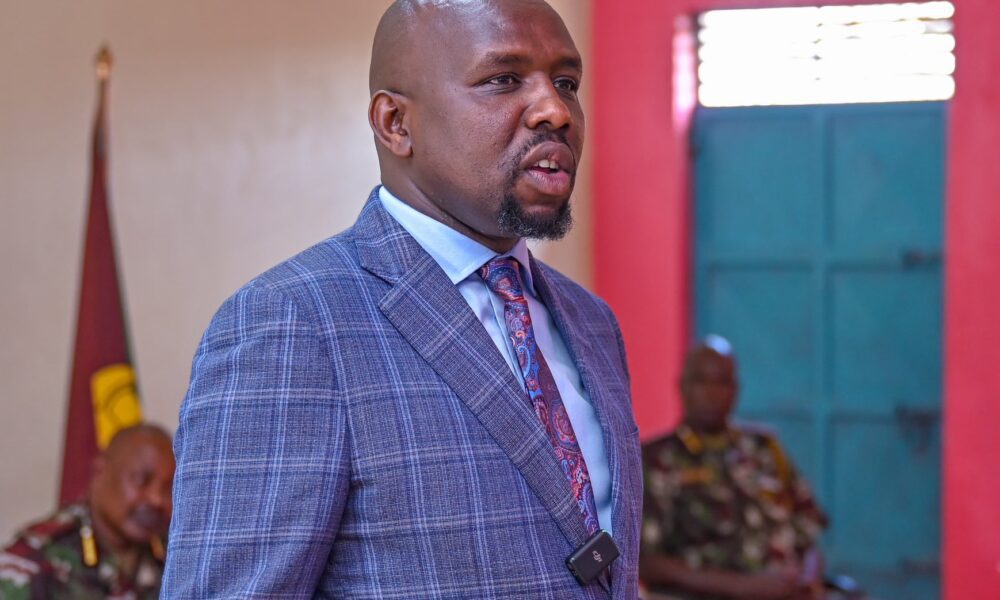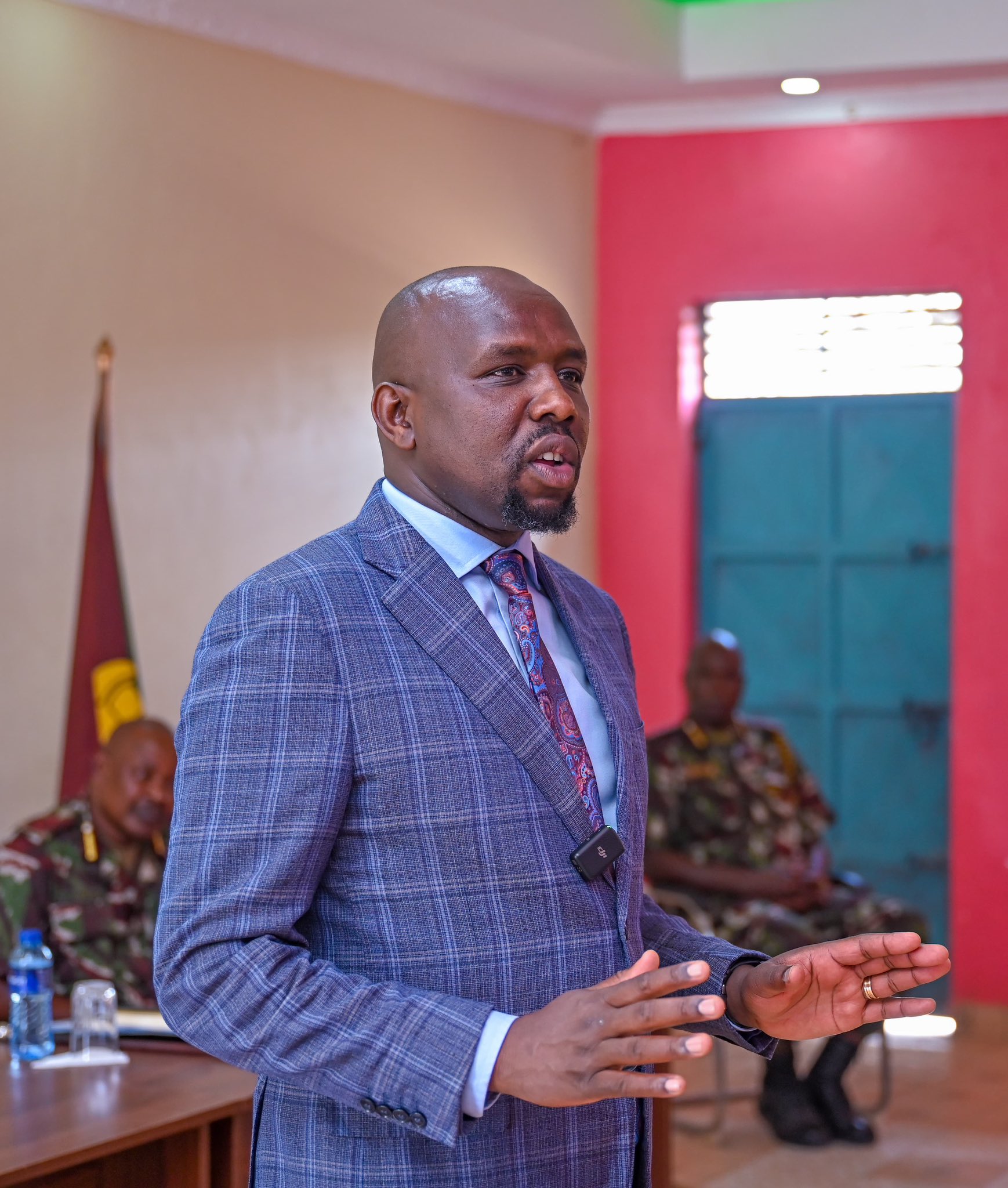
Kenya’s Interior Cabinet Secretary Kipchumba Murkomen has strongly denied issuing a “shoot to kill” order against protesters, following accusations from former Makueni Governor Kivutha Kibwana. The controversy comes amid escalating tensions after nationwide protest in Kenya led by Gen Z demonstrators, marking one year since over 60 young people were killed in anti-government rallies.
Murkomen Clarifies His Statement
In a heated exchange on social media platform X, Murkomen refuted claims that he had instructed police to use lethal force against protesters. Instead, he insisted he was merely reiterating existing laws under the National Police Service Act.
“My good teacher & friend, where did I issue a ‘shoot to kill’ command?” Murkomen responded to Kibwana. “Having been your good student, I know better than to make unfounded statements.”
The CS pointed to the sixth schedule of the National Police Service Act, which outlines conditions under which firearms may be used—including protecting lives, property, or in self-defense. He invited Kibwana for a debate over tea, stating, “I am happy to continue this discussion… and listen to your perspectives.”
Kibwana’s Accusations and Public Outcry
Kibwana, a former law professor at the University of Nairobi, had earlier accused Murkomen of violating the constitution by allegedly endorsing extrajudicial killings.
“Do you know that due to your ‘shoot to kill’ command, you will now and in the future be held accountable for every extrajudicial extermination?” Kibwana wrote. He questioned how Murkomen, as a lawyer and his former student, could disregard legal safeguards.
The backlash follows Murkomen’s televised remarks a day after violent Kenya protest on June 25, where demonstrators clashed with police, destroyed property, and stormed stations. The protests were triggered by the death of Albert Ojwang, a government critic who died in police custody.
Gen Z Protests Turn Violent
The recent protest Nairobi and other cities saw over 400 people injured, including 300 police officers, according to government reports. Young demonstrators demanded justice for Ojwang and an end to police brutality, echoing last year’s rallies where dozens were killed.
Human rights groups have condemned the government’s heavy-handed response, with Amnesty International Kenya warning against excessive force. “The right to peaceful protest is enshrined in the constitution,” said Executive Director Irungu Houghton. “Authorities must exercise restraint.”
Legal and Political Repercussions
Legal experts argue that Murkomen’s reference to firearm use could be misinterpreted by security forces, leading to unlawful killings. Law Society of Kenya (LSK) President stated, “Any directive that appears to sanction extrajudicial force is unacceptable and must be retracted.”
Opposition leaders have also weighed in. “The government is using violence to silence dissent,” said Kalonzo Musioka. “We demand accountability for all lives lost.”
A History of Protest Crackdowns
Kenya has a long history of violent protest crackdowns. Last year’s demonstrations, which saw over 60 fatalities, led to global condemnation. The recent unrest has reignited fears of a repeat, with activists accusing the state of failing to implement promised reforms.
“The cycle of violence must end,” said Boniface Mwangi, a prominent activist. “Young people are tired of being killed for demanding their rights.”
Government’s Stance and Public Reaction
President William Ruto’s administration has defended its approach, citing the need to maintain order. “We will not allow anarchy,” DP President said in a press briefing.
However, public sentiment remains divided. While some support the crackdown on “rioters,” others accuse the government of ignoring systemic issues fueling the unrest—such as unemployment, corruption, and police impunity.
What Next for Kenya’s Protest Movement?
As tensions simmer, analysts warn that without dialogue, further violence is inevitable. “The government must address the root causes of these protests,” said political analyst Herman Manyora. “Suppression alone will not work.”
For now, all eyes are on Murkomen and the security forces. Will there be accountability, or will Kenya see another bloody chapter in its protest history?