Arsenal are heading into what could be the most defining summer of Mikel Arteta’s tenure, with major changes expected across the squad after a season that promised greatness but ultimately exposed key weaknesses. The Gunners flirted with history for much of the campaign, looking capable of winning multiple trophies, only to see their ambitions unravel during a damaging late-season slump.
That collapse has forced a hard reset in thinking at the Emirates. While there is a strong foundation in place, the gap between competing and consistently winning at the highest level has become clearer than ever. The upcoming transfer window is not just about improvement—it’s about transformation. Arsenal must evolve from a very good team into a ruthless, elite machine capable of sustaining success across all competitions.
This is what a “dream” Arsenal squad for the 2026-27 season could look like if the club executes its transfer strategy perfectly.
Goalkeepers: Stability at the Top, Questions Beneath
David Raya has firmly established himself as Arsenal’s undisputed number one. His performances this season have been a cornerstone of the team’s success, combining sharp reflexes with composure in possession. While he occasionally invites pressure with risky distribution, his overall consistency has made him one of the most reliable goalkeepers in Europe.
However, the situation behind him is less settled. Kepa Arrizabalaga, brought in to provide competition and depth, has struggled to accept a backup role. His desire for more regular playing time could lead to a departure, especially after a high-profile mistake in a cup final raised doubts about his reliability in crucial moments.
If Kepa leaves, Arsenal are expected to pursue a younger, hungry goalkeeper who can develop without demanding immediate first-team football. A profile like Diant Ramaj fits perfectly—someone with experience, potential, and the willingness to grow within the squad structure.
Tommy Setford is likely to remain as the third-choice option, continuing his development while gaining valuable experience around the first team.
Defence: Strong Core, Smart Reinforcements Needed
Arsenal’s defensive unit has arguably been the strongest aspect of their squad this season. The first-choice back four—Jurrien Timber, William Saliba, Gabriel Magalhaes, and Riccardo Calafiori—offers a near-perfect blend of athleticism, technical ability, and tactical intelligence.
This group has provided both defensive solidity and attacking support, allowing Arsenal to dominate possession and control games. When fully fit, they form one of the most complete defensive lines in Europe.
Depth, however, remains a concern.
Piero Hincapie has proven to be an excellent deputy, particularly at left-back, while Cristhian Mosquera has shown versatility across the defensive line. Both players add quality and reliability, but injuries have exposed a lack of depth in full-back positions during congested periods.
One major decision could involve Ben White. Once a key figure, he has struggled to regain form after injury setbacks and now looks off the pace. Selling him could free up funds and squad space for a more dynamic option.
That replacement could come in the form of Tino Livramento. His ability to play on both flanks makes him an ideal fit for Arteta’s system, which values tactical flexibility and fluid positioning. Signing Livramento would not only strengthen depth but also future-proof the full-back positions.
Young talent Marli Salmon is also expected to see increased involvement, providing long-term potential within the squad.
Midfield: Depth Becomes the Priority
Arsenal’s midfield is built around two elite players: Martin Zubimendi and Declan Rice. Together, they provide defensive stability, ball progression, and tactical control. However, the lack of depth behind them has been a glaring issue.
Both players have been overworked this season, leading to fatigue and dips in performance at crucial moments. Arsenal simply cannot afford to rely so heavily on two individuals if they want to compete across four competitions.
Christian Norgaard has not been trusted enough to fill that gap, and his departure seems increasingly likely. In his place, Arsenal need a high-level midfielder capable of rotating seamlessly with Rice and Zubimendi.
Sandro Tonali represents exactly that profile. At his peak, he offers energy, intelligence, and technical quality, making him an ideal addition. While his price tag would be significant, the investment would address one of Arsenal’s most urgent needs.
Further forward, Arsenal are well stocked creatively. Martin Odegaard remains the heartbeat of the attack, dictating tempo and unlocking defenses with precision passing. Eberechi Eze adds flair and unpredictability, and the two together could form one of the most exciting creative partnerships in Europe.
Mikel Merino’s return from injury will also be like a new signing. His versatility allows him to operate in multiple roles, giving Arteta tactical flexibility in different match scenarios.
Meanwhile, Ethan Nwaneri’s reintegration is one of the most intriguing storylines. Despite a disappointing loan spell, his talent is undeniable. At just 19, he has the potential to become a key figure in Arsenal’s future, possibly even succeeding Odegaard in the long term.
Myles Lewis-Skelly is another player to watch, with a likely transition into midfield offering additional depth and energy in cup competitions.
Attack: The Area That Must Change
While Arsenal have a strong defensive and midfield structure, their attack has been inconsistent and, at times, underwhelming.
Bukayo Saka remains the undisputed star on the right wing. Even in a season affected by injuries, his importance to the team is undeniable. He continues to be Arsenal’s most dangerous attacking outlet and a player capable of changing games single-handedly.
Behind him, Max Dowman is emerging as a serious talent. His development could allow Arsenal to move on from Noni Madueke, whose inconsistency has frustrated fans and limited his impact.
The left wing, however, is a major problem.
Gabriel Martinelli and Leandro Trossard have both struggled to deliver consistently. While each has moments of quality, neither has shown the level required for a title-winning side. At least one of them is expected to leave, with Trossard the more likely candidate due to his age.
Arsenal are therefore expected to target a dynamic, high-upside winger. Yan Diomande has emerged as a strong candidate. His pace, dribbling, and goal-scoring ability make him an exciting option who could transform the left side of Arsenal’s attack.
Striker Situation: A Ruthless Decision Looms
Perhaps the most controversial aspect of Arsenal’s summer plans involves the striker position.
Viktor Gyokeres, despite being the club’s top scorer, has failed to fully convince. His overall play has been seen as too limited for a team aiming to dominate at the highest level. Selling him after just one season would be a bold move, but it may be necessary if Arsenal want to upgrade significantly.
Gabriel Jesus is also expected to depart. Injuries have taken their toll, and he no longer provides the same spark or reliability.
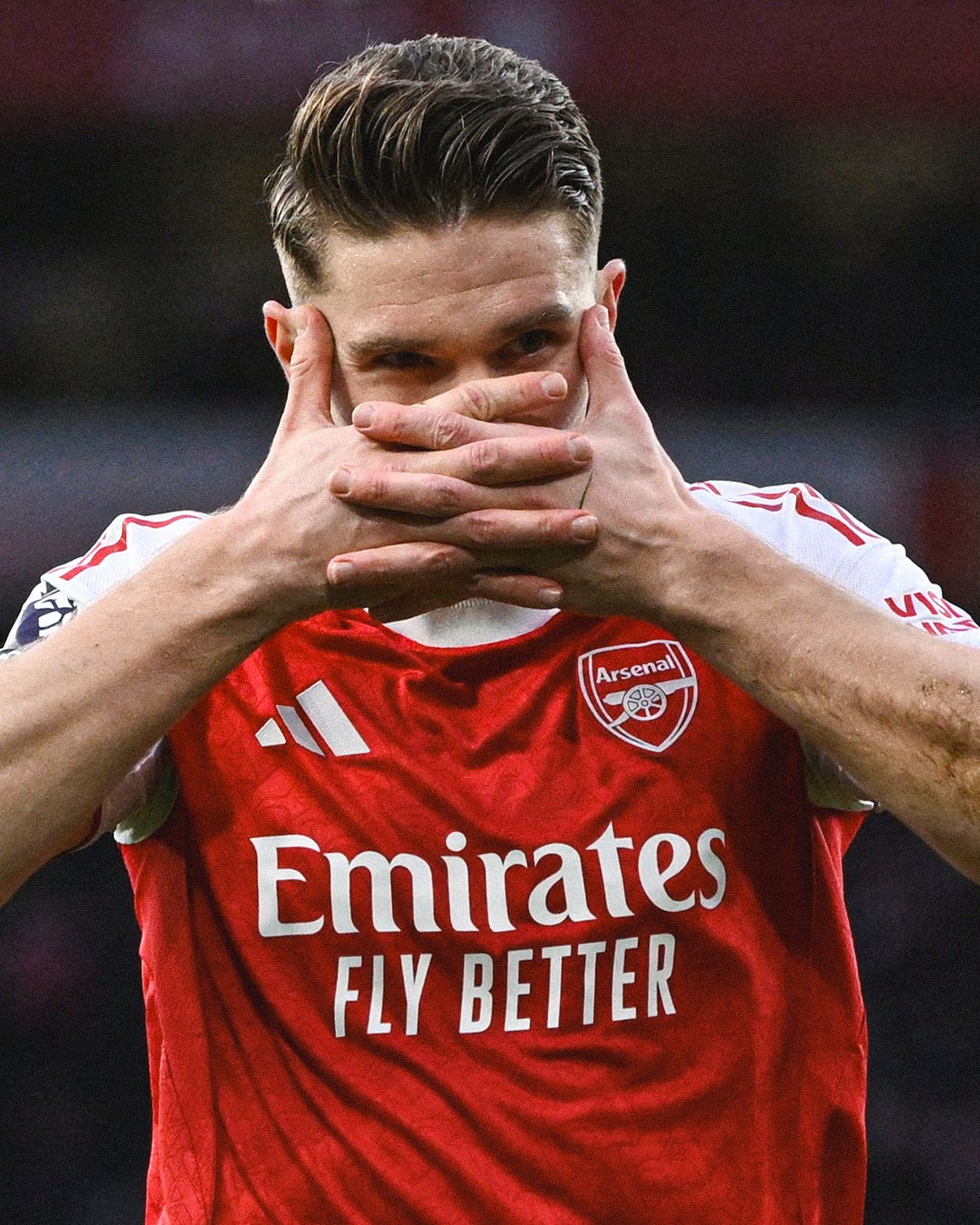
Kai Havertz has impressed since returning from injury, showcasing his intelligence, movement, and link-up play. However, while he is effective, he may not be the elite, prolific striker Arsenal need to take the next step.
That brings us to the dream signing: Julian Alvarez.
A £100 million move for Alvarez would represent a statement of intent. He combines relentless work rate with clinical finishing and intelligent movement—qualities that perfectly align with Arteta’s system. Unlike traditional strikers, Alvarez contributes across all phases of play while still delivering goals consistently.
His arrival could be the missing piece that transforms Arsenal from contenders into champions.
The Bigger Picture: From Promise to Dominance
Arsenal’s 2025-26 season has been a story of promise and frustration. For long stretches, they looked unstoppable, playing with confidence, cohesion, and intensity. But the final weeks exposed the thin margins that separate great teams from truly elite ones.
The dream 2026-27 squad reflects a shift in mentality.
It’s about making tough decisions—selling players who are not quite at the required level, investing heavily in key positions, and building depth that can sustain challenges across multiple competitions.
If Arsenal can secure targets like Livramento, Tonali, Diomande, and Alvarez, while maintaining their strong defensive core, they will enter next season as one of the most complete teams in Europe.
But success will ultimately depend on execution. Transfers must be precise, integration must be smooth, and the squad must maintain hunger and focus throughout the campaign.
The potential is there. The foundation is solid. Now, Arsenal must take the final step.
The 2026-27 season could define an era.