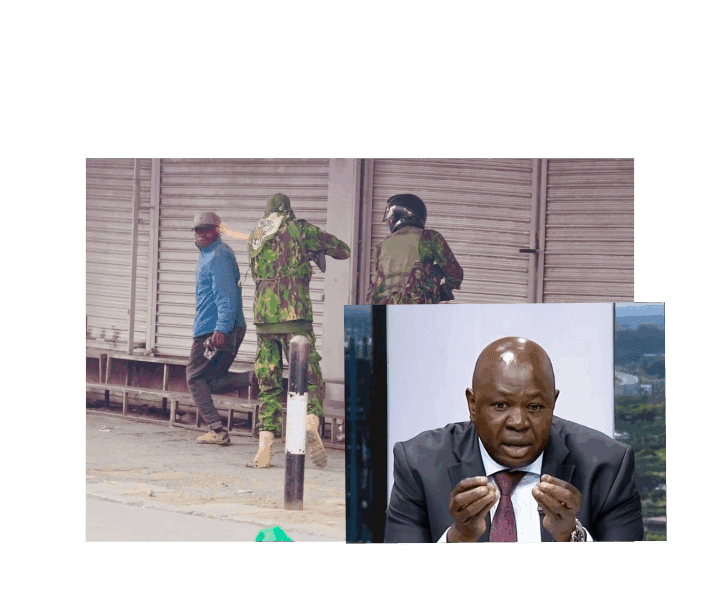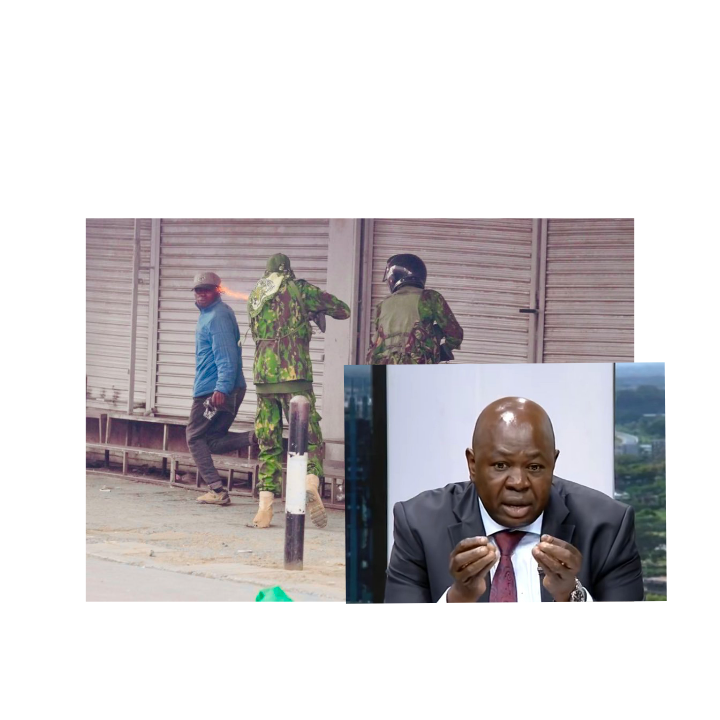
A former police spokesman has sparked outrage after suggesting that a young man shot dead by officers during recent protests had verbally abused them—a claim that has intensified debates over police use of lethal force in Kenya.
Charles Owino, former spokesperson for the National Police Service Commission, alleged in a televised interview that Boniface Kariuki—a 24-year-old shot while selling masks—had hurled insults at officers before the fatal encounter. His remarks have drawn fierce backlash from human rights activists and legal experts, who accuse the police of extrajudicial killings and impunity.
The Controversial Claim
Speaking on Citizen TV’s Day Break programme, Owino stated:
“If you listen closely to the clip of Boniface, the man who was selling masks when he was shot, you’ll hear him abusing the policeman. The police might use their firearms in some circumstances; however, they should restrain themselves.”
He further defended police actions during recent anti-government protests, where at least 39 people were killed, according to human rights groups. Owino argued that officers faced unprecedented challenges due to mass mobilisation on social media, leading to some stations being overrun.
“The police were in an awkward position during protests due to social media mobilisation. Some police stations were invaded, and there were instances of people being shot,” he said.
Minister’s “Shoot-to-Kill” Order Under Fire
Owino’s comments come days after Interior Minister Kipchumba Murkomen declared that police should use firearms “when necessary,” a statement widely interpreted as endorsing lethal force against protesters.
“I don’t believe the Minister of Interior is out of line in saying that police officers should use their firearms when it’s necessary,” Owino said. “If police are unable to use their firearms, it could result in lawlessness.”
However, critics argue that such rhetoric encourages excessive force. Nelson Havi, former President of the Law Society of Kenya (LSK), countered:
“Police officers must understand they are not required to follow unlawful orders, regardless of whether they come from the president, a minister, or anyone else. Such commands should be rejected.”
Havi also highlighted Kenya’s long-standing struggle to hold police accountable for extrajudicial killings:
“Justice regarding police killings has always been elusive. Successfully prosecuting a police officer for murder is difficult unless there’s public uproar and goodwill from the ODPP [Office of the Director of Public Prosecutions].”
Victim’s Family Demands Justice
Boniface Kariuki’s family has dismissed Owino’s claims as an attempt to justify an unlawful killing. Relatives say the teenager was not part of the protests and was merely trying to earn a living when he was gunned down.
“My son was not a criminal. He was shot in cold blood while running away,” his mother told local media. Human rights organisations have documented multiple cases of police shootings targeting unarmed civilians during the demonstrations.
MP Defends Minister’s Statement
Amid the backlash, MP Dido Rasso urged the public not to misinterpret the Interior Minister’s remarks:
“We should not interpret the Interior Minister’s statement selectively. It is important to remember that such a statement about shoot-to-kill does not carry the full force of the law.”
Yet legal experts insist that any directive permitting lethal force without clear guidelines violates constitutional protections on the right to life.
A History of Police Impunity
Kenya has faced repeated accusations of police brutality, particularly during protests. The 2017 post-election violence and the 2024 anti-tax demonstrations saw widespread allegations of excessive force, with few officers ever facing prosecution.
Havi referenced the infamous case of lawyer Willie Kimani, who was abducted and murdered by police in 2016:
“Ojwang’s main suspect, DIG Lagat, is still at large. This shows the systemic protection of rogue officers.”
What Next?
As public anger grows, pressure is mounting on President William Ruto’s administration to rein in police violence. Civil society groups are demanding an independent inquiry into the recent killings, while the International Criminal Court has been urged to investigate.