Introduction
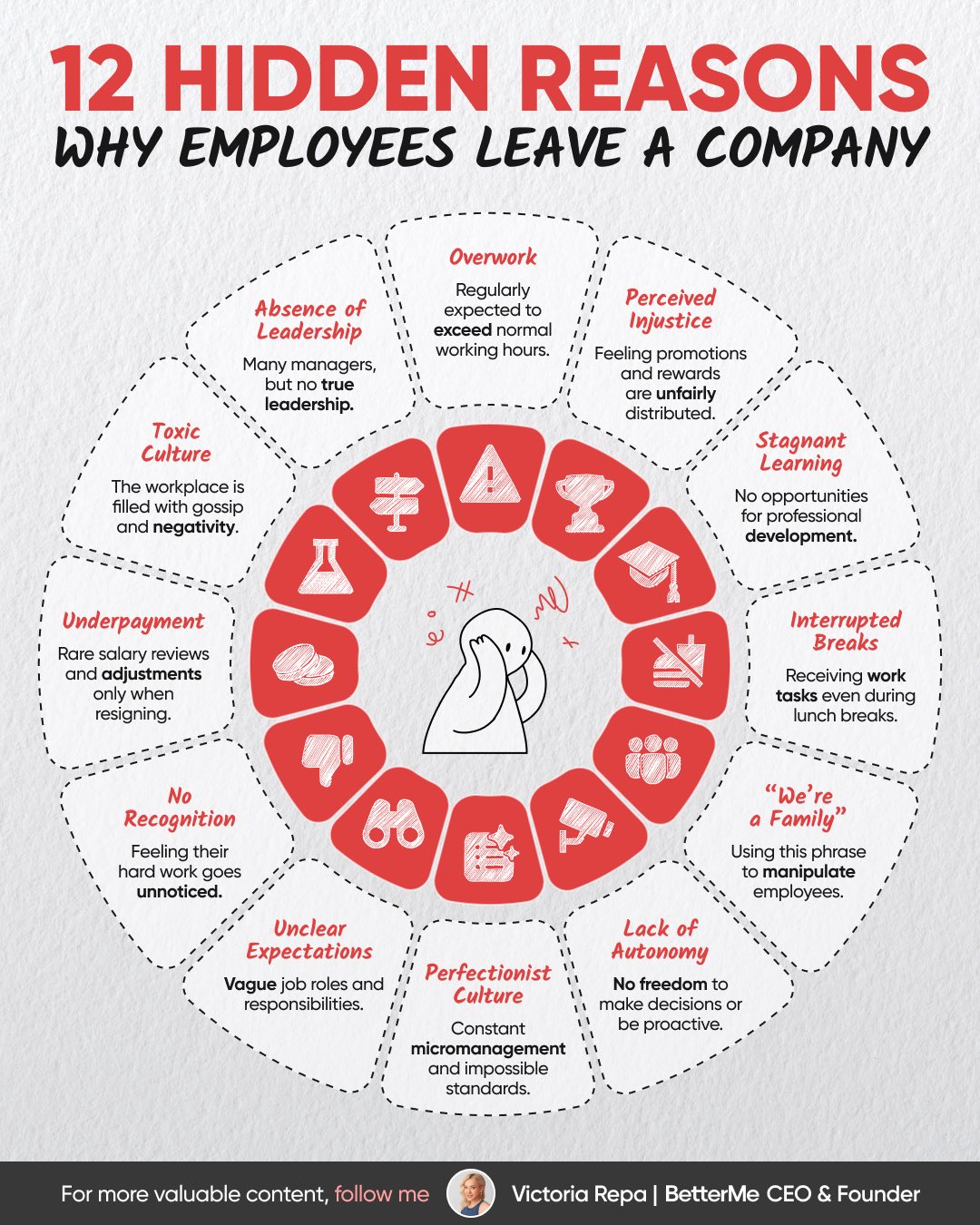
Employee turnover is a costly problem for organizations worldwide, with reasons ranging from bad management to poor compensation. This article dives into the top reasons employees quit and actionable strategies employers can implement to retain top talent, ensuring their workplaces thrive.
1. Bad Managers
Why Employees Leave:
Ineffective management creates frustration, confusion, and dissatisfaction among employees.
Solutions:
- Provide management training to improve leadership skills.
- Enable upward feedback to allow employees to share their concerns.
- Implement a merit-based promotion system to reward good performance.
2. Toxic Culture
Why Employees Leave:
Workplaces rife with negativity, discrimination, or bullying lead to disengagement and mental stress.
Solutions:
- Remove toxic employees, regardless of their rank.
- Promote open communication to foster transparency.
- Conduct regular employee surveys to identify issues early.
3. Unequal Treatment
Why Employees Leave:
Disparities in how employees are treated diminish trust and morale.
Solutions:
- Standardize performance evaluations to ensure fairness.
- Utilize 360-degree feedback to identify and rectify biases.
- Establish anonymous reporting mechanisms for grievances.
4. Poor Compensation
Why Employees Leave:
When compensation fails to meet market standards, employees feel undervalued.
Solutions:
- Offer competitive salaries to avoid costly turnovers.
- Introduce performance bonuses as a reward mechanism.
- Provide comprehensive benefits to enhance overall employee satisfaction.
5. Lack of Recognition
Why Employees Leave:
Unrecognized efforts demotivate employees, leading them to seek acknowledgment elsewhere.
Solutions:
- Praise employees regularly, both publicly and privately.
- Celebrate major achievements with bonuses or team lunches.
- Encourage peer-to-peer recognition programs.
6. Bureaucratic Policies
Why Employees Leave:
Excessive red tape limits innovation and creates unnecessary roadblocks.
Solutions:
- Remove unnecessary policies that slow processes.
- Involve employees in identifying barriers to their efficiency.
- Regularly review and update company policies to adapt to changing needs.
7. Limited Growth Opportunities
Why Employees Leave:
A lack of professional development or promotion opportunities drives employees to seek advancement elsewhere.
Solutions:
- Invest in employee training and development.
- Provide regular feedback for growth.
- Favor internal promotions over external hires.
Conclusion
Employee retention boils down to fostering a supportive, fair, and engaging work environment. By addressing these pain points and implementing the solutions provided, companies can retain their best talent and build a loyal, motivated workforce.