The SHA Billionaires: How a Little-Known Hospital in Elwak Allegedly Swindled Over 129 Million From Kenyan Taxpayers
A digital firestorm has erupted in Kenya, threatening to engulf the very foundation of the country’s new healthcare financing system. At the center of the storm is a single, seemingly insignificant hospital, a powerful political chairman, and data that suggests a brazen, multi-million shilling scandal. This is the story of Ladnan Hospital, the Social Health Authority (SHA), and allegations of theft on an industrial scale.
The revelation came not from a government audit or a parliamentary committee, but from the keen eye of a digital strategist. Pauline Njoroge, a well-known blogger and communication strategist, took to the social media platform X (formerly Twitter) to drop a bombshell that has since sent shockwaves across the nation. Her claim was simple, yet staggering: Ladnan Hospital has fraudulently received millions of shillings from the SHA.
But her accusation didn’t stop at the hospital’s door. She pointed a direct finger at the Chairman of the SHA board, Abdi Mohamed, who also happens to be the founder of Ladnan Hospital. This glaring conflict of interest, she argued, is not a bug in the system but a feature of an administration that has “perfected the art of stealing from Kenyans.”
“What is the population there?” Njoroge pointedly asked, highlighting the absurdity of a hospital in a sparsely populated area receiving sums comparable to giant county referral hospitals serving millions.
The initial allegation was soon bolstered by hard data. Analyst Elijah K. Samuel delved into the publicly available SHA payments data from April to August 2025. His analysis, which he shared online, provided the chilling numbers to back up Njoroge’s claims. The figures weren’t just suspicious; they were, for many, a smoking gun.
The Data That Tells a Story: Ladnan Hospital vs. The Giants
Let’s break down the numbers that have caused national outrage. According to the extracted SHA data for the five-month period:
- Embu County Referral Hospital: 154.1 Million KES
- Ladnan Hospital: 124.9 Million KES
- Machakos County Referral Hospital: 123.8 Million KES
- Kakamega County General Hospital: 120.5 Million KES
- Kericho County Referral Hospital: 80.6 Million KES
- Nyeri County Referral Hospital: 69.6 Million KES
On the surface, one might see Ladnan nestled among reputable public institutions. But context is everything. Let’s peel back the layers.
Kakamega County General Hospital is a Level 5 public referral facility. It serves a massive catchment population—Kakamega County alone has a population of over 1.8 million people, and as a referral hub, it draws patients from neighboring counties, serving a total population pushing 4 million. It is a cornerstone of healthcare in Western Kenya, with hundreds of beds, multiple specialized units, and a huge staff complement handling thousands of outpatient and inpatient cases monthly.
Machakos County Referral Hospital is another Level 5 titan. Machakos County’s population is over 1.4 million, and its referral hospital is a critical facility for the entire Lower Eastern region, dealing with a high volume of complex cases, accidents along the busy Mombasa Road, and providing essential services its smaller satellites cannot.
Nyeri County Referral Hospital, another Level 5 facility serving a population of over 700,000, received nearly half of what Ladnan Hospital was paid. This means a single, private facility received more than double the funding of a major public county referral hospital that is the lifeline for hundreds of thousands of citizens.
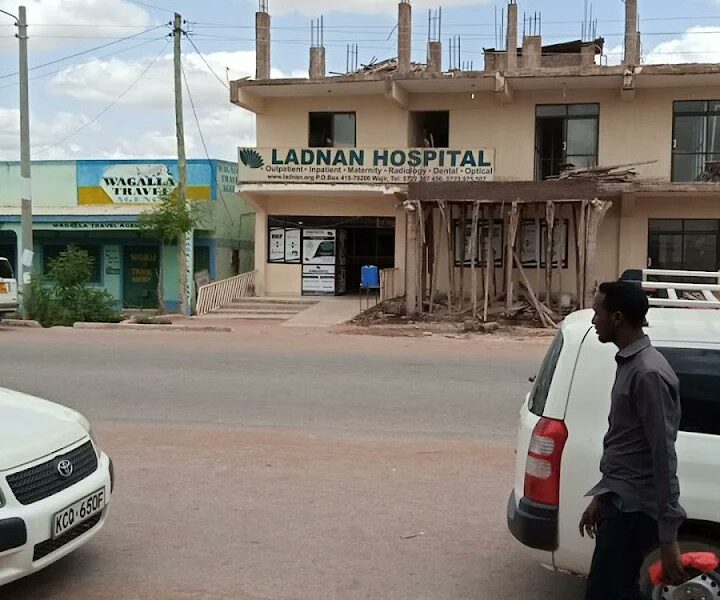
And then there is Ladnan Hospital. The branch in question is in Elwak, a town in Mandera County. The entire population of Mandera County is estimated to be around 867,000 people. Elwak itself is a small town. Furthermore, it is inconceivable that a single private hospital in this location would handle a patient volume and complexity of cases that rivals or surpasses the combined efforts of entire county health systems serving millions.
This discrepancy forms the core of the scandal. Either Ladnan Hospital is the most efficient, high-volume, cutting-edge medical center in the history of modern medicine, operating out of a small town, or something is profoundly rotten in the state of the SHA.
Pauline Njoroge’s Indictment: “An Administration That Has Perfected the Art of Stealing”
Pauline Njoroge’s post was more than just an accusation; it was a full-throated indictment of the entire system. She framed the Ladnan case not as an isolated incident, but as a symptom of a metastatic disease within the government’s financial architecture.
“Ladnan Hospital has fraudulently received millions of shillings from SHA,” she stated bluntly. “Yet instead of confronting this massive theft, Duale is busy trying to exonerate the hospital’s founder, Abdi Mohamed, who conveniently also serves as the Chairman of SHA.”
This mention of Defense Cabinet Secretary Aden Duale suggests high-level political maneuvering to shield those involved, adding another layer of gravity to the claims. The implication is that the scandal reaches into the highest echelons of power.
Her most damning passage resonates with the deep-seated frustrations of ordinary Kenyans: “But this is bigger than one hospital or one individual. It exposes an administration that has perfected the art of stealing from Kenyans. Billions meant for the sick, the poor, and the vulnerable are being diverted into some people’s pockets. Meanwhile, genuine cases are ignored, patients are turned away without treatment, hospitals run out of drugs, and families are pushed into poverty to pay for healthcare the state should provide, and for which Kenyans are already bleeding through their taxes.”
This powerful narrative connects the abstract numbers on a spreadsheet to the tangible suffering of citizens. It suggests that the empty drug shelves and the heartbreaking medical fundraisers on social media are not a result of scarcity, but of deliberate, calculated diversion.
She also directly challenged the justification for the expensive transition from the National Hospital Insurance Fund (NHIF) to the SHA. The new system was sold to the public as a technological marvel, a Ksh 104 billion solution designed to be “impenetrable,” to “seal loopholes and block fraudulent claims.” The emergence of such a massive alleged fraud so early in SHA’s life cycle begs the question: was the public sold a lie? “So what happened?” Njoroge asked. “Why am I even asking? We all know where that money went.”
The Chairman and The Hospital: A Glaring Conflict of Interest
The figure of Abdi Mohamed is crucial to understanding the outrage. As the founder of Ladnan Hospital, he benefits directly from its financial success. As the Chairman of the SHA board, he is one of the chief architects and overseers of the very system that is funneling millions into his own private business.
This is a textbook definition of a conflict of interest. In any functioning democracy with robust ethical safeguards, such a position would be untenable. The chairman of a national health insurer cannot also be the owner of a major provider that bills that insurer. The potential for self-dealing, favoritism, and the approval of inflated or fraudulent claims is immense and obvious.
The fact that this was allowed to happen points to either a catastrophic failure of governance or a deliberate design feature to facilitate the looting of public funds. Kenyans are left wondering: who approved this appointment? Were no red flags raised? Or were they ignored?
The NHIF to SHA Transition: A Solution That Became the Problem?
The transition from NHIF to SHA was one of the government’s flagship healthcare reforms. NHIF was widely criticized for its inefficiency, corruption, and failure to provide comprehensive cover. The SHA was promised as a fresh start, built on a digital foundation that would eliminate human intervention and, by extension, corruption.
The government invested heavily in this new system, with contracts for technology infrastructure running into tens of billions of shillings. The public was assured that the days of “ghost patients” and inflated claims were over.
The Ladnan scandal strikes at the heart of this promise. If a facility can receive 124.9 million in just five months—averaging over 4.4 million per transaction across 28 transactions—it suggests that the “impenetrable” system might be deeply flawed, or worse, that the fraud has simply been digitized and scaled up.
This raises alarming questions:
- What algorithms is SHA using to verify claims?
- Where is the oversight?
- Is there an automated audit trail?
- How does a single hospital generate 28 multi-million shilling claims in five months?
- Who is verifying that the services billed for were actually rendered to bona fide SHA members?
The speed and scale of the payments to Ladnan, as noted by Elijah K. Samuel, are themselves a red flag. In public healthcare systems, reimbursement processes are notoriously slow, often taking months due to rigorous verification processes. The fact that Ladnan’s payments were processed so swiftly and so generously suggests it may have been prioritized in a way that public hospitals are not.
The Human Cost: Beyond the Numbers
While the figures of 124.9 million or 129 million are staggering, it is vital to translate what that money represents in human terms. That sum could have provided:
- Life-saving dialysis for thousands of patients with kidney failure.
- Chemotherapy drugs for hundreds of cancer patients.
- Antiretroviral therapy for a significant number of HIV-positive Kenyans.
- Essential surgeries like C-sections, hernia repairs, and cataract operations for countless individuals.
- Stocked pharmacy shelves in dozens of dispensaries and health centers across the country.
Instead, if the allegations are true, this money has vanished into the pockets of a few well-connected individuals. This isn’t just corruption; it is a direct attack on the health and well-being of the nation. It is, as many have called it, economic murder.
Every time a patient is turned away from a public hospital because “there are no drugs,” or a family is forced to sell their land to pay for a surgery that should be covered, the shadow of this kind of theft looms large. It erodes public trust not only in the healthcare system but in the very concept of governance and social contract.
The Culture of Impunity and the “SHABillionaires”
The hashtag #SHABillionaires, coined in the wake of these revelations, encapsulates the public mood. It speaks to a belief that the new system has already been hijacked to create a new class of ultra-wealthy individuals whose riches are built on the sickness of the poor.
This culture of impunity is what most enrages citizens. The brazenness of the alleged fraud—the apparent lack of any attempt to hide it—suggests that those involved believe they are untouchable. They believe that political connections will shield them from accountability, that the public outcry will eventually die down, and that business will continue as usual.
This case is a critical test for the Kenyan government and its commitment to the fight against corruption. Will there be a swift, transparent, and independent investigation? Will Abdi Mohamed be required to step aside as SHA chairman pending its outcome? Will the payments to Ladnan and other facilities with similar anomalous patterns be immediately frozen and audited?
Or will there be a familiar pattern of denial, obfuscation, and political protection? Will the scandal be buried in a committee or explained away with technical jargon? The government’s response will be more telling than the allegations themselves.
The Road Ahead: Demands for Accountability
The revelations by Pauline Njoroge and Elijah K. Samuel have lit a fuse. The public, civil society organizations, and opposition leaders are now demanding urgent action. The calls are clear and unanimous:
- Immediate Suspension: Abdi Mohamed must immediately step aside as Chairman of the SHA board to allow for an impartial investigation.
- Forensic Audit: A thorough, independent forensic audit of all SHA payments since inception, with a specific focus on Ladnan Hospital and any other facilities showing disproportionately high payments.
- Criminal Investigation: The Directorate of Criminal Investigations (DCI) and the Ethics and Anti-Corruption Commission (EACC) must immediately launch investigations into potential charges of fraud, conflict of interest, abuse of office, and theft of public funds.
- Political Accountability: Cabinet Secretary for Health Susan Nakhumicha and the SHA leadership must appear before Parliament to answer questions regarding the integrity of the system and the measures in place to prevent such fraud.
- System Overhaul: A transparent review of the SHA’s claim processing algorithms, approval workflows, and oversight mechanisms must be conducted to plug any loopholes.
Conclusion: A Moment of Reckoning for Kenyan Healthcare
The Ladnan Hospital scandal is more than a news story; it is a moment of national reckoning. It forces Kenyans to confront an uncomfortable truth: that the very institutions created to protect them are being weaponized against them for profit.
The Ksh 104 billion SHA system was meant to be a lifeline. Instead, these allegations suggest it may have become a gold rush for a corrupt few. The data doesn’t lie. The comparison between a small hospital in Elwak and the giant public referral hospitals is inexplicable through any legitimate lens.
This is a test of Kenya’s collective conscience. Will we allow billions meant for the sick and the vulnerable to be stolen in broad daylight, or will we demand accountability, transparency, and justice? The story of Ladnan Hospital is the story of modern Kenya—a battle between rampant greed and the enduring hope for a functional, ethical, and just society. The outcome of this battle will determine the health of the nation for generations to come.
The eyes of the nation are now fixed on the authorities. The question on everyone’s lips is simple: what will you do about it?