Election Day Eruption in Tanzania: What’s Really Going On?
Tanzania is in turmoil. What was meant to be a peaceful election day has erupted into chaos, with mass protests, internet shutdowns, and accusations of censorship against local media. Citizens across the country are flooding the streets to denounce what they describe as an unfair and illegitimate election process, while major mobile service providers have reportedly cut off internet access nationwide.
The 2025 general election, expected to cement President Samia Suluhu Hassan’s leadership for another term, has instead exposed deep cracks in Tanzania’s democracy. The protests sweeping across the nation—led largely by young people—have shaken the ruling Chama Cha Mapinduzi (CCM) party’s grip on power and drawn international concern.
Key Facts:
- Polls opened at 7:00 a.m. local time and were scheduled to close at 4:00 p.m.
- More than 37 million registered voters were expected to participate.
- Internet access was disrupted across Tanzania, affecting both mobile data and broadband services.
- Opposition figures and rights activists have described the election as heavily biased toward the ruling party.
Digital Blackout & Information Freeze
One of the most alarming developments on election day was the near-total digital blackout. Tanzanians woke up to find popular social media platforms and messaging apps inaccessible. Internet monitoring organizations confirmed a nationwide disruption, with data traffic dropping sharply within hours of polling stations opening.
For millions of citizens, this blackout meant being cut off from updates about the election and the protests that soon followed. Journalists were unable to upload live footage, and voters could not share real-time experiences from polling centers.
What We Know:
- Major telecom providers restricted access to social media and messaging platforms.
- VPN services, often used to bypass government restrictions, also appeared blocked in some areas.
- Reports indicated that the shutdown started just as protests began intensifying in key cities like Dar es Salaam and Arusha.
- The blackout severely limited transparency, making it difficult for observers to verify reports of voter intimidation, ballot tampering, and violence.
Why It Matters:
The deliberate timing of the blackout raises suspicions that it was a government strategy to control the flow of information. Internet shutdowns during elections are a powerful tool for silencing dissent, limiting coordination among protestors, and shielding authorities from scrutiny.
The move not only undermines press freedom but also signals a dangerous slide toward digital authoritarianism. For Tanzanians, especially the youth who rely heavily on online communication, this blackout has been a blow to both expression and democracy itself.
Protests Across Tanzania: Streets Rising
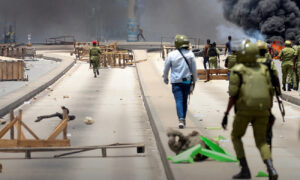
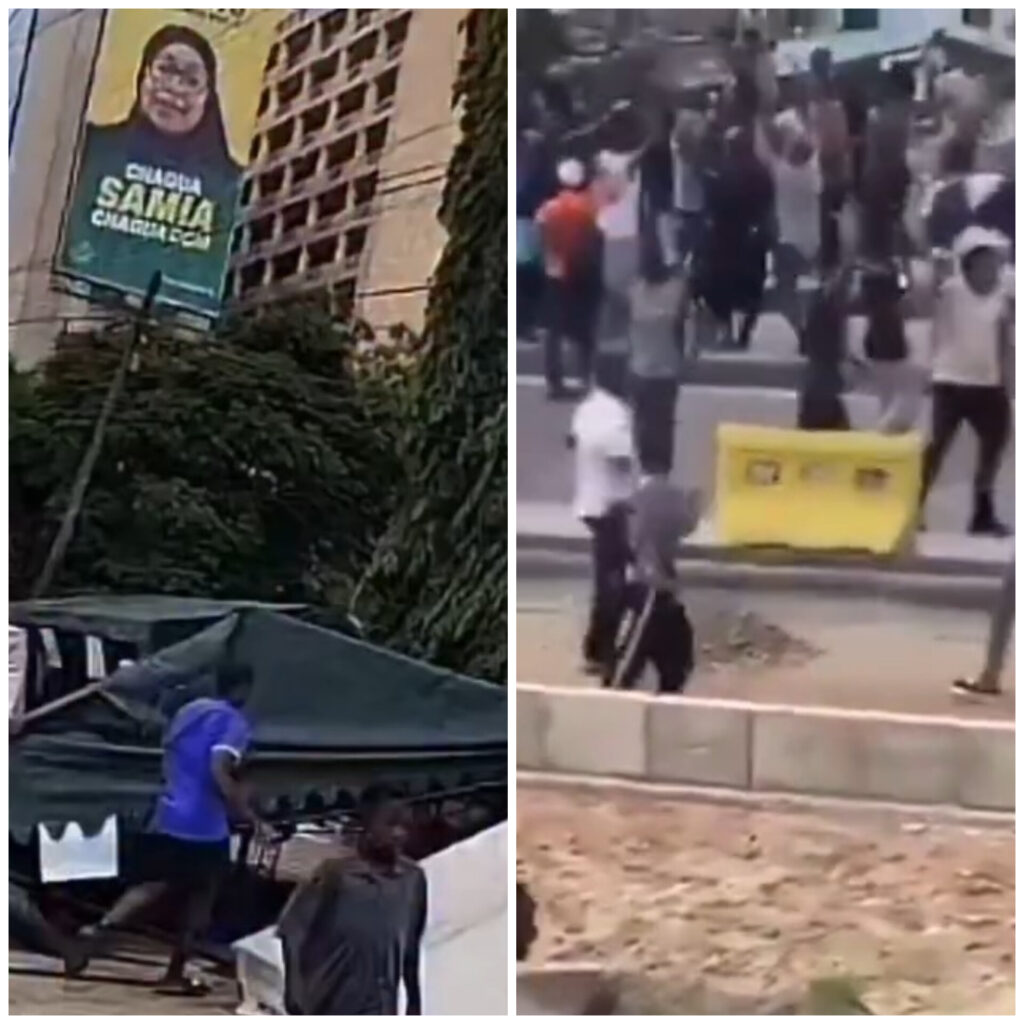
As the internet went dark, the streets of Tanzania lit up with defiance. In Dar es Salaam, Arusha, Mwanza, Dodoma, and other major cities, demonstrators clashed with police in scenes reminiscent of historic uprisings.
Eyewitnesses described running battles, tear gas, and live bullets being fired into crowds. Videos recorded before the shutdown showed protestors chanting anti-government slogans, demanding justice, and rejecting the ruling party’s “rigged” election.
What’s Happening on the Ground:
- Protestors have blocked roads and highways, paralyzing transport across the country.
- Several polling stations were left deserted or destroyed as angry voters accused officials of fraud.
- Police have reportedly fired tear gas to disperse crowds, while some protestors have retaliated by burning vehicles and government property.
- In Arusha, demonstrators were seen cheering military officers who refused to use force, a rare moment of solidarity between citizens and security forces.
The Youth Movement Behind the Protests:
The protests have been driven largely by Gen Z—young, tech-savvy Tanzanians who feel excluded from political participation. Many accuse the government of manipulating the electoral process and silencing dissent through intimidation, arrests, and media control.
Slogans like “Hatuitaki CCM” (We don’t want CCM) have become rallying cries for a generation that demands change, transparency, and democracy.
Media Under Fire: Silence or Survival?
Local media outlets in Tanzania are facing fierce backlash for failing to cover the unfolding crisis. Many citizens accuse major newspapers and TV stations of downplaying the protests or ignoring them entirely.
Several editors and journalists have privately admitted to facing government pressure to avoid “sensitive” coverage. Others fear losing broadcasting licenses or being arrested under the country’s restrictive media laws.
The Accusations:
- State media has focused almost exclusively on official election updates, ignoring widespread unrest.
- Independent outlets have been muted, allegedly due to warnings from regulatory authorities.
- Tanzanian journalists have increasingly turned to anonymous online platforms to share updates, fearing reprisals.
Why This Matters:
A free press is essential during elections. When journalists are silenced, citizens lose their right to truth. The blackout, coupled with muted media coverage, has created an information vacuum—one that the government can fill with propaganda and disinformation.
Tanzania’s press freedom has deteriorated sharply in recent years, with several media outlets suspended or fined for “unpatriotic reporting.” The election unrest has only made the environment more dangerous for reporters trying to tell the truth.
Government Response & Security Crackdown
President Samia Suluhu Hassan, Africa’s only female head of state, has yet to issue a detailed public statement on the protests. However, her administration has dismissed claims of electoral manipulation and accused “foreign-funded groups” of inciting violence.
Security forces have been deployed heavily in all major cities. Armored vehicles and riot police patrol key intersections, while roadblocks restrict movement in and out of protest zones.
Government Position:
Officials have described the protests as “illegal gatherings” and warned that those participating could face severe punishment. Authorities insist that the elections were conducted “peacefully and transparently,” despite widespread reports of intimidation.
The ruling party, CCM, maintains that President Samia’s leadership represents continuity, stability, and progress. Opposition groups, however, argue that the ruling elite is clinging to power through manipulation and fear.
Foreign Advisories:
The U.S. Embassy in Dar es Salaam issued an emergency alert urging American citizens to shelter in place, avoid demonstrations, and keep a low profile. Similar advisories are expected from other embassies, signaling rising international concern over Tanzania’s security situation.
Why This Election Matters
The 2025 Tanzanian election is more than just a national event—it’s a defining moment for East Africa’s political landscape. Tanzania has long been seen as a model of stability in the region, but the ongoing unrest threatens to change that perception.
Historical Context:
Since returning to multiparty democracy in 1992, Tanzania has held seven general elections. Yet, every one of them has been dominated by the CCM party. Opposition parties, including CHADEMA and ACT Wazalendo, have consistently accused the government of electoral fraud, intimidation, and the misuse of state resources.
President Samia Suluhu Hassan, who rose to power after the death of John Magufuli in 2021, promised reforms and greater openness. However, critics argue that her government has doubled down on censorship, surveillance, and control of the media and internet.
The Decline of Digital and Media Freedom:
Over the past two years, Tanzania has tightened control over digital spaces. New regulations criminalize the use of VPNs without government authorization, while online content creators must register with authorities.
This crackdown has left Tanzanians with fewer channels to express dissent or report abuses, making the current protests both a cry for democracy and digital freedom.
What’s at Stake
1. Legitimacy of the Vote
With major opposition leaders jailed or boycotting the election, many question whether this vote can be considered legitimate. A victory for the ruling party under these conditions could deepen public mistrust and fuel further unrest.
2. Freedom of Expression
The combination of internet shutdowns and media censorship represents one of the harshest information control measures in East Africa’s history. If left unchallenged, it sets a precedent for other governments in the region.
3. National Stability
The unrest has paralyzed transport, disrupted businesses, and raised fears of a prolonged standoff. Continued clashes could destabilize the country’s economy and scare off foreign investment.
4. Regional Implications
Tanzania’s position as a key trade hub for East and Central Africa means that its instability could ripple across neighboring countries, affecting trade routes, border security, and migration.
5. Global Response
International observers are watching closely. The global community’s reaction—whether through condemnation, sanctions, or silence—will determine how the Tanzanian government handles the aftermath.
What to Watch Next
Observers are monitoring several critical indicators in the coming days:
- Election Results: Whether results are released on time and whether they match independent tallies.
- Protest Trends: If demonstrations spread to smaller towns and rural areas, the unrest could escalate into a nationwide crisis.
- Security Force Conduct: The level of restraint or brutality used by police and military will signal how far the government is willing to go to maintain control.
- Internet Restoration: Whether connectivity is restored quickly or remains restricted may reveal the government’s confidence—or fear—of public scrutiny.
Advice for Citizens, Journalists, and Foreigners
For Tanzanian Citizens:
- Avoid large crowds and protest zones to ensure safety.
- Use trusted offline networks for information sharing during internet disruptions.
- Document incidents safely and discreetly, prioritizing anonymity.
- Stay aware of emergency contacts and local safety protocols.
For Journalists:
- Verify all information before publishing, especially when connectivity is limited.
- Maintain backups of footage and reports in secure, offline formats.
- Protect sources and exercise caution when reporting on government actions.
- Collaborate with international outlets when possible to ensure wider coverage.
For Foreign Nationals:
- Follow embassy advisories closely.
- Avoid unnecessary travel and monitor the situation through official alerts.
- Maintain communication with employers, families, and embassy contacts.
- Keep emergency evacuation plans ready in case unrest worsens.
Possible Scenarios Moving Forward
Scenario 1: Calm Restored
The government successfully suppresses protests, restores internet access, and announces election results. However, questions about legitimacy persist, leaving underlying tensions unresolved.
Scenario 2: Escalation and Violence
Protests spread nationwide, met by intensified crackdowns. Prolonged internet restrictions lead to information scarcity and potential human rights violations. This could trigger international condemnation or sanctions.
Scenario 3: Dialogue and Reform
Under pressure from both domestic protests and international scrutiny, the government opens limited negotiations with opposition groups. Internet access returns gradually, and minor reforms are promised.
Scenario 4: Prolonged Instability
Neither side backs down. Tanzania faces weeks or months of unrest, damaging its economy, straining public services, and isolating it diplomatically.
These keywords are strategically placed throughout the article to maximize Google visibility, attract organic traffic, and ensure high engagement from readers interested in Tanzanian politics and East African affairs.
Meta Description (for search results):
“Mass protests erupt across Tanzania during election day as internet blackout and media silence fuel outrage over Samia Suluhu’s government.”
Conclusion: A Nation at a Crossroads
Tanzania stands on the edge of history. The events of this election are more than political—they are a reflection of a nation’s struggle for voice, transparency, and dignity.
From the streets of Dar es Salaam to the quiet villages now cut off from the internet, Tanzanians are demanding that their votes and voices matter. Yet, as tear gas fills the air and the media remains silent, the question lingers: Will the world listen?
The coming days will define whether Tanzania emerges as a democracy reborn—or slips deeper into censorship, repression, and unrest. The people have spoken loudly. Whether their message is heard beyond the blackout remains to be seen.