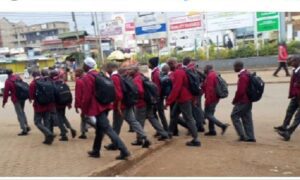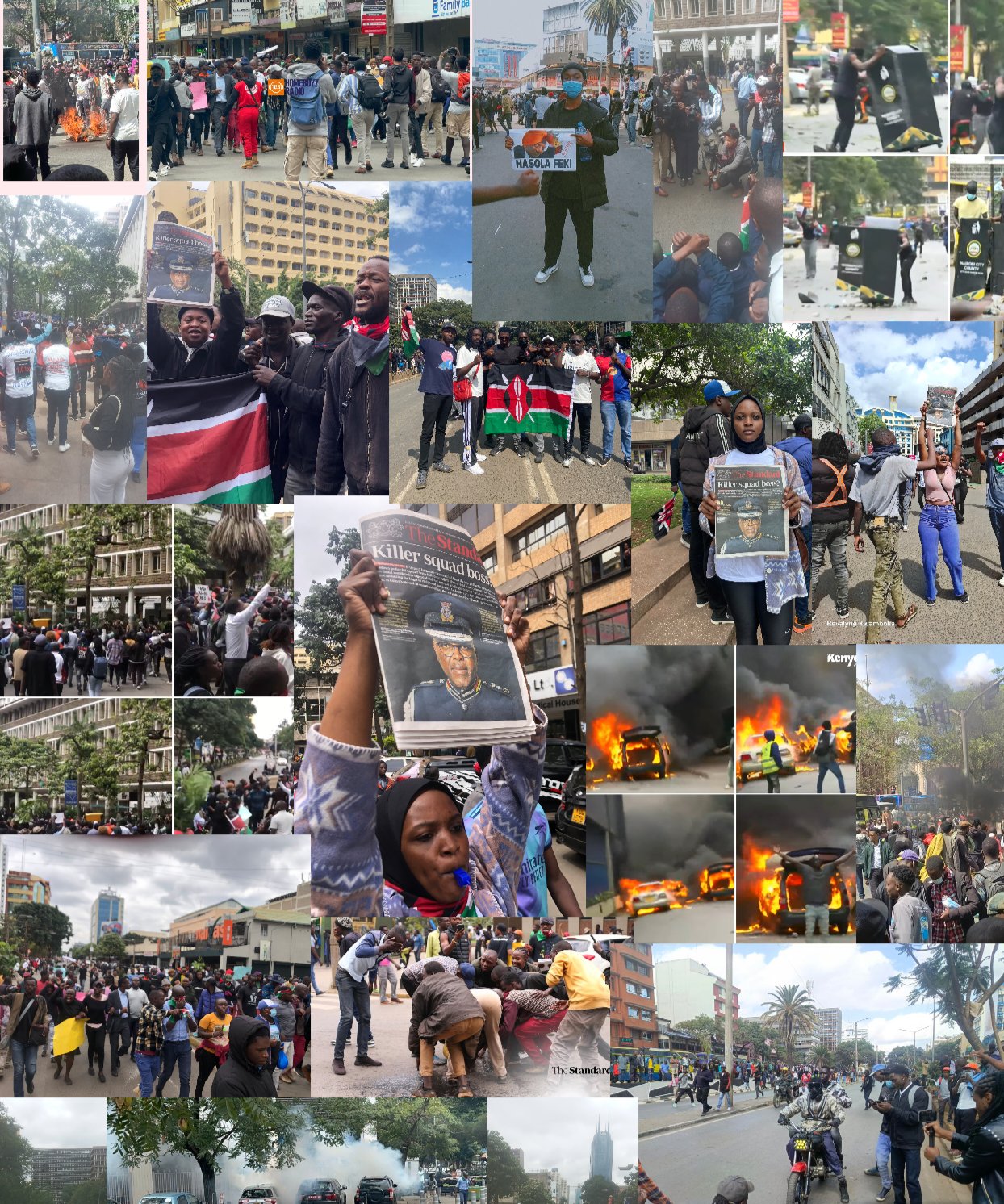
Nairobi, Kenya – 12th June 2025 – Chaos erupted in Nairobi’s Central Business District (CBD) today as thousands of protesters clashed with police during demonstrations against the killing of Albert Ojwang, a 24-year-old man who died in police custody last week. The protests, coinciding with Kenya’s National Budget Day, saw youths demanding justice for Ojwang while also rallying against the controversial Finance Bill 2025.
Police deployed water cannons and tear gas to disperse crowds, while reports emerged of live ammunition and rubber bullets being fired. At least one protester, 22-year-old Lucy Nelima, was seriously injured after being shot at close range with a rubber bullet while working as a delivery rider. She was rushed to Mbagathi Hospital, where doctors removed the embedded projectile.
A Day of Fury and Fire
The demonstrations turned increasingly tense as several vehicles were set ablaze near Parliament Road. However, social media investigators claim the burning of cars was a “false flag” operation orchestrated by state agents to discredit the protests.
Verified reports on social media platform X revealed that the license plates of the torched vehicles—KAR 936D and KBR 954G—had been deregistered years ago. KAR 936D belonged to a scrapped 2006 Isuzu lorry, while KBR 954G was assigned to a defunct 14-seater matatu. Protest organizers allege the vehicles were planted and burned to justify a heavy-handed police crackdown.
Who Was Albert Ojwang?
Albert Ojwang, a teacher and activist, was arrested last week over what police says “publication of false information on X” . His family says he was tortured in custody before his body was dumped at a morgue with severe injuries. Police claim he died from hitting his head on wall, but an independent autopsy revealed blunt force trauma and signs of asphyxiation.
The Directorate of Criminal Investigations (DCI) has yet to release a formal statement, but Deputy Inspector General (DIG) Eliud Lagat—who oversaw the operation leading to Ojwang’s arrest—faces mounting calls for his resignation and prosecution.
Media Solidarity and Government Response
Kenya’s major newspapers—The Star, The Standard, Daily Nation, and Taifa Leo—published front-page editorials condemning Ojwang’s killing and demanding accountability. Meanwhile, President William Ruto’s administration has remained silent, focusing instead on the budget presentation.
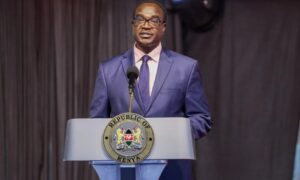
Finance Cabinet Secretary Johnbadi unveiled a Ksh 4.2 trillion budget, with increased taxes on fuel and digital services—measures protesters say will worsen economic hardship.
Eyewitness Accounts
“I saw police shoot directly at people running away,” said Mercy Atieno, a street vendor. “Lucy [Nelima] was just protesting peacefully when she was hit.”
Another protester, who asked not to be named, accused undercover officers of inciting violence: “They were the ones throwing stones first, then they brought those old cars to burn.”
What Happens Next?
Human rights groups, including Amnesty International Kenya, have called for an independent probe into Ojwang’s death and today’s violence. Meanwhile, hashtags like #JusticeForAlbertOjwang and #StopPoliceBrutalityKE are trending nationally.
As night falls, Nairobi remains on edge, with fears of further clashes. For many Kenyans, today’s events underscore a deepening crisis—one where dissent is met with bullets, and justice remains elusive.