Click here to apply: students.kuccps.ac.ke
The (KUCCPS) has officially opened its online application portal for the 2026 placement cycle, marking a critical moment for thousands of students seeking admission into universities, colleges, and Technical and Vocational Education and Training (TVET) institutions across the country. The application window, which opened on April 7, 2026, will remain active until May 6, 2026, giving applicants a one-month period to submit their course choices and secure their academic futures.
This annual exercise is one of the most significant milestones in Kenya’s education calendar, as it determines how students transition from secondary education into higher learning institutions. For the 2025 (KCSE) candidates, as well as Form Four leavers from previous years, this is an opportunity to take the next step toward their career aspirations.
Who Can Apply?
The KUCCPS application process is open to two main categories of applicants. First, it targets students who sat for the 2025 KCSE examinations. Secondly, it accommodates candidates from earlier years who wish to pursue further education. This inclusivity ensures that individuals who may have delayed their applications or are seeking new opportunities can still access placement services.
Students from the 2025 KCSE cohort are eligible to apply for both degree programmes and TVET courses. This flexibility allows candidates to explore multiple academic pathways depending on their performance and career interests.
Degree vs TVET Placement
One of the key highlights of this year’s placement process is the distinction between degree and TVET programme timelines. Successful applicants for degree programmes will report to universities in September 2026. On the other hand, those opting for TVET programmes can begin reporting to their respective institutions as early as May 2026.
This staggered reporting system reflects the continuous nature of TVET placement, which is designed to provide more immediate access to technical skills training. It also helps ease congestion in universities while ensuring that students pursuing vocational education can begin their studies without unnecessary delays.
KCSE Performance and Eligibility
The 2025 KCSE results reveal a broad distribution of performance among candidates. KUCCPS received results for a total of 980,444 eligible candidates. Out of these, 268,700 students attained a mean grade of C+ and above, qualifying them for placement into degree programmes.
These students will compete for slots in Kenya’s universities, including 43 public universities and 31 private institutions. Placement into these institutions is highly competitive and is determined by merit, course preferences, and available capacity.
The remaining 711,744 candidates scored between C plain and E. While they do not meet the minimum requirement for degree programmes, they remain eligible for placement into TVET institutions and middle-level colleges. This ensures that every student has an opportunity to pursue further education regardless of their KCSE performance.
Minimum Requirements
The minimum entry requirement for degree programmes remains a mean grade of C+ (plus). However, KUCCPS has emphasized that students with this grade or higher also have the option of applying to the , which offers flexible learning opportunities.
For TVET programmes, the eligibility criteria are broader. Individuals who sat KCSE between the years 2000 and 2025 and attained any grade from A to E can apply. This inclusivity underscores the government’s commitment to expanding access to technical and vocational education.
Available Institutions and Capacities
This year’s placement cycle offers a wide range of options for applicants. In addition to universities, KUCCPS has listed 251 public TVET colleges available for placement. Among these are 33 TVET institutes affiliated with universities, providing students with diverse training environments.
Capacity figures further highlight the scale of this year’s exercise. According to approvals by the (CUE), universities have a total capacity of 322,396 slots for degree programmes.
Meanwhile, middle-level colleges boast a combined capacity of 1,132,531 spaces for diploma, certificate, and artisan courses. Secondary Teacher Training Colleges (TTCs) have an additional capacity of 2,480 slots.
These figures indicate that Kenya’s higher education system has sufficient capacity to accommodate all eligible students, particularly those pursuing TVET courses.
Regulation and Quality Assurance
KUCCPS has reiterated that all programmes listed in the placement system have been vetted and approved by relevant regulatory bodies. Universities were required to submit their courses and capacities for the 2026/2027 placement cycle, ensuring compliance with national education standards.
The Commission for University Education oversees university programmes, while the (TVETA) regulates TVET institutions. This dual oversight guarantees that students are placed into accredited programmes that meet quality standards.
Placement Criteria
As stipulated in the Universities Act, 2012, student placement will be conducted strictly on merit. KUCCPS will consider several factors, including:
- KCSE performance
- Course preferences selected by applicants
- Available capacities in institutions
This merit-based system ensures fairness and transparency in the allocation of slots, giving every applicant an equal opportunity based on their academic achievements and choices.
Support for Applicants
Recognizing the complexity of the application process, KUCCPS has put in place measures to support applicants across the country. During the application period, KUCCPS officers will be deployed to universities and TVET institutions in all counties to provide guidance and assistance.
Additionally, applicants can seek help at Huduma Centres nationwide. These centres serve as accessible points for students who may lack internet access or require technical assistance.
Further details, including step-by-step application guidelines, will be made available on the official KUCCPS website. Applicants are encouraged to regularly check for updates and ensure that they submit their applications before the deadline.
KMTC Placement Update
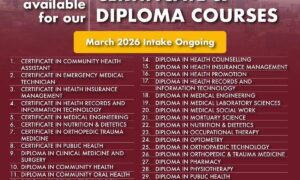
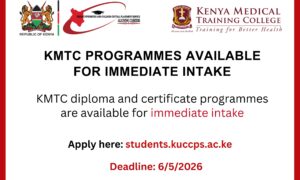
In a related development, KUCCPS recently completed the placement of students to the (KMTC) for the March 2026 intake.
Students who sat the 2025 KCSE examinations and are interested in pursuing medical courses at KMTC will have another opportunity to apply for the September 2026 intake. This application window will open after the completion of the university placement process.
Importantly, candidates who repeated specific subjects to meet KMTC requirements will also be eligible to apply. All applications will be submitted online through the KUCCPS portal, ensuring a streamlined and transparent process.
Government Oversight and Preparation
The launch of the 2026 application window follows extensive preparations by KUCCPS in collaboration with the Ministry of Education. During a briefing held at Jogoo House in Nairobi, KUCCPS Board Chairperson Cyrus Gituai and board members updated the Cabinet Secretary for Education, , on the readiness of the placement system.
The meeting underscored the government’s commitment to ensuring a smooth and efficient placement process. It also highlighted ongoing efforts to align higher education with national development goals by expanding access and improving quality.
Why This Matters
The KUCCPS placement process plays a crucial role in shaping Kenya’s workforce and economic future. By matching students with appropriate courses and institutions, the system helps ensure that graduates possess the skills needed to drive national development.
The emphasis on TVET education is particularly significant, as it addresses the growing demand for technical skills in various sectors. With over one million TVET slots available, the government is clearly prioritizing vocational training as a key pillar of economic growth.
Final Reminder to Applicants
With the application window now open, prospective students are urged to act promptly. Missing the deadline could mean waiting another year to apply, which may delay academic and career plans.
Applicants are advised to carefully review course requirements, consider their career goals, and make informed choices when selecting programmes. Seeking guidance from teachers, career counselors, or KUCCPS officers can also help improve decision-making.
As the May 6, 2026 deadline approaches, competition for popular courses and institutions is expected to intensify. Early application not only reduces last-minute pressure but also allows time for corrections if needed.
Conclusion
The opening of the KUCCPS 2026 application portal marks the beginning of a transformative journey for hundreds of thousands of Kenyan students. Whether pursuing a university degree or enrolling in a TVET programme, applicants now have the opportunity to take a decisive step toward their future.
With ample capacity across institutions, robust support systems, and a transparent placement process, KUCCPS continues to play a vital role in expanding access to higher education in Kenya. For eligible candidates, the message is clear: the window is open—don’t miss your chance.