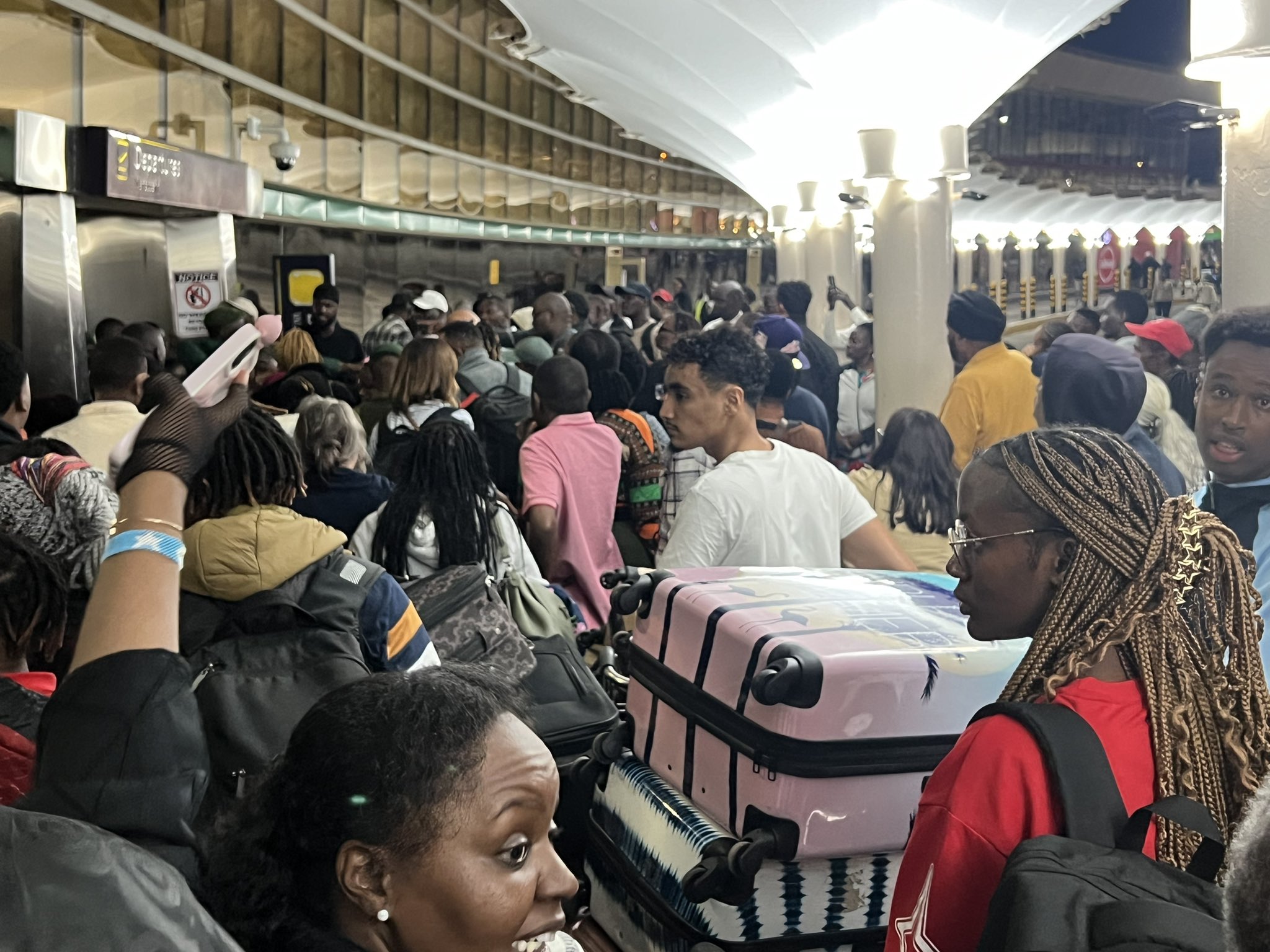
The ongoing standoff between employees at Jomo Kenyatta International Airport (JKIA) and Adani Group’s management has reached a boiling point, with tensions escalating into a full-blown strike. The hostile takeover of the airport by Adani Group has ignited protests from Kenya Airports Authority (KAA) staff, who are fiercely opposed to the company’s involvement in managing one of the country’s most critical national assets.
Reports indicate that Adani’s General Managers (GMs) have been forced to take refuge in senior management offices at JKIA amidst the growing unrest. The situation underscores the rising discontent among employees, who feel the government has betrayed their interests by allowing a foreign company to manage the country’s main airport.
A Controversial Takeover
The decision to hand over the management of JKIA to India’s Adani Group has not only sparked outrage among airport employees but has also provoked significant backlash from various sectors of the Kenyan public. Many critics view this as a reckless move that jeopardizes Kenya’s national sovereignty and economic independence.
One vocal critic, Robert Alai, a popular blogger and the Member of County Assembly (MCA) for Kileleshwa, took to social media to express his frustration:
“Adani deal shouldn’t be allowed. It’s wrong not to listen to Wananchi. Adani brokers are evil people. Who even allows such a deal?”
These sentiments have been echoed by various politicians, bloggers, and legal professionals, all raising concerns about how the deal was structured and the potential long-term consequences for the nation.
Growing Frustration with Foreign Takeovers
On social media, many Kenyans have drawn comparisons between the Adani Group’s involvement at JKIA and other critical infrastructure projects that have been awarded to foreign companies. One user commented:
“In Nairobi seated in a JAPANESE car, waiting to pay Expressway toll to a CHINESE operator, and soon airport parking fees to INDIA’s Adani, and then we wonder why our Presidents are stuffed into a school bus, like children, in London. We need to develop some self-respect.”
This view resonates with a growing portion of the Kenyan population, who are concerned about the extent to which foreign entities are taking control of strategic national assets. From roads to airports, the increasing presence of foreign companies has raised questions about Kenya’s ability to maintain control over its infrastructure and natural resources.
Employees’ Anger Boils Over
The employees at JKIA, who have been at the forefront of the protests, argue that the Adani Group’s takeover could result in job losses, deteriorating working conditions, and a reduction in the overall quality of airport services. Several employees have reported being treated with hostility by management, with some even alleging that they have been harassed and intimidated in the wake of their opposition to the takeover.
One anonymous employee stated:
“We are not just striking for ourselves. We are fighting for the future of JKIA and for the Kenyan people. This is a national asset, and it should be managed by Kenyans, not by a foreign corporation whose sole interest is profit.”
Their frustrations have been compounded by a series of recent mishaps at the airport, including power blackouts, roof leaks, and fire outbreaks. Critics have accused the government of deliberately allowing these incidents to occur in order to justify the handover to Adani.
The Role of the Government
The involvement of the Kenyan government in the Adani deal has come under scrutiny, with many accusing key figures of orchestrating the takeover for personal gain. Cabinet Secretary for Transport, Roads, and Public Works, Kipchumba Murkomen, has been a particular target of criticism. Some have alleged that Murkomen deliberately sabotaged the airport’s infrastructure to push for the privatization deal.
One lawyer, Donald Kipkorir, went so far as to suggest that those involved in the deal should be charged with treason. In a social media post, he wrote:
“Those who were involved in the negotiations of JKIA – ADANI GROUP should be charged with treason and get shot.”
The accusation of sabotage has gained traction, with rumors circulating that the government allowed infrastructure failures at JKIA to make the case for privatization. Murkomen has denied these allegations, but the suspicion lingers.
A Chaotic Airport Experience
For passengers, the situation at JKIA has been far from smooth. The increased tensions and frequent disruptions have resulted in longer wait times, overcrowded terminals, and a general sense of disarray. Some travelers have even reported being approached by brokers offering to expedite their passage through the airport for a fee.
“JKIA is completely overwhelmed, it can’t handle the traffic. It’s chaos. There are now brokers getting paid to get you to the front of the line,” said one frequent traveler.
These issues have further fueled the argument that JKIA, under its current management, is not adequately equipped to handle the growing volume of passengers and flights. However, critics argue that the solution should not involve handing control over to a foreign corporation but rather addressing the internal management issues and investing in the airport’s infrastructure.
Public Outcry and Calls for Action
As the strike continues and the protests grow louder, there are increasing calls for the government to reconsider the Adani deal. The silence from parliament on the matter has been a point of contention, with many accusing lawmakers of ignoring the will of the people.
“We shall not forget the silence of parliament in this hostile takeover of our national asset,” read one social media post, reflecting the anger and disappointment felt by many Kenyans.
There are also growing concerns that the continued unrest could negatively impact Kenya’s tourism and aviation sectors, both of which rely heavily on the smooth operation of JKIA. With the peak holiday season approaching, any further disruptions at the airport could have far-reaching consequences for the country’s economy.
Conclusion: What Lies Ahead?
The standoff at JKIA shows no signs of easing, as employees remain determined to block the Adani takeover. For now, the General Managers of Adani Group remain holed up in their offices, while the airport operates under the strain of protests and growing unrest.
Whether or not the government will heed the calls for action and reconsider the deal remains to be seen. However, one thing is clear: the situation at JKIA is emblematic of a larger struggle over the control of Kenya’s national assets. At a time when many Kenyans are questioning the country’s reliance on foreign companies, the Adani deal could become a flashpoint for broader discussions about Kenya’s economic future and its ability to maintain control over its most critical infrastructure.