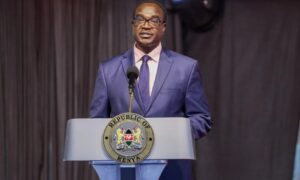
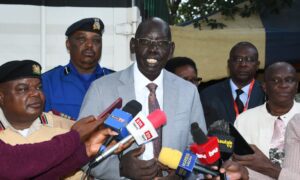
In a pivotal address to the education sector, Cabinet Secretary Julius Ogamba assured school heads and parents that the government has disbursed part of the Ksh 48 billion capitation funds to schools. Speaking in Mombasa during a public event, Ogamba appealed to school administrators not to send learners home over unpaid fees, asserting that the remaining funds would reach schools soon.
This announcement comes at a time when schools are grappling with financial challenges, with administrators raising concerns about delayed capitation and its potential to disrupt learning. The government’s renewed focus on addressing these issues signals its commitment to ensuring that learners can remain in school without interruptions.
Funds Are Being Disbursed
During his speech, Julius Ogamba disclosed that the National Treasury released Ksh 19 billion on Thursday and is set to disburse an additional Ksh 15 billion by Friday. The remaining balance will be distributed within the next two weeks to meet the total Ksh 48 billion allocation for 2025.
“We are in the process of completing the disbursement of the funds to ensure that all our schools have the resources they need. We ask headteachers not to send children home because the money is on its way to their accounts,” Ogamba said.
The CS acknowledged challenges in releasing the funds but emphasized that these hurdles have been resolved. This reassurance is expected to ease tensions among school administrators, who have expressed fears of being unable to sustain operations without capitation.
Concerns Over Delayed Capitation
The Kenya Primary Heads Association recently warned that schools might struggle to keep learners in class if the delays in capitation continued. This concern has been particularly pressing for Junior Secondary Schools (JSS), which require additional resources to meet the demands of the new curriculum.
Ogamba’s announcement comes as a relief to many educators, with some already confirming receipt of funds.
“Those with accounts in KCB have already received capitation for Junior Secondary and primary schools,” Ogamba noted.
Government’s Commitment to JSS
The Ministry of Education has taken significant steps to ensure uninterrupted learning, particularly in JSS. These efforts include recruiting and training teachers, providing learning materials, and improving infrastructure.
- Teacher Recruitment:
Over 76,000 teachers have been hired to support the implementation of the Junior Secondary curriculum. Many have also undergone retooling to align their skills with the new educational framework. - Provision of Books:
Schools have received textbooks tailored to the JSS curriculum. At St. Charles Lwanga Junior School, for instance, every subject now has sufficient learning materials. - Infrastructure Development:
In Wundanyi Constituency, CS Ogamba commissioned eight newly constructed classrooms at Mghambonyi Comprehensive School, showcasing the government’s commitment to expanding educational facilities.
Healthcare for Learners Through SHA
Alongside the focus on education, the government has introduced the Social Health Authority (SHA), a program designed to provide affordable healthcare to Kenyans. Moses Kuria, Senior Adviser at the Council of Economic Advisors, emphasized the importance of SHA during the event, urging parents to register and list their children as dependents.
“SHA is like harambee. I pay Ksh 27,000, meaning someone I don’t know is getting treated because of my contribution,” Kuria said.
SHA aims to revolutionize healthcare by creating a community-driven model where contributions benefit everyone.
How to Register for SHA
Registering for SHA is straightforward, and it guarantees healthcare access for both parents and their children. Here’s how to complete the process:
Step 1: Dial *147#
Start by dialing *147# on your phone and follow the on-screen prompts.
Step 2: Visit the SHA Website
Go to afyayangu.go.ke and click “Register” to set up your profile.
Step 3: Enter ID and Phone Number
Provide your ID number and phone number. Ensure accuracy, as an OTP code will be sent for verification.
Step 4: Create a PIN or Digital Signature
Set up a PIN or digital signature to confirm approvals during registration and login.
Step 5: Complete Your Profile
Fill out your county, sub-county, and ward details to finalize your profile.
Step 6: Means Testing for Premiums
If you are unemployed or self-employed, a means test will determine your premium amount.
Step 7: Pay via MPESA
Make your premium payment through MPESA using Paybill number 200222, with your ID number as the account reference.
Step 8: Access Healthcare Services
After payment, you and your dependents can access healthcare services through SHA.
A Lifeline for Schools and Families
CS Ogamba’s announcement and the SHA program underscore the government’s commitment to addressing critical issues in education and healthcare. By resolving capitation delays and enhancing healthcare access, the government is ensuring that learners remain in school and receive the support they need.
The introduction of SHA is particularly significant, offering families a safety net during medical emergencies. Parents are urged to register under the program and list their children as beneficiaries to ensure they receive timely medical attention.
Conclusion
The Ministry of Education’s proactive measures, including the release of capitation funds and support for JSS, reaffirm its dedication to strengthening Kenya’s education system. At the same time, initiatives like SHA provide a holistic approach to supporting learners and their families.
As schools begin to receive funds and families register for SHA, Kenya is making strides toward a future where education and healthcare are accessible to all. These developments mark a significant step in empowering communities and ensuring that no child is left behind.