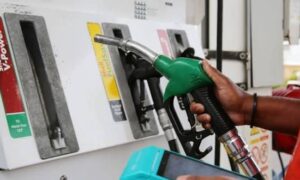
Why Fuel Prices Are About to Hit Record Highs in Kenya
Kenyans are bracing for a sharp rise in fuel prices following a dramatic escalation in global tensions after the United States ordered a naval blockade of the Strait of Hormuz. The move, announced on April 13, 2026, has already sent shockwaves through global oil markets — and Kenya, which relies entirely on imported fuel, is among the most vulnerable economies.
With the Energy and Petroleum Regulatory Authority (EPRA) set to announce its latest fuel price review, the stakes have never been higher. Early indicators suggest that pump prices could rise significantly, potentially reaching historic highs and placing additional strain on households and businesses.
Global Oil Prices Surge Past $100
Global oil markets reacted immediately to the blockade, with Brent crude surging past $100 per barrel. In some cases, physical oil cargo prices have approached $150 per barrel — levels that have not been seen in years.
The Strait of Hormuz is one of the world’s most critical oil chokepoints, handling roughly 20% of global oil supply. Any disruption in this narrow shipping route significantly reduces available supply and triggers price spikes worldwide.
Energy analysts warn that the blockade could worsen an already fragile market, tightening global supply even further and pushing prices higher in the coming weeks if tensions persist.
Why Kenya Is Highly Exposed
Kenya’s heavy dependence on imported petroleum products makes it especially sensitive to global price shocks. The country consumes approximately 100,000 barrels of fuel daily and relies heavily on shipments from the Middle East.
This means any disruption in the Gulf region — particularly at the Strait of Hormuz — has a direct impact on Kenya’s fuel availability and pricing.
Even before the latest escalation, the country was already experiencing pressure in the fuel sector due to rising global prices and supply chain constraints. The blockade has now intensified these risks, making the situation more urgent.
Rising Shipping and Insurance Costs
Beyond crude oil prices, the cost of transporting fuel is also increasing sharply.
With the Strait of Hormuz under blockade, shipping routes may become longer and riskier. Tankers could be forced to reroute around alternative paths, increasing travel time and fuel costs.
In addition, insurance premiums for vessels operating in high-risk zones are rising significantly. These extra costs are ultimately passed down to consumers, contributing to higher pump prices.
Even government-backed fuel import agreements may not be immune, as suppliers adjust pricing to reflect the increased risks and logistical challenges.
EPRA Price Review: A Critical Moment
EPRA determines fuel prices using a formula that considers global oil prices, exchange rates, landed costs, and distribution margins.
With global crude prices now above $100 per barrel and still rising, the landed cost of fuel into Kenya is expected to increase substantially.
Historically, even moderate increases in global oil prices have led to noticeable pump price hikes. This time, the increase could be more severe due to the combination of high crude prices, supply disruptions, and market speculation.
All eyes are now on EPRA’s announcement, which will determine how much of the global price shock is passed on to Kenyan consumers.
Fuel Shortages Already Emerging
Signs of a developing crisis are already visible across parts of Kenya.
Motorists in Nairobi and surrounding regions have reported long queues at petrol stations, along with sporadic shortages and distribution delays. Authorities have attributed these issues to congestion at key fuel infrastructure, including pipeline and storage facilities.
However, there are also concerns within the industry that some oil marketing companies may be withholding supplies in anticipation of higher prices. This practice, if confirmed, could further worsen the situation by limiting availability in the short term.
Panic Buying Intensifies the Crisis
As fears of rising fuel prices spread, panic buying has begun to take hold.
Many motorists are rushing to fill their tanks, leading to faster depletion of available fuel stocks. This surge in demand is placing additional pressure on an already strained supply chain.
While the reaction is understandable, panic buying is contributing to artificial shortages and could accelerate the onset of a broader fuel crisis if the trend continues.
A Wider Global Energy Shock
The situation in Kenya reflects a broader global energy crisis driven by geopolitical tensions.
The collapse of nuclear negotiations between the United States and Iran, combined with the blockade of a major oil transit route, has created significant uncertainty in global energy markets.
As a result, oil prices are experiencing extreme volatility, with analysts warning of sustained high prices if the situation does not stabilize quickly.
This global context means that Kenya’s fuel challenges are unlikely to be resolved in the short term without a de-escalation of tensions.
Impact on Kenyan Households and Businesses
Rising fuel prices will have widespread consequences across the economy.
Higher cost of living: Transport costs will increase, pushing up the prices of food and other essential goods.
Increased business expenses: Companies in transport, manufacturing, and logistics will face higher operational costs.
Pressure on public transport: Matatu fares are likely to rise, affecting millions of daily commuters.
Economic slowdown: Higher fuel costs could reduce consumer spending and slow economic growth.
Could Prices Reach Record Levels?
With oil prices climbing and supply chains under strain, Kenya could be heading toward record-breaking fuel prices.
If global crude prices continue rising toward $120 or even $150 per barrel, local pump prices could surpass previous highs by a significant margin.
The final outcome will depend on how long the Hormuz blockade remains in place and whether global supply conditions improve.
Conclusion
Kenya is facing a potential fuel crisis driven by global geopolitical developments. The blockade of the Strait of Hormuz has triggered a ripple effect that is already being felt across the country.
As EPRA prepares to announce new fuel prices, the nation waits anxiously for what could be a major increase.
Unless global tensions ease soon, Kenyans may be entering one of the most expensive fuel periods in the country’s history, with far-reaching impacts on the economy and daily life.