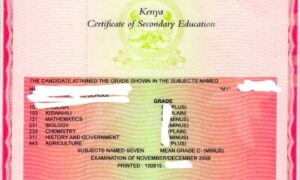
The Teachers Service Commission (TSC) has introduced new proposals in the TSC Amendment Bill, suggesting that a minimum grade of C plain will be required for individuals aspiring to become teachers.
Under these proposals, P1 certificate teachers will be phased out, and the lowest grade for a teacher will be a Diploma holder, not a certificate holder.
The commission emphasizes that these changes aim to ensure the delivery of quality education by providing classrooms with well-qualified teachers.
Presently, individuals with a grade of D are eligible to pursue P1 teaching certificates.
However, the new proposal suggests that to qualify as an Early Childhood Development Education (ECDE) teacher, one must obtain a diploma, and diploma holders should have a minimum grade of C plain.
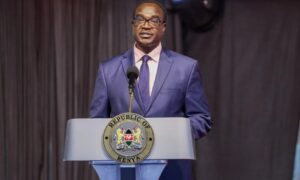
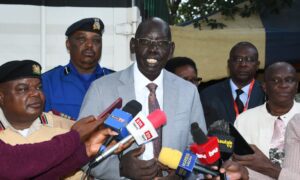
Cavin Anyuor, the TSC’s Legal Affairs Director, emphasized the importance of higher English and mathematics grades for teachers, stating that a teacher should have at least a C- in English and a D in mathematics.
During a media sensitization forum in Nairobi, Anyuor defended the proposal, questioning whether a teacher who scored low grades in subjects like English can effectively teach students to understand and pass exams.
He argued that the commission’s mandate to register teachers includes setting qualifications for those registrations.
However, he acknowledged that the proposed registration framework has sparked controversy, with discussions on whether the entry grade should be reduced, enhanced, or maintained.
Anyuor pointed out that the entry grade for teaching is comparatively low when compared to other professions such as law, medicine, and engineering, which have higher entry grades.
He stressed the importance of having quality teachers in the education sector, as teaching is considered the foundation of other professions. Anyuor questioned the logic of expecting low-grade teachers to produce professionals like engineers or pilots.
Addressing concerns about exporting teachers, Anyuor mentioned ongoing discussions between the Ministry of Education and the Ministries of Labour and Foreign Affairs to send English teachers to Germany.
He highlighted the need to assess the quality of teachers being sent abroad, drawing parallels with the exportation of nurses and the quality standards applied.
The ongoing changes in the education sector, including the transition to the Competency-Based Curriculum (CBC), were also acknowledged by Anyuor.
He raised questions about the entry qualifications for diploma teachers, considering the shifts in the sector.
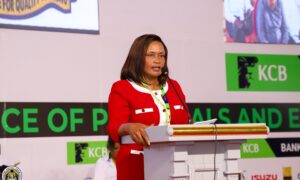
The fate of current students pursuing P1 teaching certificates in colleges was addressed by TSC CEO Nancy Macharia, who assured that consultations with the Ministry of Education are underway to determine the way forward.
Macharia emphasized the commission’s belief that the quality of education is directly linked to the quality of its teachers.
She encouraged Kenyans to provide feedback on the proposed qualifications outlined in the TSC Amendment Act before it is presented to Parliament.
In addition to setting minimum standards for teacher registration, the commission aims to prescribe continuous professional development programs through newly inserted sections in the Act.
If passed, the amendment would grant the commission the authority to issue and cancel certificates of registration for tutors.
In summary, the proposed changes by the Teachers Service Commission signal a shift towards higher entry grades for teachers, aiming to ensure the delivery of quality education in Kenya.
The ongoing discussions and consultations reflect the importance of considering various perspectives before finalizing these amendments.