A widely circulated recruitment notice claiming that the Teachers Service Commission (TSC) is hiring 20,000 teachers has been officially flagged as fake, raising serious concerns over a growing wave of employment scams targeting job seekers across Kenya.
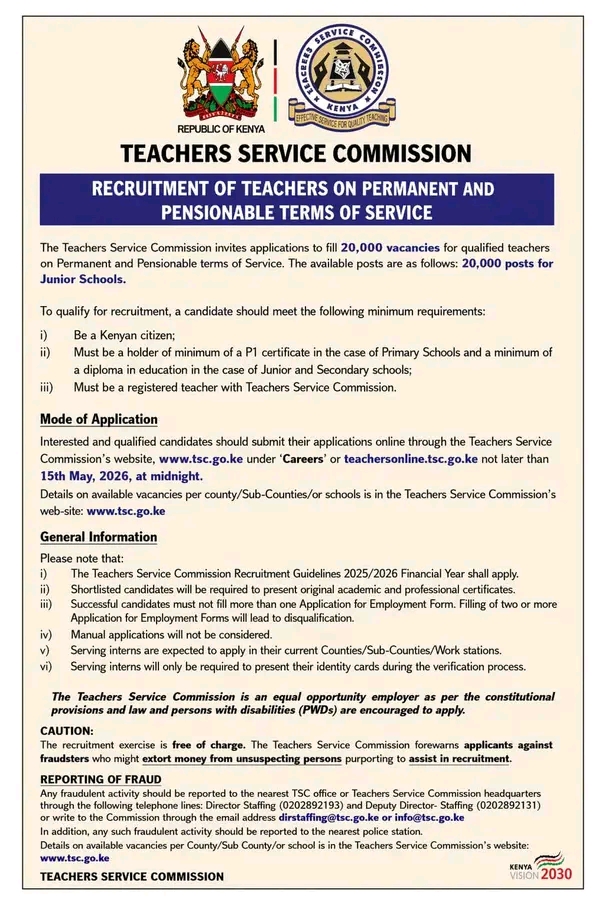
The fraudulent advertisement, which has been spreading rapidly on social media platforms and messaging apps, purports to announce mass recruitment for teachers on “permanent and pensionable terms of service.” It includes detailed requirements, application procedures, and even a specific deadline—features that make it appear legitimate at first glance. However, the TSC has issued a firm warning that the document is not authentic and should be ignored.
Fake Recruitment Notice Raises Alarm
According to the fake notice, 20,000 teaching vacancies are available, particularly for junior schools. It outlines qualifications such as Kenyan citizenship, possession of teaching credentials, and registration with the commission. It also directs applicants to apply through what appear to be official links and sets a deadline of May 15, 2026.
Despite its polished appearance, the TSC has clarified that this advert is misleading and unauthorized. The commission noted that scammers are increasingly producing convincing fake job announcements designed to exploit the high demand for employment, especially within the education sector.
TSC Clarifies Official Communication Channels
In response, the Teachers Service Commission has emphasized that all legitimate job vacancies, recruitment guidelines, and official updates are only published عبر verified channels. These include:
- The official website: tsc.go.ke
- The verified Facebook page: TSC KENYA
- The official X (formerly Twitter) account: @TSC_KE
- Recognized national media outlets
The commission warned job seekers against trusting information from unofficial sources, pointing out that scammers often replicate official logos, layouts, and language to create a false sense of authenticity.
Rising Trend of Job Scams in Kenya
This incident highlights a broader and increasingly troubling trend in Kenya—the rise of online job scams. Fraudsters are targeting unemployed graduates and professionals by advertising fake opportunities, often with the intention of collecting money or personal data.
Although the fake TSC advert claims that the recruitment process is “free of charge,” experts caution that such statements are commonly used to gain trust before victims are later asked to pay facilitation fees or provide sensitive personal information.
Cybersecurity specialists note that these scams are becoming more sophisticated, sometimes involving cloned websites, impersonation of officials, and well-designed documents that closely resemble genuine government communications.
How to Spot a Fake Job Advert
To protect themselves, job seekers are encouraged to follow these guidelines:
1. Verify Through Official Sources
Always confirm job opportunities through the organization’s official website or verified social media accounts.
2. Watch for Errors and Inconsistencies
Fake adverts may contain small mistakes in grammar, formatting, or contact details.
3. Be Cautious with Links
Avoid clicking on suspicious links, especially those that mimic official domains but contain slight differences.
4. Never Pay for Applications
Legitimate government recruitment processes do not require any payment.
5. Cross-Check Contact Details
Ensure that phone numbers and email addresses match those listed on official platforms.
TSC Issues Strong Warning
The Teachers Service Commission has reiterated that it does not charge any fees for recruitment and has urged the public to remain vigilant. The commission also warned that individuals responsible for creating or sharing fake recruitment notices could face legal consequences.
Members of the public are encouraged to report any suspicious adverts to the relevant authorities or through official TSC communication channels.
Impact on Job Seekers
For many aspiring teachers, the promise of 20,000 vacancies created excitement and hope in an already competitive job market. The revelation that the advert is fake has led to frustration and disappointment, particularly among recent graduates eager to secure employment.
Education stakeholders have also raised concerns, calling for increased public awareness and stricter measures to combat online fraud. Some have suggested that government institutions should respond more quickly to misinformation to prevent it from spreading widely.
Government and Public Response
Authorities continue to intensify efforts to combat cybercrime in Kenya, but the rapid spread of false information online remains a major challenge. Citizens are being urged to exercise caution and rely only on verified sources when searching for job opportunities.
At the same time, the TSC has reaffirmed its commitment to transparency, assuring the public that any future recruitment exercises will be clearly communicated through official channels.
Final Advice to Applicants
Job seekers are advised to:
- Regularly check the official TSC website for updates
- Follow verified TSC social media pages
- Avoid sharing personal information with unknown individuals or platforms
- Report suspicious job adverts immediately
The circulation of this fake recruitment notice serves as a clear reminder of the importance of staying alert in the digital age. As scammers continue to evolve their tactics, verifying information before taking action is more important than ever.
Conclusion
The fake TSC recruitment advert promising 20,000 teaching jobs has been officially debunked, highlighting the urgent need for greater awareness about employment scams. The Teachers Service Commission continues to urge the public to rely only on its official platforms for accurate and up-to-date information.
In a challenging job market, staying informed and cautious remains the best defense against falling victim to fraudulent schemes.