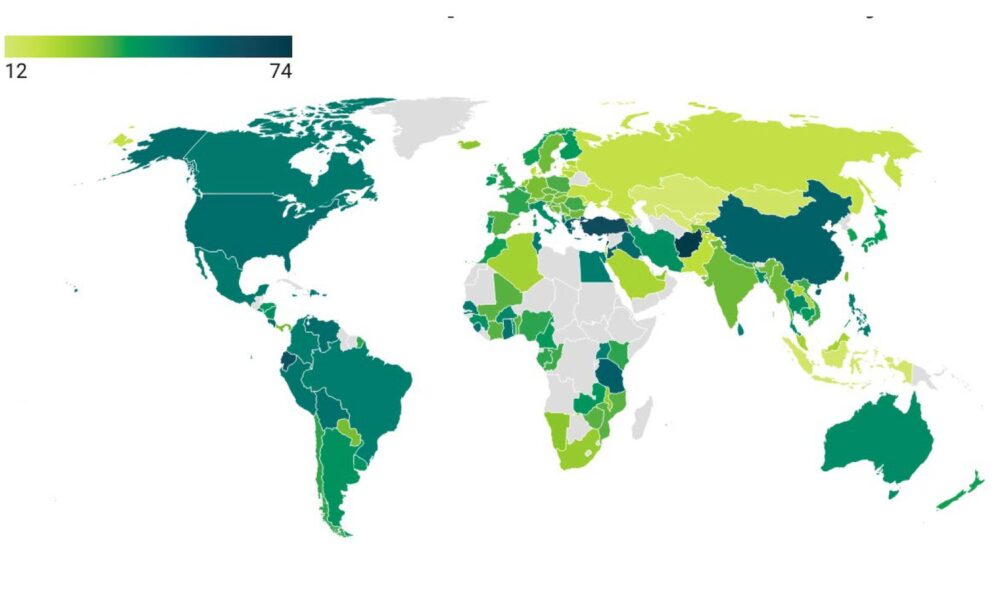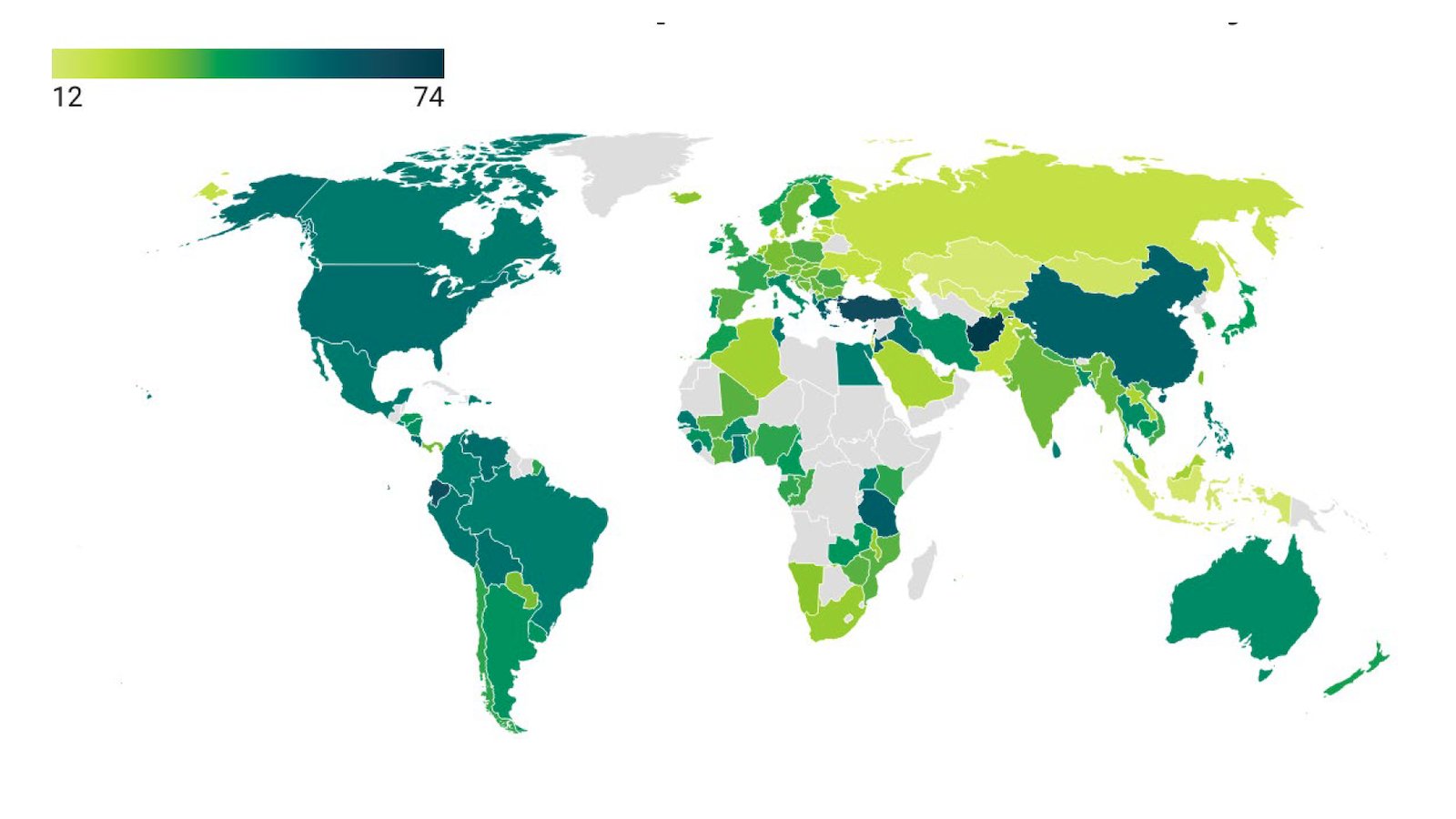
Rising daily stress is sweeping the Middle East and North Africa (MENA). New global survey data shows Lebanon and Turkey at the top — read the full breakdown, what’s driving the surge, who’s most affected, and what governments, employers and communities can do next.
People across the Middle East and North Africa are reporting alarmingly high levels of stress — not just occasional worry, but stress “a lot of the previous day.” Recent surveys on global emotions reveal some striking national contrasts:
- Lebanon: 68%
- Turkey: 68%
- Tunisia: 53%
- Jordan: 51%
- Iraq: 51%
- Egypt: 50%
- Iran: 47%
- Libya: 45%
- Morocco: 45%
- Israel: 39%
- UAE: 33%
- Algeria: 32%
- Kuwait: 32%
- Saudi Arabia: 28%
These figures, consistent with Gallup’s Global Emotions reporting, show some countries facing extreme emotional strain while others remain comparatively lower.
Why these numbers matter
When more than half — or in some places nearly three-quarters — of a country’s adults report feeling stressed “a lot” the previous day, that’s a public-health red flag. Daily, intense stress is linked with worse physical health, including heart disease and high blood pressure, as well as impaired immune function, depression and anxiety. It also reduces productivity and strains social relationships. These surveys are useful because they capture experiential daily emotion (what people actually felt yesterday), providing a real-time snapshot of wellbeing.
What’s driving high stress in MENA?
Economic hardship and inflation. Many MENA countries have faced sharp currency devaluations, inflation spikes and falling real incomes. Lebanon’s ongoing financial and banking crisis has driven dramatic declines in living standards and is a core driver of daily negative emotions.
Political instability and conflict. Iraq, Libya and parts of the Levant continue to feel the effects of conflict, insecurity and displacement. Even countries not in active war zones can be affected indirectly by regional geopolitics and refugee flows — all of which increase daily uncertainty and stress.
Unemployment and job insecurity. Younger populations, especially in Tunisia, Jordan and Morocco, face weak job markets. Financial insecurity is one of the strongest predictors of daily stress responses in global surveys.
Displacement and environmental shocks. Floods, droughts and forced relocations — plus the mental toll of climate-related uncertainty — are associated with elevated stress in affected communities.
Who in society is most affected?
Stress is not evenly distributed:
- Low-income households: Stress, worry and sadness concentrate among the poorest groups — Lebanon’s data is a particularly stark example.
- Young adults: Younger cohorts report more negative emotions and loneliness in many countries, including those in the MENA region.
- Displaced people and recent migrants: Those who have relocated temporarily report much higher rates of stress and loneliness than those who did not.
Country spotlights — short reads on the top 5
Lebanon — crisis fatigue and economics
Lebanon’s economic collapse since 2019, the 2020 Beirut blast, frequent power shortages and political paralysis created a potent mix that shows up in emotional measures. The poorest households continue to report the highest stress, worry and sadness. Stabilizing the economy, restoring public services and expanding mental-health support are crucial steps forward.
Turkey — economic uncertainty and social strain
Turkey’s high stress rate reflects economic volatility, workplace pressures and political polarization. Surveys of workplace conditions also find Turkish workers reporting elevated stress and low engagement, compounding the national emotions picture.
Tunisia & Jordan — unemployment and generational strain
Both Tunisia and Jordan face youth unemployment and political uncertainty that translate into daily stress for many. For young adults navigating precarious job markets, stress becomes an everyday reality rather than an episodic event.
Iraq — conflict, recovery and daily risk
Iraq’s elevated stress scores align with long-term instability, reconstruction challenges and local security concerns that continue to affect daily life and emotional well-being.
Regional comparison: why some countries are lower
Countries such as Saudi Arabia (28%), Kuwait (32%) and the UAE (33%) report lower daily stress than Lebanon or Turkey. Several factors help explain this: stronger social safety nets, higher per-capita incomes in some Gulf states, and — in some cases — different social-reporting tendencies. That said, “lower” is relative: one-third of adults feeling stressed a lot of the previous day is still substantial and worth policy attention.
What governments and employers can do (evidence-based steps)
- Scale mental-health services: Expand community mental-health clinics, telehealth options and subsidized counseling for low-income households.
- Target economic relief: Cash transfers or targeted subsidies for the poorest households can quickly reduce acute economic stress.
- Workplace reforms: Encourage flexible work, enforce working-hour limits, and provide employee assistance programs — steps that reduce job-related stress and boost productivity.
- Community resilience programs: For displaced people and disaster-affected communities, provide temporary housing, legal aid and psychosocial support.
- Public information and stigma reduction: Run campaigns to normalize seeking help for mental-health problems and to reduce stigma.
What individuals can do (practical, low-cost)
- Prioritize sleep and daily routines, since sleep loss is strongly linked to elevated stress.
- Engage in small, regular physical activity and social connection — even brief calls reduce daily negative affect.
- Use employer-provided support where available: hotlines, counseling, or even one-off mental-health days.
- Seek community supports: NGOs and community centers often provide free counseling or group programs.
Limitations and notes on the data
- Measurement: The survey asks respondents whether they experienced a negative emotion “a lot of the previous day.” It’s a short, experiential measure — excellent for cross-country comparison of daily feelings but not a clinical diagnosis.
- Timing & sampling: Country-level percentages fluctuate year-to-year because of economic shocks, conflict, or policy changes. Always interpret a single-year snapshot alongside trends and local context.
Final takeaways — why readers should care
Daily stress at the levels reported for several MENA countries is not just a personal issue — it erodes economies, strains healthcare systems and undermines social cohesion. When tens of percent of adults report feeling stressed most of the previous day, policymakers, employers and civil society need to act — quickly and comprehensively. The data provides a clear early-warning signal: where stress is high, targeted social, economic and mental-health interventions can make measurable differences in people’s daily lives.