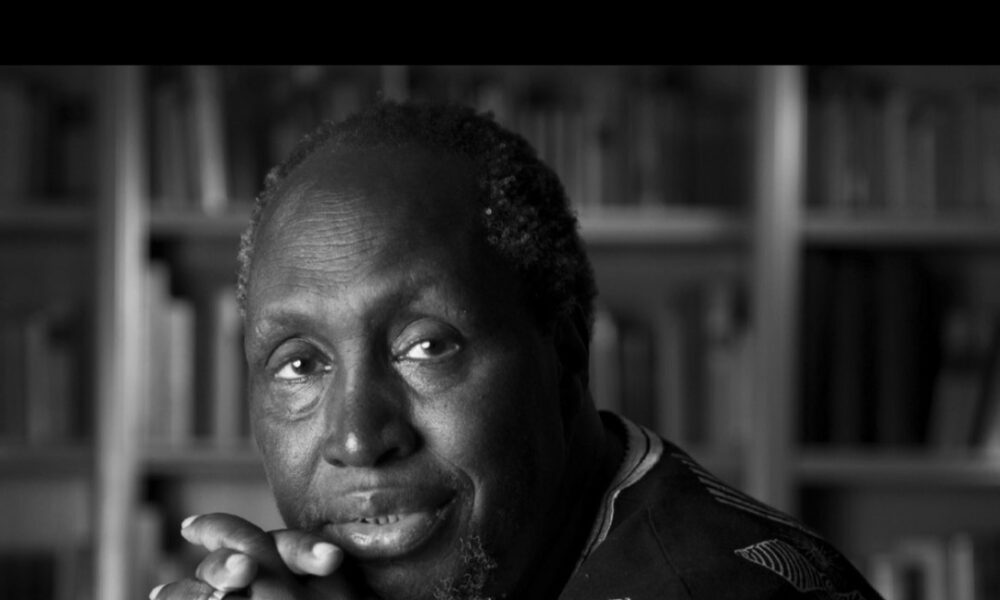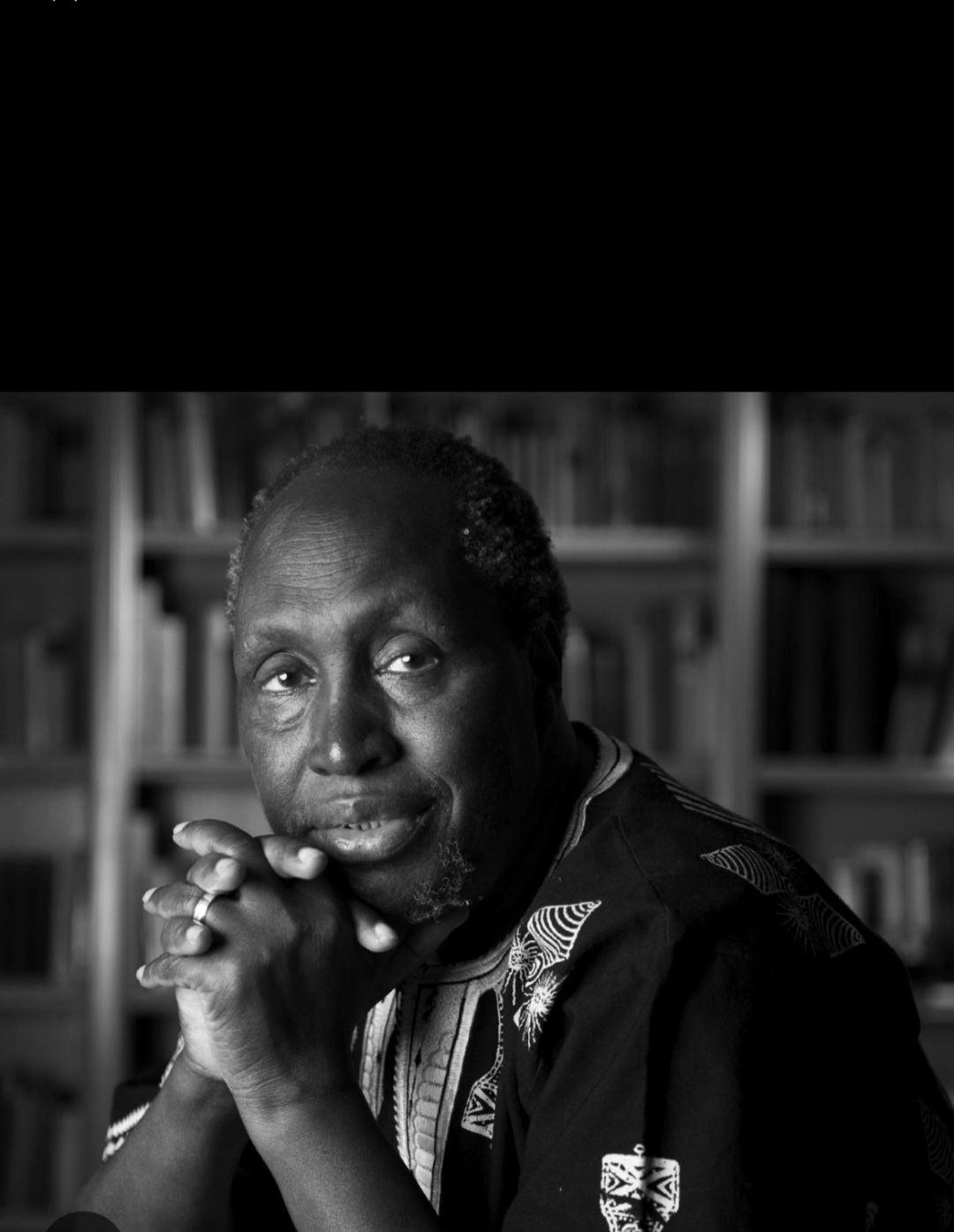
Ngũgĩ wa Thiong’o, the celebrated Kenyan novelist, playwright, and academic, has died at the age of 87. His daughter, Wanjikũ wa Ngũgĩ, confirmed his passing on May 28, 2025, in the United States.
Ngũgĩ was renowned not only for his pioneering literary contributions but also for his unwavering advocacy for the use of African languages in literature and education. A prominent figure in African letters, Ngũgĩ leaves behind a formidable legacy that reshaped the continent’s cultural and intellectual landscape.
From Kamiriithu to Global Acclaim
Born James Ngugi on January 5, 1938, in Kamiriithu village, Kiambu County, central Kenya, Ngũgĩ’s early life was marked by colonial hardship and political unrest. He experienced the Mau Mau uprising and the broader context of Kenya’s struggle for independence—formative influences that would later shape his writing.
He studied at Makerere University in Uganda and the University of Leeds in the UK, where his literary voice matured. His first novel, Weep Not, Child (1964), was the first English-language novel to be published by an East African writer. It was followed by The River Between (1965), A Grain of Wheat (1967), and Petals of Blood (1977)—works that critically examined the post-independence disillusionment in Kenya.
Language as Liberation
Ngũgĩ’s career took a transformative turn in the late 1970s when he began writing in his native Gikuyu language, asserting that language was not neutral but a carrier of culture, identity, and resistance. This marked a radical break from many of his contemporaries who continued to write in English, the language of the former colonial power.
In 1986, he published Decolonising the Mind: The Politics of Language in African Literature, a powerful collection of essays that challenged African writers and intellectuals to reclaim indigenous languages as a form of cultural decolonization. This text became one of the most influential post-colonial works of the 20th century and has been taught widely in universities around the world.
Imprisonment and Exile
In 1977, Ngũgĩ co-wrote Ngaahika Ndeenda (I Will Marry When I Want) with fellow playwright Ngũgĩ wa Mĩriĩ. The play, performed in Gikuyu at the Kamiriithu Community Cultural Centre, critiqued inequality, corruption, and neocolonial politics. Its popularity and political messaging led to a government crackdown. The Kenyan authorities arrested Ngũgĩ and detained him without trial for over a year in Nairobi’s Kamiti Maximum Security Prison.
While imprisoned, he began writing his novel Devil on the Cross—on prison-issued toilet paper. The book, originally written in Gikuyu, highlighted the exploitation of ordinary Kenyans by the ruling elite and multinational corporations.
After his release in 1978, the political climate in Kenya remained hostile to his work and activism. Facing continued harassment and surveillance, he went into self-imposed exile in 1982. He lived in the United Kingdom and the United States, where he held several academic positions.
Global Recognition
Ngũgĩ held professorial roles at prestigious institutions such as Yale University, New York University, and the University of California, Irvine, where he served as Distinguished Professor of English and Comparative Literature.
His later works include Matigari (1987), Wizard of the Crow (2006)—a sweeping satire of African dictatorship—and The Perfect Nine (2018), an epic retelling of a Gikuyu origin story that was longlisted for the International Booker Prize in 2021. Notably, The Perfect Nine made Ngũgĩ the first author to be longlisted for both writing and translating a work in an indigenous African language.
Awards and Accolades
Over the decades, Ngũgĩ received numerous accolades for his literary and academic contributions. These include the Nonino International Prize for Literature, the Erich Maria Remarque Peace Prize, and the Park Kyong-ni Prize. He also received honorary doctorates from universities across the world.
He was frequently mentioned as a potential Nobel Prize laureate, and though he never received the honor, his body of work and influence arguably place him among the giants of world literature.
A Literary Family
Ngũgĩ’s literary influence extended to his family. His son, Mũkoma wa Ngũgĩ, is a noted poet, novelist, and academic, while his daughter Wanjikũ wa Ngũgĩ is also an accomplished author. Together, they reflect a legacy of storytelling deeply rooted in identity, resistance, and cultural pride.
Legacy
Ngũgĩ wa Thiong’o’s passing marks the end of an era. His life was one of fierce intellectual independence, political courage, and deep-rooted commitment to African culture. He taught that literature is not merely a tool for entertainment but a powerful weapon for liberation.
Through his bold rejection of colonial languages, his insistence on the dignity of African traditions, and his storytelling that echoed across continents, Ngũgĩ transformed African literature.
He once wrote, “The choice of language and the use of language is central to a people’s definition of themselves.” In both life and death, Ngũgĩ defined himself—and his people—with unyielding clarity.
He is survived by his children and grandchildren, his readers across the world, and the enduring power of his words.