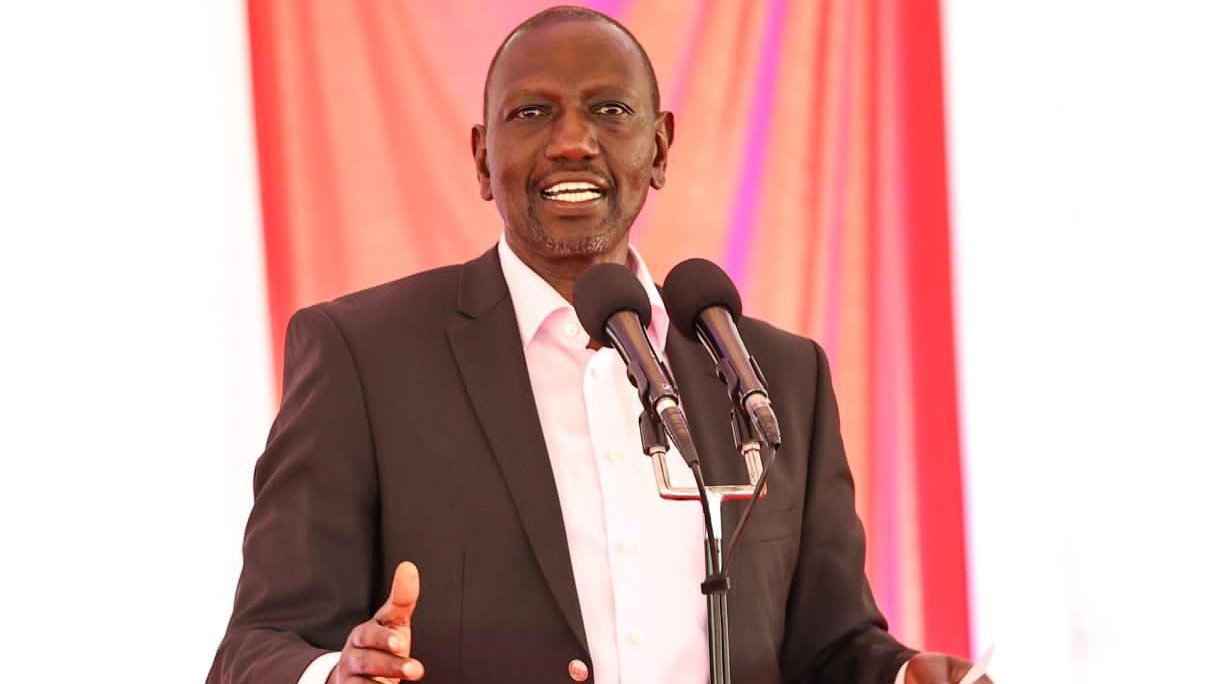
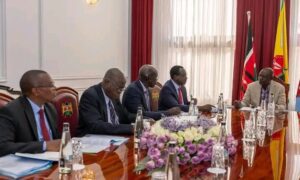
His Excellency the President has today morning 27th April 2024 chaired a Special Cabinet Meeting at State House, Nairobi.
The sitting was convened to consider the Administration’s inaugural budget – 2023/2024 financial year-in compliance with the Constitutional and statutory timelines as set out in the law.
The apex body considered and approved the annual budget for transmittal to Parliament. The synopsis of the Administration’s financial document is as follows:
ECONOMIC OUTLOOK.
Kenya’s economy is expected to grow by 6.1 percent in 2023 and maintain that momentum over the medium term. Leading indicators show a strong performance of the Kenyan economy in the first quarter of 2023, reflecting robust activity in the service sector and also in the wholesale and retail trade, accommodation and food services, education and information and communication.
The growth outlook will be supported by a broad-based sector growth, including continued strong performance of the service sector and recoveries in agriculture, while the public sector consolidates.
From the expenditure perspectives, private consumption is expected to support aggregate demand, supported by the ongoing labor market recovery, improved consumer confidence and resilient remittances.
REVENUE PROJECTIONS.
Revenue Collection is projected at Ksh. 2893.6 billion (17.8 per cent of GDP) in the FY 2023/24, an increase from FY2022/23 which stands at Ksh.2528 billion and is expected to grow further to Ksh.4,195.2 billion (18.3 per cent of GDP) by the FY 2026/27, an indication that the fiscal outturn is on an upward trajectory.
EXPENDITURE PROJECTIONS.
Expenditure is projected at Ksh.3599.3 billion (22.1 per cent of GDP) in FY 2023/24. Recurrent expenditure will comprise Ksh.2,477.7 billion (15.2 per cent of GDP) and Development of Ksh.689.1 billion (4.2 per cent of GDP).
ALLOCATION TO COUNTY GOVERNMENTS.
Total allocation to county governments is projected at Ksh.385.4 billion (23% of total government revenue of the last audited accounts approved by the National Assembly) shareable revenue Including other conditional grants to a total of Ksh.429.7 billion (25.7 per cent) compared to the FY 2022/23 of Ksh.370 billion. These include:
- Ksh.385.4 billion from the shareable revenues Ksh.44.2 billion from Conditional Grants from the National Government of which: Ksh.33.2 billion foreign financed projects; Ksh.4.7 billion County Industrial Parks;
- Ksh.5.9 billion for Medical Equipment Services;
- Ksh.454 million for County Headquarters; and
- Ksh.l08 million from the Judiciary.
DEFICIT FINANCING.
Fiscal deficit is projected at Kshs.663.5B (4.1 per cent of GDP) in FY 2023/24, a reduction of more than Ksh.450B from FY 2022/23 which stood at Ksh.1.12 trillion (6.2 per cent of GDP). Currently, the fiscal deficit is estimated at 5.7 per cent of GDP having improved from 6.2 per cent in the previous year, owing to reduced borrowing, and expenditure reorganization.
ALLOCATION TO JUDICIARY.
In line with Kenya Kwanza’s pledge to strengthen and institutionalize Judicial Independence, the judiciary’s allocation has been increased from Ksh 18.8 billion to Ksh.22.9 billion in the next financial year. Bottom-up Economic Transformation Agenda in the budget FY 2023/24. The government has taken a value chain approach to budgeting and has committed a total of Ksh.267.7 B in nine value chains which will mainstream the Bottom-up transformation agenda.
The value chain approach allows mapping the production process throughout the value chain to the final market transaction. The resource allocation on the value chain approach to budgeting ensures efficiency by eliminating gaps and duplications. The value chains are;
EXECUTIVE OFFICE OF THE PRESIDENT.
Cotton to Textile and Apparel value chain. Edible Oil crop production value chain
- Dairy value chain Leather & Leather products value chain
- Rice production value chain Tea value chain Blue Economy & Fisheries value chain
- Minerals and Tree Planting value chain
- Construction & Building material value chain
HIGHLIGHTS OF THE FINANCE BILL 2023.
- To reduce the cost of liquefied petroleum gas (LPG) and make it affordable, reduce the use of biomass fuel and destruction of our forests, the Bill proposes to exempt LPG from VAT. It further proposes to exempt LPG from Railway Development Levy (RDL) and Import Declaration Fees (IDF).
- In order to promote local processing of tea and value addition for export, the Bill proposes to exempt from VAT, tea purchased from factories or the auction centre for the purposes of export. In addition, there is a deliberate assessment of tax incentives required for domestic capacity of packaging materials to support value-addition for the tea export Industry.
- To support the local Industries and expand tax base, the Bill seeks to introduce excise duty on imported fish and Imported furniture.
- To promote local investments in manufacturing of vaccines and bio- pharmaceuticals products for Africa and beyond, the bill provides tax incentives to companies that manufacture vaccine and bio- pharmaceutical products.
- The Bill proposes amendments to support the access to medical services by the retired members of our society. This includes tax exemptions on contributions and Investment Income to a Post-retirement Medical fund.
- To lower the Cost of construction and maintenance of telecommunication towers hernce improve penetration and support the Government’s Digital Superhighway Agenda as well as Interoperable payments platform, the bill proposes investment allowance in respect of telecommunication.
FURTHER TAX INCENTIVES.
- In regard to processing of VAT refunds, the Bill seeks to provide that approved tax refunds be paid or automatically be offset against tax liability within a period of six months.
- Tax debt portfolio currently stands at Kshs.1.5 trillion including penalties and interests. In order to reduce the growing tax debt portfolio, the Bill proposes introduction of a 1-year amnesty on penalties and interest for the accrued tax debts to encourage tax debtors to come forward and make payments.
To improve predictability of excise duty rate, the Bill proposes to remove the provision that allows the Commissioner General to adjust specific excise duty annually on account of inflation. With the approval of this Bill, it lays the building blocks necessary for the full implementation of the Administration’s transformative plan for our Nation as aptly espoused in the Bottom-Up Economic Transformation Agenda (BETA).