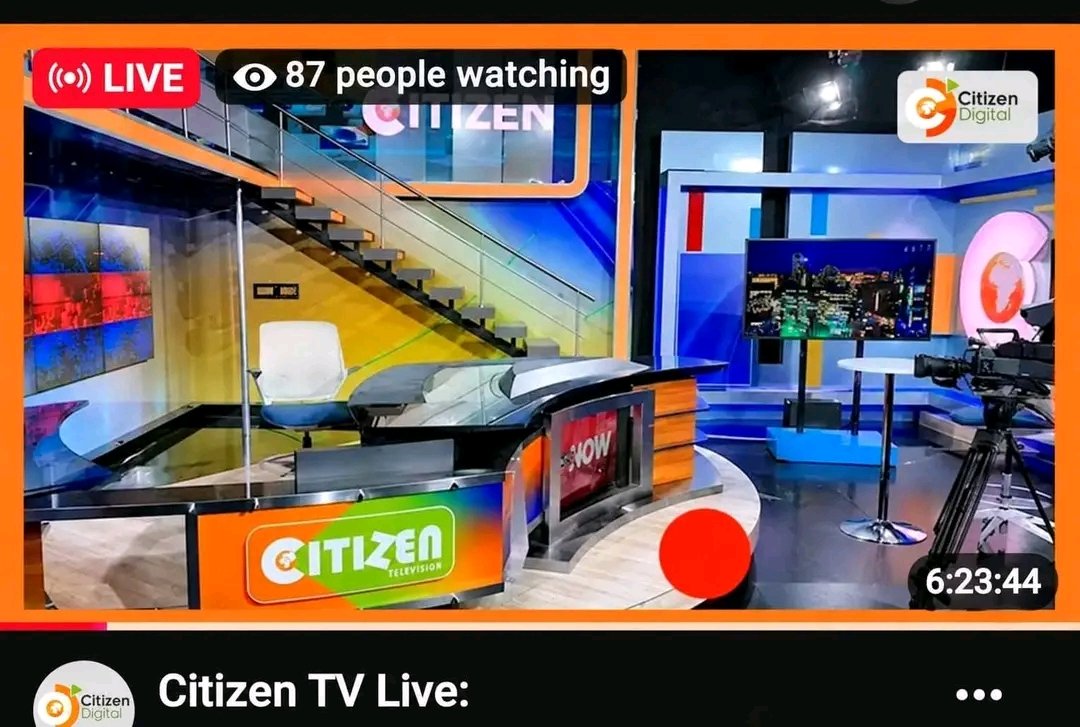
Royal Media Services (RMS) could be making a costly strategic mistake by introducing a KSh350 monthly subscription for Kenyans who want to watch Citizen TV, Inooro TV and Ramogi TV live on YouTube.
The decision, which took effect on Saturday, November 21, 2026, has sparked debate among viewers, with many questioning why they should pay an additional monthly fee to watch television programmes that have been available free of charge for years.
While Royal Media Services has every right to explore new ways of generating revenue from its digital platforms, the decision raises serious questions about its understanding of the changing media landscape, consumer behaviour and the commercial value of digital audiences.
The problem is not necessarily the KSh350 subscription fee. It is the assumption that a large audience automatically translates into a paying audience.
For years, Citizen TV has built a substantial digital following by making its news bulletins, political interviews, current affairs programmes and other broadcasts accessible to Kenyans on YouTube.
That accessibility has helped the broadcaster maintain visibility among audiences who increasingly consume news through smartphones rather than traditional television sets.
However, introducing a paywall for ordinary live broadcasts could undermine some of the advantages that made its digital presence attractive in the first place.
1. Royal Media Could Be Misreading Its Digital Audience
One of the biggest mistakes media companies make when monetising digital platforms is assuming that people who watch their content regularly are necessarily willing to pay for it.
There is a significant difference between having millions of people interested in your content and having millions of people willing to purchase access to it.
A Kenyan who watches Citizen TV’s evening news on YouTube may be a loyal viewer, but that does not automatically mean they consider the broadcast valuable enough to justify another monthly expense.
Most people follow television stations because they want information, entertainment and updates about what is happening in the country.
They are not necessarily attached to a particular distribution platform.
If Citizen TV becomes inaccessible without payment, a viewer interested in political discussions can easily switch to NTV, KTN or another broadcaster offering free livestreams.
Others can follow news updates through Facebook, TikTok, X and online news websites.
The audience has alternatives, and that is precisely what makes the subscription strategy risky.
2. Kenyans Already Have Too Many Monthly Expenses
The KSh350 monthly fee might appear affordable to some households, but affordability must be considered within the broader economic realities facing ordinary Kenyans.
Consumers already spend money on internet bundles, electricity, transport, food, education and other essential expenses.
Some also pay for Netflix, Showmax, YouTube Premium and other entertainment services.
Introducing another recurring payment means Royal Media must convince viewers that its livestreams offer sufficient additional value to justify the expense.
That could be difficult when the product being sold is essentially the same television broadcast viewers have watched for free for years.
A viewer who has already purchased internet bundles to access YouTube might reasonably question why they should pay an additional KSh350 to watch a news bulletin.
The issue is therefore not simply whether KSh350 is expensive.
It is whether the subscription offers something sufficiently different to justify paying for it.
3. Citizen TV Risks Losing Its Advertising Advantage
Perhaps the biggest concern is the possibility that Royal Media Services could sacrifice audience reach while pursuing subscription revenue.
Digital audiences are commercially valuable because they offer media organisations an opportunity to reach large numbers of people through advertising.
Citizen TV’s popularity on YouTube has helped extend its influence beyond conventional television broadcasting.
However, if a significant proportion of viewers abandon its livestreams because of the subscription requirement, the broadcaster could lose some of that digital reach.
This presents a difficult commercial question.
Would Royal Media make more money from a smaller group of paying subscribers or from a much larger audience that attracts advertisers?
The answer depends on subscription conversion rates, advertising revenue, platform costs and audience behaviour.
A successful subscription strategy should generate enough recurring income to compensate for any advertising revenue lost through declining viewership.
If the number of paying subscribers remains relatively small, the company could find itself collecting subscription fees while losing valuable audience numbers.
That would be a poor commercial trade-off.
4. NTV and KTN Could Benefit From Citizen TV’s Decision
One of the most immediate consequences of the move is the opportunity it creates for competing broadcasters.
For years, Kenyan television stations have competed for audiences through news coverage, political interviews, current affairs and entertainment programming.
However, digital platforms have changed the competitive environment.
A viewer no longer needs to remain loyal to one television station simply because it is the station they have always watched.
If Citizen TV introduces a payment requirement, competitors offering free livestreams could attract some of its displaced viewers.
Reports following the introduction of the subscription have highlighted increased interest in NTV and KTN livestreams.
Although such early audience observations should not be mistaken for independently verified long-term ratings, they demonstrate the competitive opportunity created by the decision.
NTV and KTN do not necessarily need to spend millions convincing Kenyans to abandon Citizen TV.
They only need to make their content easily accessible while viewers reconsider whether they should pay for the alternative.
This is where Royal Media could unintentionally strengthen its competitors.
5. The Problem Is That Viewers Are Not Getting Enough New Value
There is nothing fundamentally wrong with charging audiences for premium journalism.
International media organisations have successfully developed subscription businesses by offering exclusive investigations, specialist reporting, documentaries, analysis and other content that audiences cannot easily obtain elsewhere.
The difference is that successful paywalls generally give consumers a compelling reason to subscribe.
Royal Media needs to ask itself what additional value viewers are receiving for their KSh350.
Are subscribers getting exclusive interviews, special investigative programmes, additional news bulletins, uninterrupted broadcasts or premium documentaries?
Or are they simply paying to access the same live television programmes previously available for free?
If the main attraction is ordinary television broadcasting, convincing viewers to pay could prove difficult.
A subscription product must offer more than restricted access to something that was previously free.
6. The Diaspora Market Could Be More Attractive
There is, however, a market that Royal Media Services could potentially target more aggressively: Kenyans living abroad.
For Kenyans in the United States, United Kingdom, Canada, Australia and other countries, Citizen TV, Inooro TV and Ramogi TV provide a connection to home.
Live political discussions, local news, entertainment and vernacular programming can be particularly attractive to people who want to remain connected to developments in Kenya.
For such audiences, KSh350 may represent a relatively small expense compared with the convenience of accessing familiar Kenyan television stations.
The diaspora market could therefore offer Royal Media a more promising subscription opportunity than relying entirely on ordinary Kenyan households.
However, this would require a properly developed product with reliable streaming, exclusive content and convenient international payment options.
7. Royal Media Should Have Considered a Freemium Model
Instead of immediately placing ordinary livestreams behind a subscription requirement, Royal Media could have considered a freemium approach.
Under this model, the broadcaster would continue offering selected live broadcasts for free while charging for premium digital content.
For instance, Citizen TV could retain free access to major news bulletins while offering paying subscribers exclusive political interviews, extended discussions, investigative documentaries and special programmes.
The company could also introduce affordable packages for diaspora audiences and viewers interested in particular stations.
This approach would allow Royal Media to generate additional revenue without unnecessarily alienating the audience that helped build its digital presence.
It would also provide an opportunity to test the market before committing to a broader paywall strategy.
8. What the Media Council’s Digital Research Suggests
The changing habits of Kenyan audiences make this decision particularly important.
A Media Council of Kenya report titled Navigating the Digital Reality 6, based on research conducted in November 2025, offers useful insights into how Kenyans consume information and entertainment.
The report found that 51.3% of respondents used social media platforms to access digital news and entertainment, while 23.8% used streaming platforms.
Smartphones were the dominant devices, accounting for 91.1% of reported digital-platform access.
Importantly, the research also found that advertising was the most commonly encountered digital monetisation format, at 50%, while subscriptions and paywalls accounted for 15.8%.
These findings do not prove that Kenyans will reject Royal Media’s subscription, but they demonstrate the importance of accessibility, mobile consumption and established advertising models in the country’s digital environment.
Royal Media should therefore be careful not to confuse the popularity of its television brands with guaranteed demand for paid livestream access.
9. Royal Media Has Every Right to Charge, But the Market Will Decide
Ultimately, Royal Media Services owns its content and has the right to determine how it distributes and monetises its broadcasts.
The company is also operating in an increasingly competitive media environment where traditional advertising models face pressure from social media platforms and digital publishers.
Seeking alternative revenue streams is therefore understandable.
However, having the right to charge does not mean consumers are obligated to pay.
Kenyans have become accustomed to choosing between television stations, online news websites, social media platforms and independent content creators.
Their loyalty is increasingly influenced by convenience, accessibility, relevance and the quality of information they receive.
If Citizen TV’s YouTube livestreams become less accessible, some viewers will simply find alternatives.
That does not mean the subscription is guaranteed to fail. Royal Media could attract a loyal group of paying members, particularly among audiences who strongly prefer its programmes.
But the company must demonstrate that subscription revenue can compensate for any loss of audience reach and advertising opportunities.
Conclusion: Royal Media Must Rethink Its Digital Strategy
The introduction of the KSh350 monthly subscription could become an important experiment in Kenya’s evolving media industry.
However, Royal Media Services should not underestimate the power of consumer choice.
Citizen TV’s success has partly been built on its ability to reach large audiences across different platforms.
Turning ordinary livestream access into a paid service risks weakening that advantage if viewers decide that the content is not sufficiently exclusive to justify another monthly expense.
The smartest strategy would be to preserve accessibility while developing premium products that give loyal audiences a genuine reason to subscribe.
After all, attracting an audience is difficult, but keeping one becomes even harder when competitors are only a click away.
Royal Media has every right to charge for its content. Kenyans, equally, have every right to watch somewhere else.