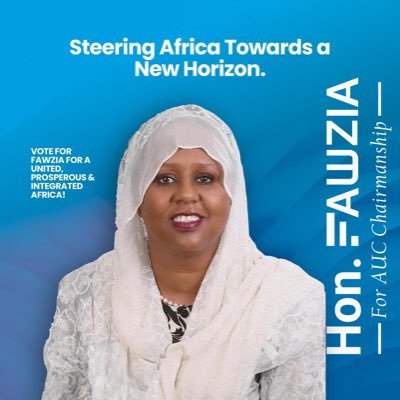
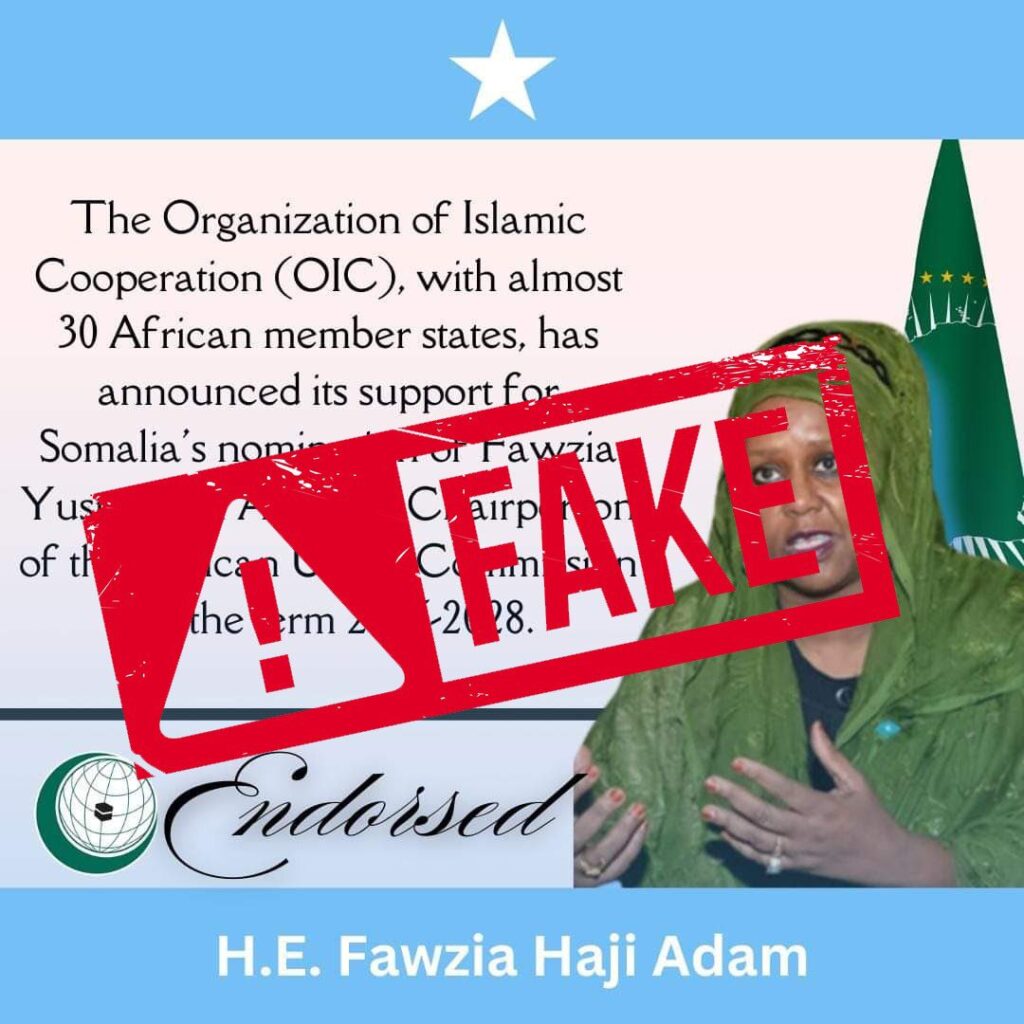
In a recent clarification, the Organization of Islamic Cooperation (OIC), comprising over 30 member states, has dismissed viral reports suggesting an endorsement of Fawzia Haji Adam. These erroneous claims were circulating widely on social media platforms, prompting the OIC to issue a statement urging the public to disregard such misinformation.
The OIC’s statement, obtained by K47 Digital News, refutes any association with an endorsement of Fawzia Haji Adam, emphasizing that the reports are baseless and misleading. The organization underscored the importance of verifying information from credible sources to avoid the spread of false narratives.
Meanwhile, within the context of African Union Commission (AUC) chairmanship dynamics, Somalia—alongside other member states—has thrown its support behind Raila Odinga’s candidacy. This development highlights Somalia’s stance within the broader geopolitical landscape, particularly concerning African Union affairs.
Raila Odinga, a prominent Kenyan political figure, has garnered significant backing for his bid to chair the African Union Commission. His candidacy has received endorsements from various African nations, reflecting a growing consensus among regional stakeholders.
The convergence of these events underscores the complexity and interconnectivity of regional politics, where diplomatic endorsements and denials can have far-reaching implications. The OIC’s swift response to debunk false claims underscores its commitment to accuracy and transparency in the dissemination of information.
As geopolitical dynamics continue to evolve, especially in the African and Islamic contexts, developments such as these provide critical insights into the shifting alliances and strategic alignments shaping international relations. The importance of reliable reporting and fact-checking cannot be overstated in an era dominated by the rapid dissemination of information across digital platforms.