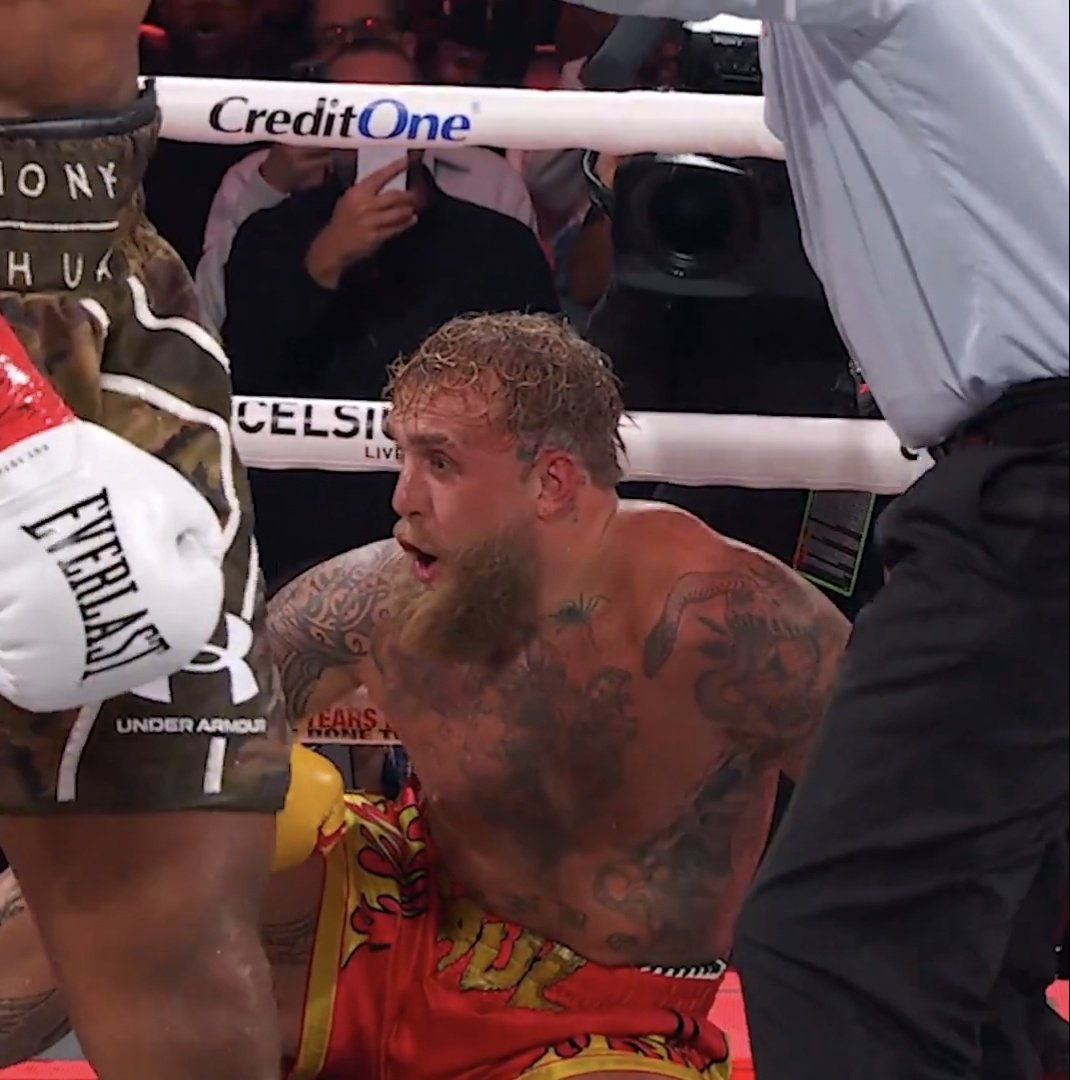
Popular UFC commentator and podcast host Joe Rogan has sparked fresh debate in the combat sports world after issuing a blunt warning to YouTube star-turned-boxer Jake Paul, urging him to seriously reconsider continuing his professional boxing career. Rogan’s remarks came in the wake of Paul’s brutal defeat to former heavyweight champion Anthony Joshua, a fight that left Paul with severe injuries and raised major concerns about his long-term health.
Speaking candidly on The Joe Rogan Experience and shared by “Home Of Fight” on x, Rogan argued that boxing, especially at elite levels, comes with hidden costs that often surface years after a fighter leaves the ring. According to Rogan, the physical punishment fighters endure can result in irreversible brain damage, mental health struggles, and destructive addictions.
“There Is a Price to Pay That Is Not Worth It”
Rogan did not mince his words as he addressed Jake Paul’s future in boxing. He warned that repeated blows to the head often lead to deep depression, severe neurological damage, and a cycle of addiction that many fighters fail to escape after retirement.
“There is a price to pay that is not worth it,” Rogan said. “The price is deep depression, severe brain damage that’s going to lead you to addiction. So many people become gambling addicts, drug addicts, alcoholics after their fighting career.”
Rogan explained that the human brain can only absorb a limited amount of trauma. Once that threshold is crossed, the damage becomes cumulative and permanent. He compared a fighter’s career to a punch card, where each heavy blow brings them closer to long-term consequences.
The Joshua Fight That Changed the Conversation
The warning comes after Jake Paul suffered one of the most punishing defeats of his career against Anthony Joshua in December 2025. Paul was knocked out in the sixth round and later revealed he had sustained a broken jaw in two places, an injury that required surgery and weeks of recovery.
Rogan emphasized that a single punch from a heavyweight like Joshua carries devastating force. “The one he got from Joshua — that was like ten punches,” Rogan said, highlighting how elite fighters can compress years of damage into one fight.
The bout marked a turning point in public perception of Paul’s boxing journey. While Paul had previously faced fellow influencers and aging MMA fighters, Joshua represented a massive leap in competition — and the results were sobering.
Mental Health After Fighting: Rogan’s Core Concern
Beyond physical injuries, Rogan focused heavily on the mental toll of prolonged fighting careers. He noted that many retired fighters struggle to adjust to life after competition, battling depression, identity loss, and substance abuse.
According to Rogan, the transition out of combat sports is particularly dangerous for fighters who rely on adrenaline, fame, and routine violence as part of their daily lives. When the fights stop, many turn to gambling, alcohol, or drugs to fill the void.
Rogan stressed that Jake Paul, unlike most fighters, is already financially secure and famous, making the risks even harder to justify.
“He doesn’t need to do this,” Rogan implied, suggesting Paul has little to gain and everything to lose by continuing to fight elite boxers.
Jake Paul’s Defiant Stance
Despite Rogan’s warning and widespread concern from fans and analysts, Jake Paul has shown no signs of stepping away from boxing. In post-fight statements, Paul expressed pride in sharing the ring with a former heavyweight champion and insisted that his journey in boxing is far from over.
Paul has repeatedly stated that he wants to continue testing himself against top competition and believes the loss to Joshua was a learning experience rather than a career-ending moment. His team has indicated that once he fully recovers from his injuries, he plans to resume training and return to the ring in 2026.
This determination has divided opinion within the boxing and MMA communities, with some praising Paul’s courage while others echo Rogan’s concerns.
A Career Built on Risk and Reward
Jake Paul’s boxing career has been incredibly lucrative, generating massive pay-per-view numbers and global attention. His crossover appeal has allowed him to make more money than many traditional boxers ever will, despite having far fewer fights.
However, Rogan argues that financial success does not erase the long-term cost of repeated head trauma. He pointed out that many fighters who once earned millions now struggle with memory loss, emotional instability, and addiction.
In Rogan’s view, walking away early is not weakness — it is wisdom.
The Bigger Picture for Combat Sports
Rogan’s comments have reignited a broader conversation about fighter safety, brain health, and mental well-being in boxing and MMA. As combat sports continue to grow in popularity, concerns about chronic traumatic encephalopathy (CTE), depression, and post-career decline remain unresolved.
Jake Paul’s situation is unique, but Rogan believes it highlights a universal truth: no amount of fame or money can undo permanent brain damage.
What Comes Next?
As Jake Paul recovers from his injuries, all eyes are on his next move. Will he listen to Joe Rogan’s warning and step away while he’s still young and healthy? Or will he push forward, chasing glory at the risk of long-term consequences?
For now, the debate continues — but Rogan’s message is clear and chilling: boxing always collects its debt, sooner or later.