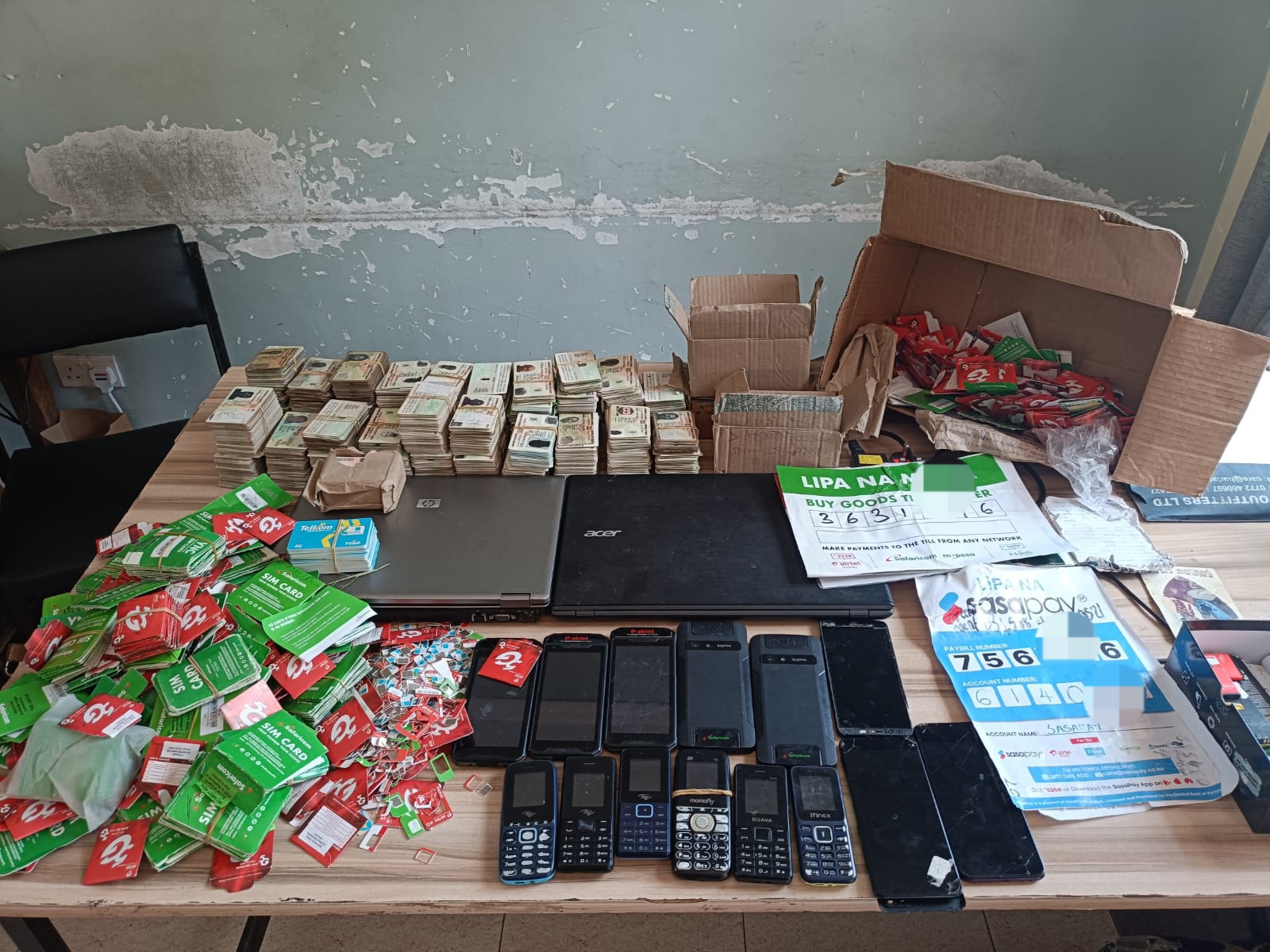
The Directorate of Criminal Investigations (DCI) has arrested a father-and-son duo accused of orchestrating a Sh236,000 M-Pesa fraud in Gikomba market, exposing a disturbing syndicate that has been draining mobile money agents in Nairobi.
According to detectives, the suspects — 49-year-old Peter Mwendwa Musyoka and his 23-year-old son, Dennis Musyoka — were nabbed after a dramatic operation that followed weeks of digital tracking. The pair was arrested at their hideout in Komarock’s Nyama Villa estate, where police recovered a trove of evidence linked to their alleged fraudulent activities.
How the Gikomba M-Pesa fraud unfolded
The fraud, which took place on September 2, 2025, targeted an unsuspecting M-Pesa shop operator in Gikomba market, Nairobi’s busiest wholesale hub. Investigators revealed that the Musyoka duo executed a well-coordinated scam that saw them siphon a staggering Sh236,000 from the business.
Detectives from Shauri Moyo Police Station began tracking the suspects after receiving multiple complaints from mobile money dealers in the area. By following digital footprints and mobile transactions, officers were able to zero in on the suspects’ residence, where the breakthrough raid occurred.
Evidence seized at Komarock hideout
Upon storming the residence, detectives found:
- Dozens of used and unused SIM cards
- Multiple national ID cards believed to have been stolen or fraudulently acquired
- Safaricom, Airtel, and Telkom agent numbers
- Various paybill numbers linked to suspicious transactions
- Several laptops and smartphones allegedly used to execute the fraud
The discovery painted a picture of an organized mobile fraud network, with the father described as the mastermind who initiated his son into the trade.

A father grooming his son into fraud
Authorities disclosed that Peter Mwendwa, the elder suspect, was the architect of the con game. He not only perfected the fraudulent methods but also groomed his 23-year-old son into the scheme, effectively creating a family-run fraud business.
“This is a disturbing trend where young people are being lured into cybercrime by close family members,” said a senior detective familiar with the case. “Instead of guiding his son into honest work, the father chose to introduce him into a criminal syndicate.”
The arrests have since exposed a wider network of fraudsters targeting M-Pesa agents across Nairobi, with police confirming that investigations are ongoing to apprehend more suspects.
Growing threat to M-Pesa agents in Nairobi
This case highlights the rising wave of mobile money fraud targeting small businesses in Kenya. M-Pesa, which is widely used by millions of Kenyans, has increasingly become a prime target for criminal syndicates.
For many small traders, especially in high-traffic areas like Gikomba, M-Pesa services are their financial lifeline. Fraudsters exploit this reliance by using fake identities, stolen SIM cards, and sophisticated tricks to siphon money within minutes.
The Sh236,000 Gikomba fraud has sent shockwaves through the mobile money community, raising fears among operators already battling daily risks such as robberies and cyber scams.
DCI’s warning and public appeal
The DCI has urged Kenyans, particularly M-Pesa agents, to remain vigilant and adopt tighter security measures to avoid falling prey to similar scams.
“The arrest of the two suspects is just the beginning,” the agency noted in a statement. “We are tracking other members of this syndicate who have been targeting mobile money operators across Nairobi.”
The agency has also called on the public to report suspicious activities using their toll-free hotline 0800 722 203 or through WhatsApp at 0709 570 000. The DCI assured whistleblowers that all information will remain anonymous under the #FichuaKwaDCI campaign.
Why mobile money fraud is on the rise
Experts say the surge in mobile fraud cases is fueled by several factors:
- High unemployment rates, pushing young people to quick-money schemes.
- Weak KYC (Know Your Customer) loopholes exploited to register SIM cards fraudulently.
- Insider collusion, where rogue mobile agents leak customer details.
- Rapid adoption of mobile money, making it attractive for criminals to target.
Cybersecurity analysts warn that unless stronger measures are implemented, syndicates will continue targeting mobile money businesses with sophisticated scams.
What M-Pesa agents can do to stay safe
To reduce the risk of falling victim to fraud, experts recommend that mobile money agents:
- Verify customer identity before transactions.
- Avoid using public Wi-Fi when accessing sensitive accounts.
- Regularly update security PINs and keep transaction logs.
- Report lost or stolen SIM cards immediately.
- Stay informed about emerging fraud tactics.
Conclusion
The arrest of the father-and-son duo behind the Sh236,000 Gikomba M-Pesa fraud is a major win for law enforcement. However, it also shines a spotlight on the vulnerability of Kenya’s booming mobile money ecosystem.
With detectives pursuing other members of the syndicate, this case serves as a chilling reminder of the evolving tactics of fraudsters — and the urgent need for vigilance among M-Pesa operators and users alike.
For now, Peter Mwendwa Musyoka and his son Dennis remain in police custody, pending arraignment in court. If convicted, they could face heavy penalties under Kenya’s cybercrime and fraud laws.
The DCI has promised Kenyans one thing: more crackdowns are coming.