Introduction: When a Contender Meets a Title Machine
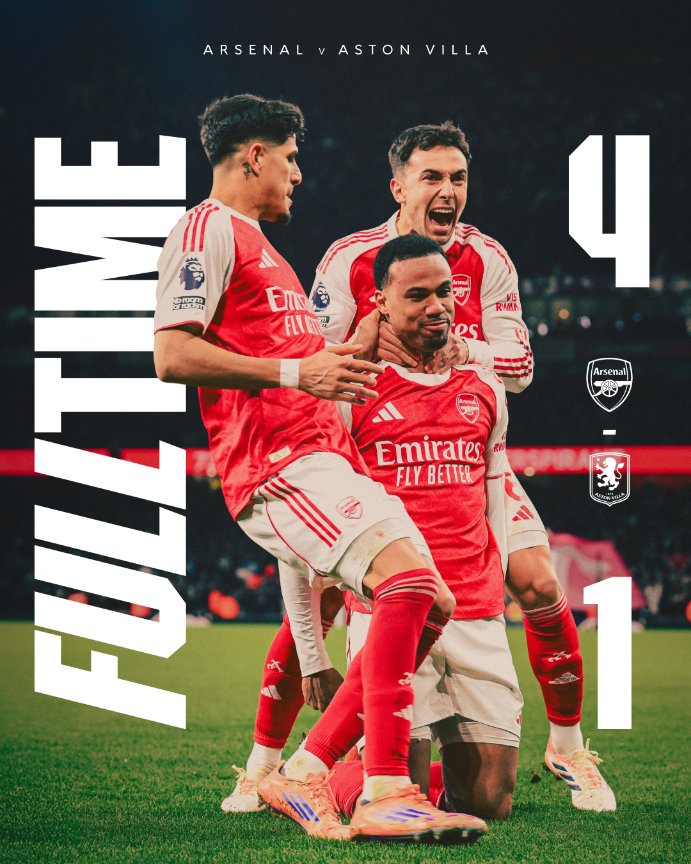
On 30 December 2025, Arsenal delivered one of the most commanding performances of the Premier League season, overpowering Aston Villa 4–1 at the Emirates Stadium. This was not just a victory — it was a lesson in elite-level football execution. Against a Villa side riding an 11-game winning streak and widely regarded as genuine title challengers, Arsenal demonstrated why they currently sit at the summit of English football.
This objective analysis examines how Arsenal dismantled Aston Villa, the tactical adjustments that turned a balanced contest into a rout, and what the result means for both clubs as the title race intensifies. Drawing from post-match reports, statistical breakdowns, and tactical analysis from sources such as Premier League Match Centre, The Analyst, Yahoo Sports, and Tribuna, this article dissects a match that may ultimately define the 2025/26 season.
Context and Build-Up: A Clash of Momentum
The stakes could hardly have been higher. Arsenal entered the match top of the Premier League, determined to extend their lead after a congested festive schedule. Aston Villa, under an increasingly respected manager, arrived in North London full of belief after winning 11 consecutive matches in all competitions — their longest run in the modern Premier League era.
Earlier in the month, Villa had defeated Arsenal at Villa Park, a result that raised questions about Arsenal’s ability to handle high-intensity transitional teams. This return fixture offered Arsenal the opportunity for revenge and redemption — and they seized it emphatically.
According to Premier League match previews, both teams lined up with near full-strength squads, highlighting how seriously each side treated this contest. For Villa, this was a chance to announce themselves as legitimate title contenders. For Arsenal, it was about authority.
First Half: Tactical Caution and Missed Opportunities
Despite the high expectations, the first half was surprisingly subdued. Arsenal dominated possession but lacked incision, while Aston Villa appeared content to sit compact and strike on the counter.
Statistical data from The Analyst shows Arsenal completed fewer progressive passes in the opening 30 minutes than in any other home league match this season. Their build-up was slower, and Villa’s midfield press — led by Amadou Onana — disrupted Arsenal’s rhythm effectively.
Villa, meanwhile, created the clearer chances. Ollie Watkins and Leon Bailey both found space behind Arsenal’s defensive line, though poor final touches and decisive defending prevented a breakthrough. Arsenal goalkeeper David Raya was alert when called upon, but the warning signs were there.
By halftime, the scoreline read 0–0, and Villa could feel encouraged. Arsenal looked tense, and the Emirates crowd grew restless. However, what followed after the break would completely redefine the narrative.
Second-Half Transformation: Arteta’s Tactical Reset
The second half showcased Arsenal at their ruthless best. According to post-match analysis from Premier League Match Centre, Arsenal emerged with greater tempo, sharper pressing triggers, and more aggressive positioning from midfield.
Three key tactical shifts defined the turnaround:
- Higher Defensive Line and Compact Shape
Arsenal squeezed the pitch, denying Villa space to counter and forcing errors in midfield. - Increased Verticality
Martin Ødegaard and Declan Rice began progressing the ball quicker, reducing Villa’s ability to reset defensively. - Targeted Set-Piece Exploitation
Arsenal deliberately attacked Villa’s zonal marking at corners — a vulnerability previously identified in scouting reports.
The result was devastating.
Goal Breakdown: How the Game Was Won
48th Minute — Gabriel Magalhães (1–0)
Arsenal struck immediately after halftime. From a Bukayo Saka corner, Aston Villa goalkeeper Emiliano Martínez misjudged the flight of the ball, allowing Gabriel Magalhães to power a header into the net.
According to Premier League data, this was Arsenal’s league-leading 12th set-piece goal of the season — a testament to their preparation and aerial dominance.
52nd Minute — Martín Zubimendi (2–0)
Just four minutes later, Arsenal doubled their advantage. Martin Ødegaard split Villa’s midfield with a perfectly weighted pass, releasing Zubimendi, who finished calmly into the bottom corner.
Analysts from The Analyst highlighted Villa’s midfield disorganisation following the halftime injury to Amadou Onana as a decisive factor. Without his physical presence, Villa lost control of central areas almost instantly.
69th Minute — Leandro Trossard (3–0)
Trossard delivered the knockout blow with a stunning long-range effort. Cutting inside from the left, he unleashed a precise strike beyond Martínez’s reach.
According to Yahoo Sports, Trossard now leads Arsenal in combined goals and assists for the calendar year, underlining his importance in decisive moments.
78th Minute — Gabriel Jesus (4–0)
Introduced as a substitute moments earlier, Gabriel Jesus scored within 55 seconds of entering the pitch. Curling a composed finish into the far corner, he reminded everyone of his clinical quality.
Reports from TalkSPORT noted this as Jesus’ first league goal since returning from injury — a significant boost for Arsenal’s attacking depth.
90+4th Minute — Ollie Watkins (4–1)
Villa managed a late consolation when Ollie Watkins capitalised on a rebound. While the goal restored some pride, it did little to mask the gulf in quality on display.
Aston Villa’s Collapse: Why It Unravelled
From a neutral perspective, Aston Villa’s collapse was startling. For 45 minutes, they had matched Arsenal. But once they conceded, the structure fell apart.
Several factors contributed:
- Midfield Disruption: The injury to Onana severely weakened Villa’s ability to shield their defence.
- Psychological Shock: Conceding twice in four minutes drained confidence and belief.
- Defensive Fragility: Villa’s backline struggled with Arsenal’s positional rotations and failed to track late midfield runs.
- Lack of Tactical Flexibility: According to analysis from Tribuna, Villa were slow to adjust shape or personnel, allowing Arsenal to dominate uncontested.
This match exposed the gap between a strong challenger and a fully developed title-winning side.
Individual Performances: Arsenal’s Standouts
Leandro Trossard
Dynamic, decisive, and relentless. Trossard’s goal and assist encapsulated Arsenal’s attacking efficiency. His movement constantly disrupted Villa’s defensive structure.
Martin Ødegaard
The captain orchestrated play with intelligence and urgency. His assist for Zubimendi was a moment of pure vision and technical excellence.
Gabriel Magalhães
Dominant defensively and lethal offensively, Gabriel once again proved why Arsenal are among the most dangerous teams from set pieces.
Declan Rice
While not on the scoresheet, Rice controlled transitions and ensured Arsenal maintained territorial dominance throughout the second half.
What This Means for the Title Race
According to league standings published by Premier League Match Centre and analysis from Tribuna, Arsenal’s victory extended their lead at the top to five points over second place.
More importantly, this win carried symbolic weight:
- It ended Aston Villa’s 11-match winning streak.
- It avenged Arsenal’s earlier defeat to Villa.
- It reinforced Arsenal’s reputation as the league’s most complete side.
Predictive models cited by The Analyst showed a significant increase in Arsenal’s title probability following this result, while Villa’s ambitions shifted toward consolidating Champions League qualification.
Conclusion: A Lesson in Elite Football
Arsenal did not merely beat Aston Villa — they educated them. In one devastating half of football, Arsenal demonstrated superiority in preparation, adaptability, and execution.
The 4–1 scoreline reflects more than goals; it reflects a gulf in maturity. Where Villa hesitated, Arsenal punished. Where Villa faltered, Arsenal accelerated. This was the performance of a team that understands how championships are won.
As the season progresses, this match will be remembered as a defining moment — the night Arsenal reminded the league that they are not just contenders, but the standard.