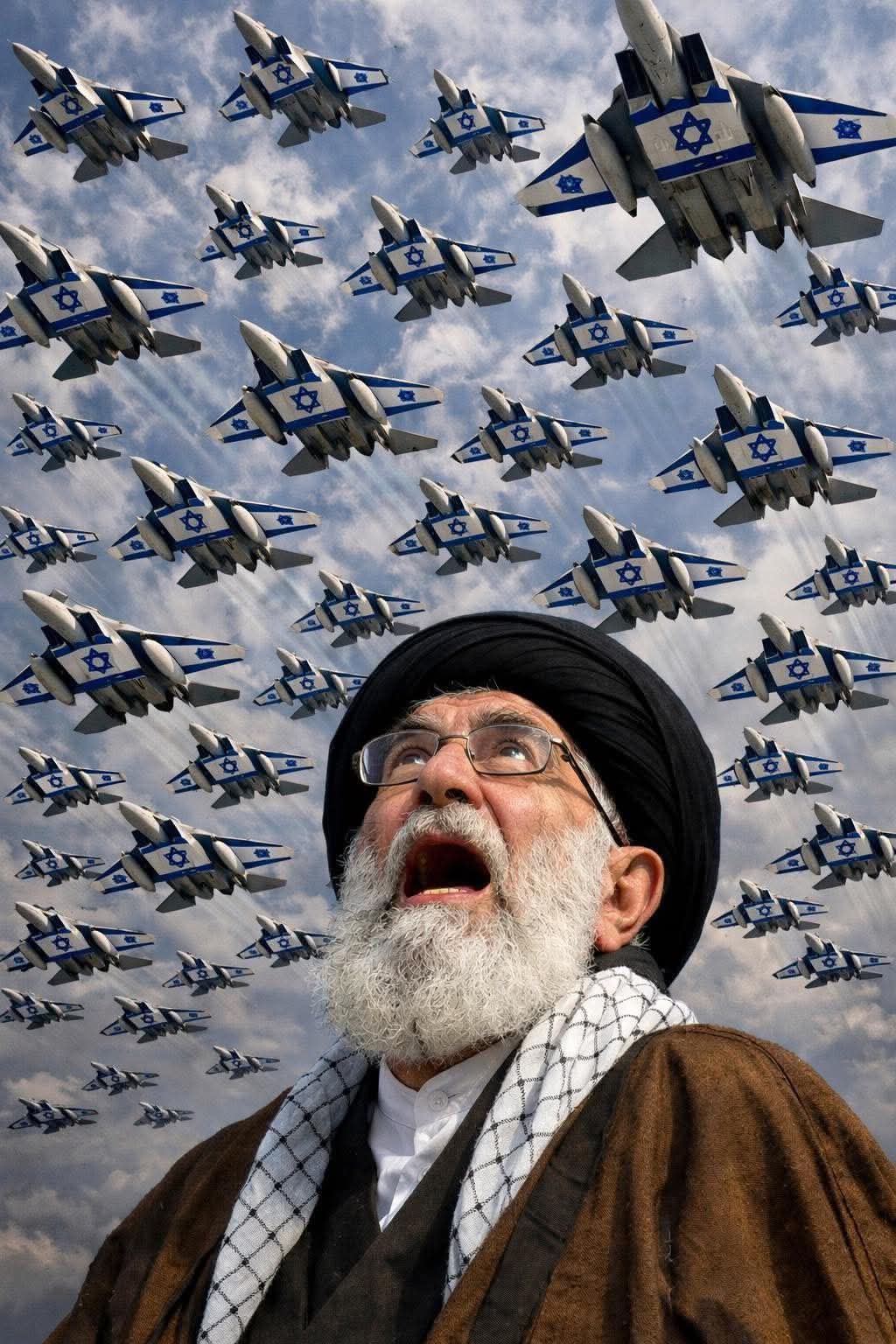
In a stunning development that has sent shockwaves across the globe, the Supreme Leader of Iran has been killed in a major military operation carried out by Israel together with the United States.
The assassination of Ayatollah Ali Khamenei, who had ruled Iran with an iron fist for more than three decades, marks one of the most dramatic escalations in modern Middle Eastern history. To understand why this happened and what it means for the world, we need to break down a complex story into simple terms that anyone can understand.
Let’s start from the very beginning.
Where Is the Middle East and Why Does It Matter?
The Middle East is a region in Western Asia that includes countries like Iran, Israel, Palestine, Saudi Arabia, Iraq, Turkey, Jordan, Syria, Lebanon, Kuwait, Qatar, Oman, the United Arab Emirates, Yemen, and Bahrain. It’s a relatively small area on the world map, but it holds enormous importance for the entire planet.
Why? The answer is largely about oil.
The Middle East sits on some of the largest oil reserves in the world. Oil is the lifeblood of modern economies. It powers cars, heats homes, runs factories, and fuels military machines. Countries that control oil have power. Countries that need oil must pay attention to who controls it.
This simple fact explains why powerful nations from outside the region, particularly the United States, have been deeply involved in Middle Eastern affairs for decades. America needs oil for its economy and its military. But as we will see, oil is not the only reason America gets involved in foreign countries.
The Religious Divide You Need to Understand
Inside the Middle East, countries don’t just compete for money and power. They also compete for religious influence. This is something many news reports overlook, but it is crucial to understanding why Iran and Saudi Arabia are rivals.
Islam, the dominant religion in the region, has two main branches: Shia and Sunni. Think of them like different denominations within Christianity, such as Catholic and Protestant. They share core beliefs but have important differences in leadership, traditions, and interpretation of religious texts.
Iran is predominantly Shia. About 90 percent of Iranians practice Shia Islam. Saudi Arabia, on the other hand, is predominantly Sunni. This religious divide creates tension because both countries want to be the leader of the Islamic world. They support different groups, different governments, and different causes across the region.
This religious rivalry plays out in wars and conflicts from Yemen to Syria to Lebanon. But the biggest and most dangerous rivalry in the Middle East today is between Iran and Israel.
Why Iran and Israel Hate Each Other
Israel and Iran were not always enemies. Before 1979, they actually had reasonably good relations. Both were friendly with the United States, and they cooperated on various matters. So what changed?
The answer lies in the Iranian Revolution of 1979, which we will explain in detail shortly. But first, you need to understand the core of the conflict.
Iran’s leaders, particularly the hardline religious figures who have run the country since 1979, believe that Israel should not exist as a country. They have repeatedly called for Israel to be wiped off the map. This is not political rhetoric. It is a stated goal of the Iranian government.
At the same time, Iran strongly supports the Palestinian cause. Palestinians have been in conflict with Israel for decades over land, rights, and statehood. Iran sees Israel’s actions in Palestine, including military operations that have killed civilians, bombed homes and hospitals, and restricted food and aid, as crimes against humanity. Some Iranian leaders have even used the word “genocide” to describe what is happening in Palestine.
Iran provides money, weapons, and training to groups that fight Israel, including Hezbollah in Lebanon and Hamas in Gaza. These groups are designated as terrorist organizations by Israel and the United States, but Iran sees them as legitimate resistance movements fighting for Palestinian rights.
The Nuclear Factor
The second major reason for the conflict is Iran’s nuclear program.
Iran says it is developing nuclear technology only for peaceful purposes, such as generating electricity and medical research. But Israel does not believe this. Neither does the United States nor many Western countries.
Why is everyone so worried?
Because nuclear weapons change everything. They give countries an extra layer of protection. Think about North Korea. North Korea developed nuclear weapons, and now attacking North Korea would be extremely dangerous. Western countries think twice before confronting North Korea because they know a war could go nuclear.
Iran has seen what happened to countries without nuclear weapons. Iraq was invaded. Libya was bombed. Its leader was killed. Iran’s leaders look at North Korea and think, “Maybe we need nuclear weapons too, to protect ourselves from foreign attacks.”
But Israel says absolutely not. Israel is a small country. One nuclear bomb could destroy it. When Iranian leaders talk about wiping Israel off the map, and then Iran develops nuclear weapons, Israel sees that as an existential threat. It is a matter of survival.
Israel has made it clear for decades that it will do whatever it takes to prevent Iran from getting nuclear weapons. That includes cyber attacks, assassinations of Iranian nuclear scientists, and even military strikes.
Let’s Talk About America’s Motives
Before we go further, let’s address something important. Some people believe that America only attacks other countries for oil. That is not entirely accurate.
America acts based on its own interests. Sometimes those interests are about oil and money. But sometimes they are political or strategic.
Consider Afghanistan. Afghanistan does not have major oil reserves. Yet America sent its military there and stayed for 20 years. The reasons were about national security, terrorism, and geopolitics, not oil.
Consider Korea. Korea does not have major oil resources. Yet during the Korean War in the 1950s, America fought to defend South Korea. More recently, in June 2019, President Donald Trump became the first sitting U.S. president to step onto North Korean soil when he crossed the Demilitarized Zone to meet Kim Jong Un.
Clearly, oil is not the only factor in American foreign policy. America cares about stopping its enemies, supporting its allies, preventing the spread of nuclear weapons, and maintaining its position as the world’s most powerful nation.
So when America joined Israel to kill Iran’s Supreme Leader, oil was part of the picture, but it was not the whole picture.
The History of U.S.-Iran Relations: How Friends Became Enemies
To understand why America would participate in killing Iran’s leader, we need to go back in history. This story begins after World War II.
After the war, America became more involved in the Middle East. The Cold War was heating up, and America wanted to stop the Soviet Union from spreading its influence. Oil had become crucial to global power, and America wanted to ensure friendly countries controlled Middle Eastern oil.
At that time, Iran was ruled by a leader named Mohammad Mossadegh. He came to power in 1951 and did something dramatic: he took control of Iran’s oil industry from foreign companies and said it should belong to Iran. This is called nationalization.
The problem was that British and American companies had been making huge profits from Iranian oil. Mossadegh’s move threatened their interests and, more importantly, threatened Western influence in the region.
America saw Mossadegh as a problem. He was popular in Iran, but he was also nationalistic and independent. He was not automatically aligned with the West. In the context of the Cold War, America feared Iran might drift toward the Soviet Union.
So in 1953, America organized a coup. The CIA worked with British intelligence to overthrow Mossadegh. They brought back to power a man named Mohammad Reza Pahlavi, who was known as the Shah.
The Shah ruled Iran for 26 years. He was a harsh ruler. His secret police, known as SAVAK, tortured and killed political opponents. But he was friendly to America. He supported American interests in the region, sold oil to the West, and bought American weapons. So the United States ignored his human rights abuses and supported him.
Many Iranians hated the Shah. They resented his dictatorship, his secret police, and his close ties to America. One of his strongest critics was a religious leader named Ruhollah Khomeini, who held the title of Ayatollah. In Shia Islam, an Ayatollah is a very senior religious scholar and leader.
Ayatollah Khomeini spoke out against the Shah. He criticized Western influence in Iran and America’s role in propping up the Shah’s regime. Because of this, he was forced into exile in the 1960s. He went to Iraq, then to France. But even from exile, he sent recorded messages back to Iran, urging people to rise up against the Shah.
Public anger kept growing. The economy had problems. The Shah’s secret police kept arresting people. Religious leaders kept preaching against the government. Protests became larger and more frequent.
Finally, in 1979, the Shah was forced to flee Iran. The monarchy collapsed. Ayatollah Khomeini returned from exile to massive celebrations. He became the Supreme Leader of a new Islamic Republic of Iran.
The new Iranian government was intensely anti-American. Many Iranians believed America had stolen their democracy in 1953 and then supported a dictator for 26 years. They saw America as the “Great Satan” that had oppressed them.
Later in 1979, Iranian students stormed the U.S. Embassy in Tehran. They took 52 American diplomats hostage and held them for 444 days. The hostage crisis was shown on American television every night for more than a year. It humiliated America and poisoned relations permanently.
From that moment, Iran and America became enemies.
The Man Who Was Killed: Ayatollah Ali Khamenei
The Supreme Leader who was just killed was named Ayatollah Ali Khamenei. He had been in power since 1989, when he took over after the death of Ayatollah Ruhollah Khomeini.
Khamenei was not originally supposed to become Supreme Leader. He was a mid-level cleric when Khomeini died. But the political situation in Iran led to his appointment, and over time, he consolidated enormous power.
As Supreme Leader, Khamenei was the ultimate authority in Iran. He was commander-in-chief of the armed forces. He controlled the intelligence services. He appointed the heads of the judiciary and state media. He had the final say on all major policy decisions, including foreign policy and nuclear negotiations.
Khamenei maintained the revolutionary ideology established by Khomeini. He continued to call for the destruction of Israel. He continued to support groups like Hezbollah and Hamas. He continued to develop Iran’s nuclear program and its ballistic missile program.
Under his leadership, Iran expanded its influence across the Middle East. Iranian forces and Iranian-backed militias operated in Syria, Iraq, Lebanon, and Yemen. Iran became a major regional power, directly challenging both Israel and Saudi Arabia.
Khamenei also oversaw the suppression of dissent inside Iran. When protesters took to the streets in 2009, 2017, and 2019, his security forces cracked down hard. Thousands were arrested, and many were killed.
For Israel and America, Khamenei represented the heart of the problem. He was the man who made the final decisions. He was the man who could authorize the development of nuclear weapons. He was the man who could order attacks on Israel.
Why Kill Him Now?
The question everyone is asking: why did Israel and America decide to kill the Supreme Leader at this particular moment?
The answer is that in times of war, you try to destabilize your enemy’s regime. And one of the most effective ways to destabilize a regime is to eliminate its leader.
Not every country can survive a sudden leadership crisis, especially during wartime. When a leader who has been in power for 35 years is suddenly killed, it creates chaos. Succession is not automatic. Different factions within the government fight for control. The military and intelligence services become uncertain about who is in charge. Decision-making slows down or stops entirely.
Israel and America calculated that killing Khamenei would throw Iran into confusion at a critical moment. With the Supreme Leader dead, Iran’s leaders would be focused on internal power struggles rather than on attacking Israel or advancing its nuclear program.
There is also a message being sent. By killing the Supreme Leader, Israel and America are telling Iran’s leaders: no one is safe. Not even your highest authority. We can reach you anywhere, anytime.
What Happens Next?
The killing of Iran’s Supreme Leader is one of the most significant events in Middle Eastern history. It could lead to several possible outcomes.
Option One: Escalation. Iran could retaliate forcefully. It could launch missile attacks on Israel. It could order its proxies in Lebanon, Syria, and Gaza to attack Israeli targets. It could attack American bases in the region. This could trigger a full-scale war between Iran and Israel, with America drawn in.
Option Two: Chaos. Iran could descend into internal power struggles. Different factions within the government and military could fight for control. The country could become unstable, perhaps even fracture. This would weaken Iran’s ability to threaten its neighbors, which is what Israel and America want.
Option Three: Negotiation. A new Iranian leader might decide that the country cannot survive continued conflict. They might seek to negotiate with the West, perhaps offering concessions on the nuclear program in exchange for relief from sanctions. This seems unlikely given Iran’s revolutionary ideology, but it is possible.
Option Four: Everything at Once. The most likely outcome is a combination of all three. Iran will retaliate in some way. There will be internal power struggles. And eventually, someone will emerge as the new leader, and the world will have to deal with them.
The World Watches and Waits
As news of the Supreme Leader’s death spreads across the globe, world leaders are gathering in emergency meetings. Oil prices are spiking. Military forces are on high alert. Everyone is watching to see what Iran will do next.
For Israel, this is a moment of both opportunity and danger. The opportunity is to weaken its greatest enemy. The danger is that Iran’s response could be devastating.
For America, this is another chapter in a long and troubled history with Iran. From the 1953 coup to the 1979 hostage crisis to decades of sanctions and conflict, the relationship has been defined by hostility. Killing the Supreme Leader is the ultimate escalation.
For ordinary people in Iran, the future is uncertain. Some may see this as an opportunity for change. Others may rally around the regime in response to foreign attack. Many will simply hope that their country does not descend into war.
For the world, the killing of Iran’s Supreme Leader means entering uncharted territory. No one knows exactly what will happen next. But everyone knows that the Middle East, already volatile, has just become even more dangerous.
Conclusion: Understanding What Just Happened
Let’s summarize the key points in simple terms:
Iran and Israel are enemies. Iran supports groups that fight Israel and has threatened to destroy Israel. Israel sees Iran as an existential threat, especially if Iran gets nuclear weapons.
America has a long history with Iran, much of it bad. America helped overthrow Iran’s democratic government in 1953 and supported a dictator for 26 years. Iranians have never forgotten this.
The Supreme Leader was the most powerful person in Iran. He made all the important decisions. Killing him is intended to throw Iran into chaos and prevent it from attacking Israel or building nuclear weapons.
This did not happen because of oil alone. It happened because of politics, religion, security, and decades of conflict.
Now the world waits to see what happens next. Will there be war? Will there be peace? Will Iran survive this crisis, or will it collapse?
No one knows the answers yet. But one thing is certain: the Middle East will never be the same.
This article is based on current events and historical context. The situation continues to develop, and new information may emerge. We will update this report as events unfold.