MP Charles Ong’ondo Were Assassination: 22 Chilling Questions That Demand Answers
The shocking assassination of Kasipul Member of Parliament, Charles Ong’ondo Were, has triggered a national uproar and ignited intense scrutiny into the state of political security in Kenya. The seasoned lawmaker was gunned down in what authorities have described as a “targeted and premeditated” killing, leaving the country demanding justice and answers.
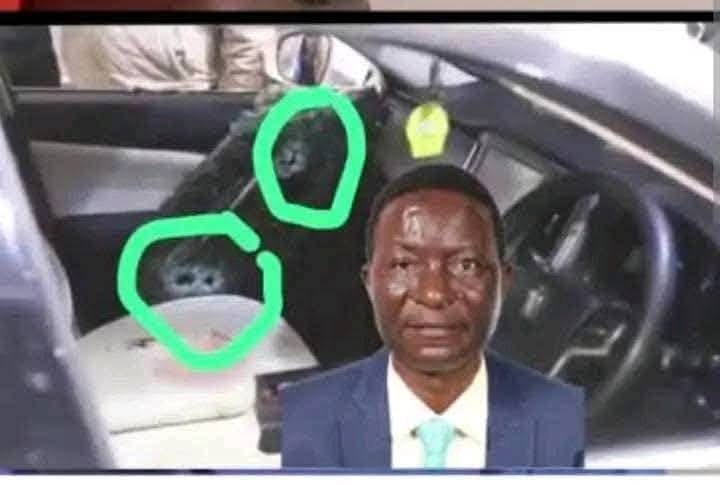
On the fateful evening of April 30, 2025, Were was fatally shot at close range while seated in a vehicle that had stopped at a traffic light along Ngong Road, Nairobi. He was being driven in a car registered to his son — an unusual move that has since become a key focus in investigations.
Two armed men riding on a motorcycle are said to have intercepted the car. One of them dismounted, walked up to the front passenger window where Were was seated, and opened fire. Witnesses say the assailant shot multiple times before fleeing the scene with his accomplice. Despite being rushed to Nairobi Hospital, the MP succumbed to gunshot wounds and was pronounced dead on arrival.
This cold-blooded execution, which occurred in a high-security zone with surveillance cameras, has left a trail of questions and suspicions.
The Strange Case of the MP’s Vehicle Swap
The first red flag was the vehicle. Why was the MP riding in his son’s car? Did he suspect he was being followed? Was the change a routine occurrence or a deliberate attempt to throw off potential threats? This raises questions about the nature of the threat he might have perceived and why it failed to deter the attackers.
Despite the vehicle switch, the assassins still managed to locate and kill him. This suggests a high level of intelligence and coordination on the part of the perpetrators. Was there a mole feeding them information?
The Silent Bodyguard and Unharmed Driver
Another pressing issue surrounds the MP’s bodyguard, who was seated in the vehicle but did not return fire or stop the attack. Was he out of position? Was his weapon functional? Was there hesitation, or worse — complicity?
The driver also escaped unhurt, adding to speculation. Was the attack so fast that neither had time to react? Or was it something deeper?
22 Critical Questions That Need Answers
- Why was MP Charles Ong’ondo Were using his son’s vehicle that evening?
- Was the vehicle swap a security measure or a random decision?
- How did the assassins know his location despite the vehicle change?
- Who had access to the MP’s travel plans that day?
- Why did the bodyguard not respond — was he unarmed, incapacitated, or complicit?
- Did the driver notice anything suspicious before or during the shooting?
- Was the MP receiving threats in the days or weeks before the shooting?
- Were any political rivals or enemies recently involved in disputes with the MP?
- Are there any known financial or legal disputes that could have motivated the killing?
- Did the MP have any controversial votes, policy stands, or whistleblowing activities recently?
- Is there CCTV footage from the scene or surrounding buildings capturing the attack?
- Have investigators obtained mobile phone and tower data from the area at the time of the shooting?
- Were there any unusual movements by the MP or his team in the 24 hours prior?
- Was this type of vehicle switch a common habit for the MP or a rare decision?
- Did the son know his vehicle was being used — could that have caused confusion or a security oversight?
- Did the bodyguard have proper training and equipment to deal with such a threat?
- Were there any security protocols breached or ignored on the day of the killing?
- Have witnesses given consistent accounts, or are there discrepancies in statements?
- Did the assailants escape without being tracked — and if so, how?
- Has any group or individual claimed responsibility, or have police received any leads suggesting a motive?
- What does forensic analysis of bullet casings, the vehicle, and the scene suggest about the weapon and shooter?
- Is this killing linked to other recent political attacks or part of a broader conspiracy?
A History of Threats and Political Tension
MP Ong’ondo Were had recently raised concerns about threats to his safety. Just two months before his death, he reported that he was being blocked from attending public events in his constituency and that members of his team had been attacked. He suspected local political rivals were fueling hostility against him.
These claims, initially dismissed as part of the usual political friction, now take on a new urgency. Could these tensions have escalated into a contract killing?
Police, Political Leaders Respond
Law enforcement has declared the killing a highly organized and targeted hit. Investigations are ongoing, with officers revisiting the crime scene and reportedly collecting surveillance footage and witness statements. Forensic teams are analyzing bullet trajectories, spent cartridges, and fingerprint evidence from the vehicle.
Political leaders across the divide have condemned the murder. President William Ruto ordered a swift investigation and justice, calling it an attack on democracy. Opposition leader Raila Odinga also issued a strong statement, demanding the culprits be found and held accountable.
Medical Response and Delay Concerns
Witnesses say it took precious minutes for an ambulance or police to arrive at the scene. Although Were was quickly rushed to Nairobi Hospital, he was already gravely injured. Did this delay cost him his life? Was there poor coordination in the emergency response?
Echoes of the Past – A Pattern Emerging?
Political assassinations in Kenya are not new. The killings of past figures such as Josiah Mwangi Kariuki in the 1970s, or Jacob Juma in 2016, bear eerie similarities: targeted, public, executed with precision, and shrouded in mystery.
Could this be another case that vanishes into a cloud of unresolved investigations and fading headlines? Or will this be the one that finally exposes the dark underbelly of Kenya’s political underworld?
Mounting Pressure for Forensic and Independent Probe
Kenyans, civil society groups, and watchdog organizations are demanding an independent inquiry, citing lack of trust in local investigative institutions. They argue that without external scrutiny, evidence could be tampered with and witnesses silenced.
There are also calls for Parliament to conduct its own probe through a special committee, and for the Directorate of Criminal Investigations (DCI) to update the public regularly on the case’s progress.
Conclusion: A Nation Demands Justice
The death of Charles Ong’ondo Were is not just the loss of a legislator—it is a direct strike at the heart of democracy. His assassination raises fundamental questions about safety, trust, political rivalry, and the unseen forces that may influence the nation’s destiny.
Until these 22 questions are answered — with evidence, transparency, and accountability — Kenya will remain haunted by the silence of a fallen leader and the whispers of conspiracy surrounding his death.