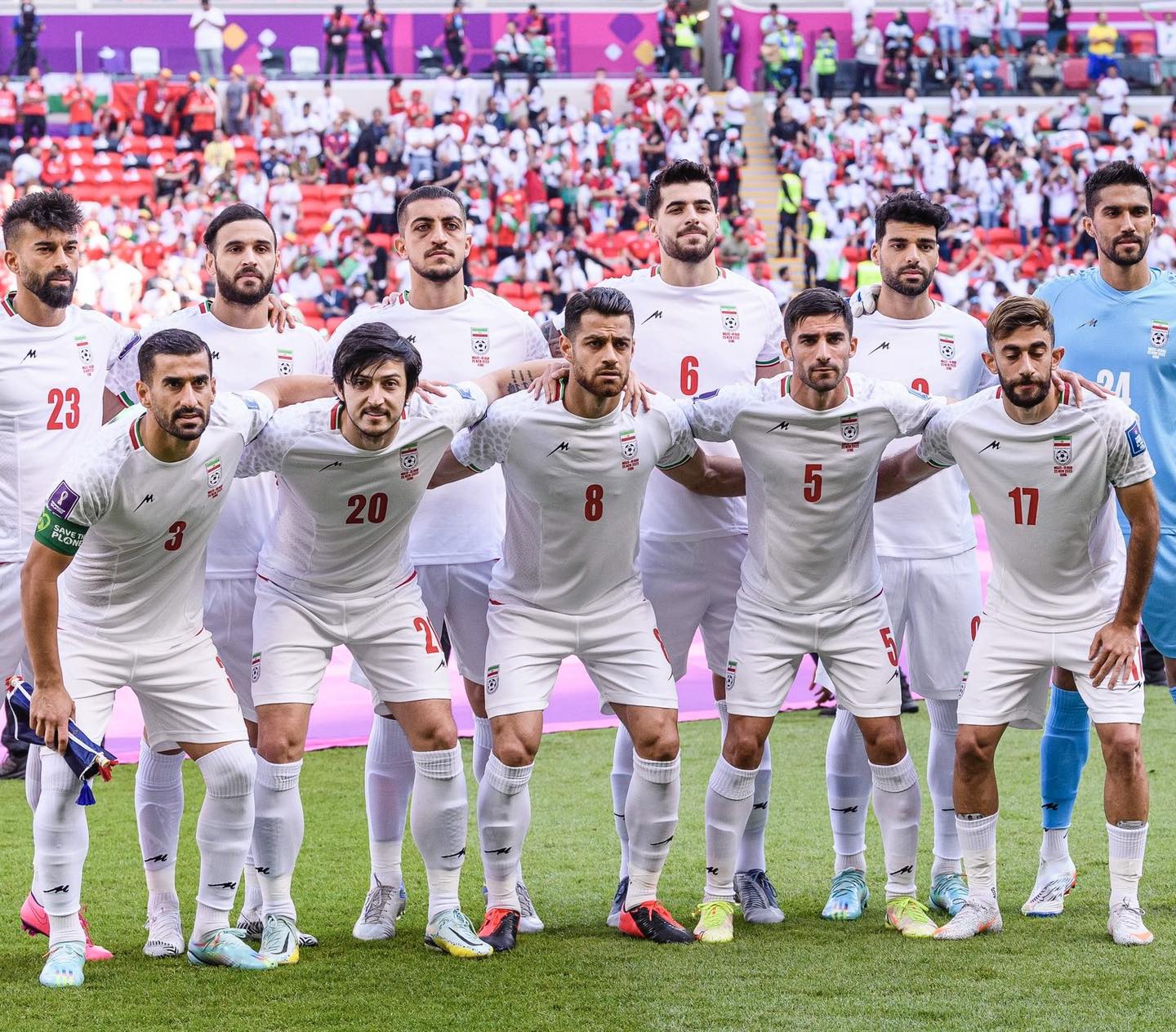
In a stunning development that has sent shockwaves through the international football community, Iran has officially announced it will not participate in the 2026 FIFA World Cup, citing the assassination of its Supreme Leader Ayatollah Ali Khamenei in joint US-Israeli airstrikes and escalating conflict in the Middle East.
Iranian Sports Minister Ahmad Donyamali made the explosive announcement on state television Wednesday, declaring that the national team cannot compete in the tournament co-hosted by the United States following the deadly military strikes on February 28 that killed the country’s longtime leader.
“Considering that this corrupt regime has come and assassinated our leader, we are not in a position to participate in the World Cup,” Donyamali told state TV, referring to the United States. “A hostile country is hosting the World Cup, and we expect FIFA to respond to this issue,” he added, arguing that Iranian team members are “not safe.”
A Nation in Mourning, A Region on Fire
The decision comes against the backdrop of devastating military escalation that has rocked the Middle East. On February 28, the United States and Israel launched joint strikes on Iran, which have killed over 1,300 people, including Supreme Leader Ayatollah Ali Khamenei and more than 150 schoolgirls.
President Donald Trump confirmed the supreme leader’s death on social media, posting on Truth Social: “Khamenei, one of the most evil people in History, is dead. He was unable to avoid our Intelligence and Highly Sophisticated Tracking Systems and, working closely with Israel, there was not a thing he, or the other leaders that have been killed along with him, could do.”
Israeli officials confirmed that several of Iran’s most senior military leaders were also killed in the strikes, including Gen. Mohammad Pakpour, the chief of the Islamic Revolutionary Guard Corps; Defense Minister Gen. Aziz Nasrizadeh; and Ali Shamkhani, former head of the Iranian navy and a close adviser to Khamenei.
Iran has retaliated with drone and missile strikes targeting Israel, Jordan, Iraq, and Gulf countries that host US military assets, disrupting global markets and air travel. The fighting has effectively shut down shipping through the Strait of Hormuz, the conduit for one-fifth of the world’s oil supply.
Football Caught in Geopolitical Crossfire
The 2026 World Cup, scheduled to run from June 11 to July 19 across the United States, Mexico, and Canada, now faces an unprecedented crisis with one of its qualified teams boycotting due to active warfare with a host nation.
Iran had successfully qualified for the 48-team tournament and was drawn in Group G alongside Belgium, Egypt, and New Zealand. All three of Iran’s group-stage matches were scheduled to be played on US soil—the first two in Inglewood, California, and the third in Seattle.
“We definitely have no possibility of participating in this way,” Donyamali said, pointing to the human toll of the conflict. “Because of the malicious measures they have carried out against Iran, they have forced two wars on us over eight or nine months and have killed and martyred thousands of our people.”
Mixed Signals and Diplomatic Drama
The announcement creates an awkward diplomatic situation, coming just one day after FIFA President Gianni Infantino met with President Trump and received assurances that Iran’s team would be welcome.
Infantino wrote on social media that Trump told him during their Tuesday meeting that Iran’s national team “is, of course, welcome to compete in the tournament in the US” despite the ongoing war. “We all need an event like the FIFA World Cup to bring people together now more than ever,” Infantino stated.
Adding to the confusion, Iranian Football Federation President Mehdi Taj had previously suggested a boycott was likely, citing the political treatment of Iranian athletes and officials. Taj noted that the US had already refused visas to him and at least six other FFI officials for the World Cup draw in Washington last December.
“What reasonable person would send their national team to the US if the World Cup is going to be as political as it was in Australia?” Taj asked, referring to incidents where five Iranian women’s national team players were granted asylum in Australia during the Asian Cup.
Conflicting Signals from Washington
President Trump’s public statements have added another layer of complexity. While he reportedly assured Infantino that Iran would be welcome, he separately told reporters that he “really didn’t care” whether Iran participated.
Iran is among several countries whose citizens face entry restrictions to the United States, though Trump has said exceptions will be made for athletes, officials, and family members at the World Cup and the 2028 Los Angeles Olympics.
What Happens Next: FIFA’s Dilemma
If Iran formally withdraws, FIFA faces the complex task of restructuring Group G and finding a replacement team. Article 6 of FIFA’s 2026 World Cup regulations gives the organization broad authority to handle such situations.
Regulation 6.5 states that if a team withdraws or a match cannot take place due to force majeure, FIFA can take any necessary action. Regulation 6.7 allows FIFA to replace a withdrawing team with another association at its discretion.
Several potential replacements have emerged. Iraq, which is set to play a continental play-off against Bolivia or Suriname for a World Cup spot, could automatically advance to fill Iran’s place. Alternatively, the United Arab Emirates could be considered, either for the main draw or to take Iraq’s play-off slot.
South Korean media outlet Chosun Ilbo reported that “Iraq or the United Arab Emirates, UAE, could advance” as replacements, noting that FIFA’s decision will ultimately determine the outcome.
A History of Tensions
This is not the first time football has become entangled in Iran-US tensions. The two nations have a long history of politically charged encounters on the pitch, most famously at the 1998 World Cup in France, when Iran defeated the United States 2-1 in a match dubbed the “Mother of All Games” that was laden with political symbolism.
The current crisis, however, represents an unprecedented escalation—with active warfare directly impacting tournament participation. Sports analysts note that no qualified team has boycotted a World Cup due to conflict with a host nation in modern tournament history.
Reactions from the Football World
The announcement has drawn sharp reactions from across the football community. FIFA has stated it is “closely monitoring the situation,” noting that “it’s premature to comment in detail, but we will track developments worldwide.”
Belgium, Egypt, and New Zealand—Iran’s scheduled group opponents—have yet to comment officially, but sources suggest their federations are anxiously awaiting clarity on whether they will face a replacement team or benefit from a revised group structure.
Football fans worldwide have taken to social media to express shock and disappointment, with many lamenting that geopolitical conflict has once again overshadowed sport’s unifying potential.
The Human Cost
Behind the political and sporting drama lies a devastating human tragedy. Iranian authorities report that US and Israeli forces have bombed nearly 10,000 civilian sites, resulting in more than 1,300 civilian deaths since the war began on February 28.
One particularly horrific strike reportedly killed dozens of children at a girl’s elementary school in the southern town of Minab. Iran’s Red Crescent and several state news outlets said more than 60 people were killed at Shajarah Tayyebeh school, near a naval base, with Iran’s state news broadcaster IRIB giving a toll of 85 dead and 93 injured.
In Tehran, residents described chaos and fear. One resident told the New York Times: “I rushed to school to get my daughter from middle school, the girls were hiding under the stairs and crying.”
Yet in some neighborhoods of Tehran, residents were reportedly cheering, dancing, and lighting fireworks after news that Ayatollah Khamenei might have been killed—a sign of the deep divisions within Iranian society.
What This Means for the World Cup
The 2026 World Cup is the first to feature 48 teams and is being marketed as the most inclusive tournament in history. Iran’s withdrawal would cast a shadow over those ambitions, demonstrating that even sport cannot escape the reach of geopolitical conflict.
For the United States as a host nation, the situation is diplomatically awkward. Having a qualified team boycott specifically because of US military action creates an uncomfortable narrative that tournament organizers will be eager to downplay.
For Iran, the decision represents a significant statement—prioritizing political and national sentiment over the global prestige of World Cup participation. It also deprives Iranian fans, already suffering under war and economic pressure, of the rare joy of watching their national team compete on football’s biggest stage.
Looking Ahead
As the situation continues to develop, all eyes will be on FIFA’s executive committee and its response to Iran’s announcement. The governing body must balance sporting integrity with diplomatic reality, all while navigating one of the most politically charged situations in World Cup history.
The Iranian people, meanwhile, continue to endure the realities of war—with thousands dead, schools destroyed, and now, the loss of a World Cup dream that might have offered a brief escape from their suffering.
For the global football community, the coming days will reveal whether the beautiful game can truly transcend politics—or whether it remains, like everything else, hostage to the conflicts that divide humanity.
As one Iranian football fan posted on social media: “First they take our leader, then they take our schools, now they take our World Cup. When will it end?”
The answer, for now, remains painfully unclear.