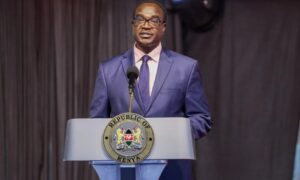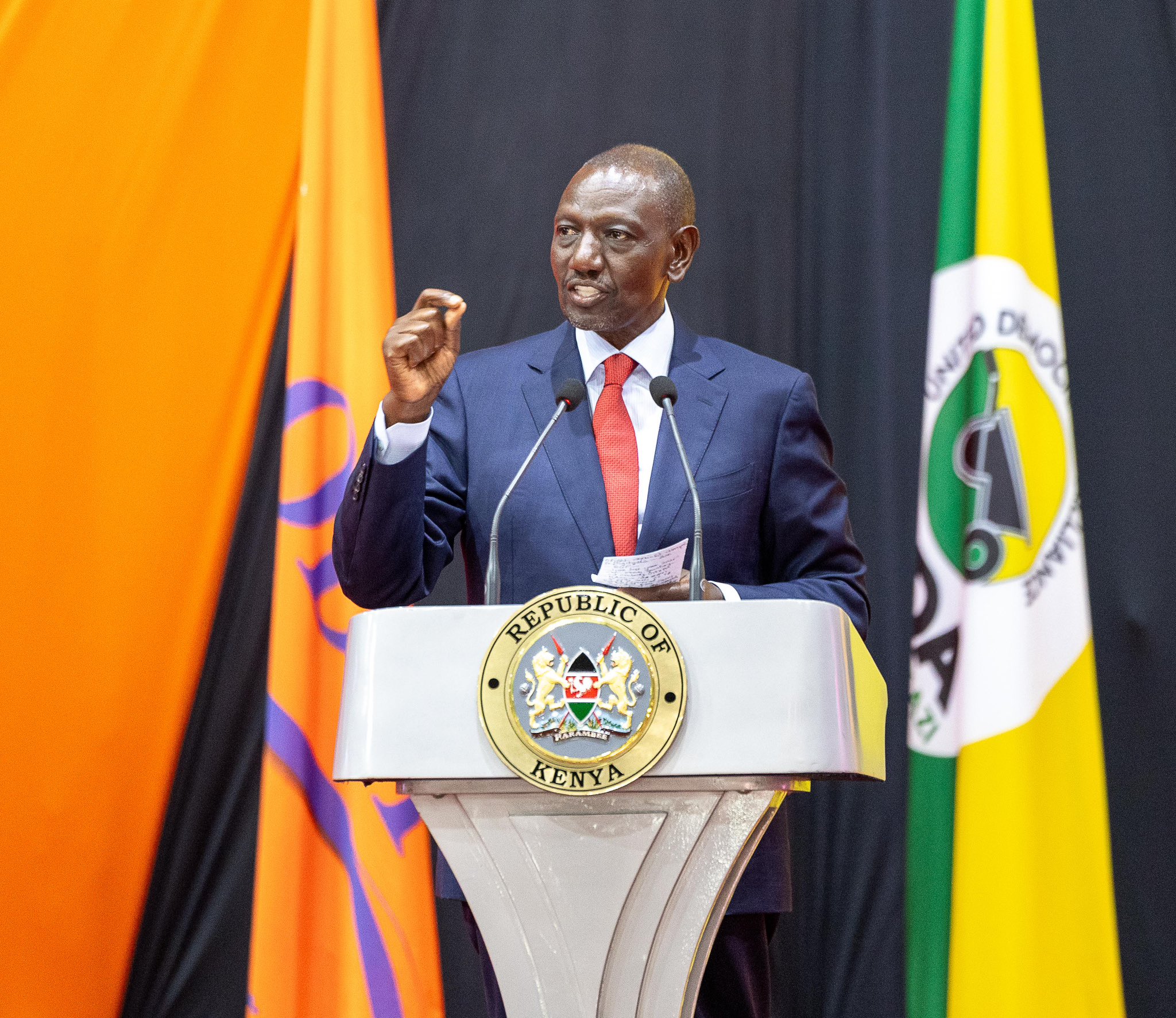
In a startling turn of events that has sent shockwaves through Kenya’s private sector and civil society, Democratic Party (DP) Party Leader and former Attorney General, Hon. Justin Muturi, has publicly accused the administration of President William Ruto of orchestrating an intricate and illegal plot to take over The Nairobi Hospital. In a damning statement released on Tuesday, Muturi detailed a year-long campaign of intimidation, blackmail, and threats allegedly masterminded from State House and executed through senior government officials and state agencies.
This exposé, backed by a flurry of court cases, anticipatory bails, and witness accounts, paints a grim picture of a government willing to subvert the rule of law to gain control over one of Kenya’s most prestigious and lucrative private medical institutions. The 70-year-old hospital, an entity limited by guarantee and owned by the Kenya Hospital Association (KHA), now stands at the center of a constitutional crisis that threatens the very fabric of private enterprise in the country.
The Anatomy of a “Takeover”
According to the detailed dossier presented by Muturi, the alleged takeover strategy has been unfolding for over a year. The master plan is being executed through the President’s Chief of Staff and Head of Public Service, Felix Koskei. The primary target is the hospital’s Board of Management, which has been subjected to relentless pressure, either directly or through its Chairman, Dr. Barkley Modere Onyambu, a respected Consultant Gynaeoncologist and elder at the SDA Church in Karen.
“The Nairobi Hospital has been in existence for the last 70 years. It should actually be celebrating its 70th anniversary, but instead, it is fighting for its survival against a predatory government,” Muturi stated.
The first major salvo in this campaign was fired in March 2025. Muturi alleges that intense machinations coerced the board into a split composition, where seven new members were controversially co-opted while seven others were removed. This, critics argue, was the first step in “capturing” the board by installing State-compliant individuals. Among the new directors co-opted at the time were individuals with direct links to State House, including Moses Ondaba, a Director at Statehouse, and Dr. Sylvester Kasuku, an advisor to the President and former Director-General of the LAPPSET Authority.
Weaponizing State Agencies
When the board reshuffle didn’t fully secure control, Muturi claims the state escalated its tactics. The Attorney General, Dorcas Oduor, was allegedly directed to assemble a multi-agency team to investigate the private hospital—a move critics deem an unconstitutional overreach into a non-state entity. This team comprised heavyweights of state security and financial oversight, including the Directorate of Criminal Investigations (DCI), the Kenya Revenue Authority (KRA), the Financial Reporting Centre, the Registrar of Companies, and the Asset Recovery Agency (ARA).
The intimidation quickly turned physical. Several directors were summoned to DCI headquarters by a team led by SP Peace Maithya and Chief Inspector Martin Munene, who unconstitutionally introduced themselves as “inspectors” under the Companies Act. Following the summons, armed raids were conducted at the private residences of several directors.
“The raids on our homes were designed to terrorize us and coerce our resignations,” a source close to the board revealed. “They wanted us to feel vulnerable and unprotected by the law.”
However, the directors refused to capitulate. They moved to court and secured anticipatory bail, which remains in force, effectively blocking the state from arresting them without following due process. In a significant legal victory for the hospital, the High Court also halted a probe by the multi-agency team and ordered the police to unfreeze the bank accounts of the directors.
The Final Ultimatum: Resign or Face Jail
With the legal route proving futile, Muturi alleges the state turned to direct, high-stakes blackmail. The situation reached a boiling point on Saturday, March 7, 2026. According to the statement, Dr. Barkley Onyambu received an intimidating telephone call from two senior officers from the Office of the Head of Public Service: Dr. Linda Musumba and Collins Kiprono.
The message was unequivocal and threatening. The Chairman was instructed to immediately cause the resignation of three specific directors to pave the way for three individuals proposed by the state. The three individuals named as the state’s preferred candidates are:
- Justice Mohammed Warsame, a sitting Judge of the Court of Appeal.
- Narendra Raval, the billionaire industrialist and owner of Devki Steel.
- Jackson Chebet Kiplimo, a businessman described as a proxy of the President who runs Stabex International Ltd and is allegedly involved in the acquisition of Kenya Pipeline Company.
The threat was backed by a terrifying ultimatum. When the Chairman requested to await a court determination on the hospital’s Annual General Meeting (AGM)—which had been stopped by a court following a petition by Busia Senator Okiya Omtatah—Musumba and Kiprono reportedly told him that “President Ruto wants the three persons in the board immediately and cannot wait.”
To ensure compliance, the directors were summoned to Harambee House on Monday, March 9. The message there was even more direct: failure to create the three vacancies would lead to the immediate arrest of directors, who would be arraigned in court on trumped-up “money laundering offences.” The Asset Recovery Agency has already begun flexing its muscles, writing to the National Transport and Safety Authority (NTSA) to restrict vehicles belonging to directors and managers of the hospital.
A Legacy of Intimidation and Legal Defiance
The current crisis did not emerge from a vacuum. The Nairobi Hospital has been embroiled in a bitter governance dispute for years, a fact that the Ruto administration appears to be exploiting. A review of the hospital’s recent history reveals a long history of legal battles, often pitting factions of the KHA membership against the Board of Management.
In late 2024, a major row erupted over a proposed Sh4.2 billion loan, with members accusing the then-board of bypassing ownership and risking insolvency. This dispute triggered a series of court cases and counter-suits, exposing deep fractures within the hospital’s leadership. The internal chaos has also had a severe financial impact. Board member Ngugi Wachira recently revealed that the hospital recorded losses of more than Sh3 billion in 2024 and owes suppliers in excess of Sh4 billion.
The allegations of state interference began surfacing in early 2025. An opinion piece in a leading Kenyan business daily warned against the “outrageous invasion” of the hospital by the political elite, noting that directors were “literally forced to co-opt State-influenced appointees” following intimidation and raids. This culminated in the High Court, on February 5, 2026, issuing a conservatory order halting the KHA’s Annual General Meeting, which was scheduled to potentially resolve the leadership impasse.
Despite these multiple court orders, critics, including board member Job Obwaka, have accused senior executives and state-linked operatives of ignoring the rulings. “This matter is no longer about personalities or internal disagreements,” Obwaka said recently. “It goes to the heart of whether court orders in Kenya are respected and obeyed, or whether they can simply be ignored by those who feel protected.”
Why the Nairobi Hospital?
The Nairobi Hospital is not just any medical facility. It is a 70-year-old institution with an unparalleled reputation in the region. As a recent analysis pointed out, it is a Sh12 billion turnover company sitting on a prime 20-acre piece of land in the upscale Upper Hill area of Nairobi. Its portfolio in government securities is substantial, and it controls lucrative procurement contracts, including a reported multimillion-dollar hospital management information system.
For politically connected oligarchs, the allure is obvious: control of the board means influence over billions of shillings in procurement, prime real estate, and significant financial assets. Muturi argues that this is the real motive behind the state’s “coordinated blackmail.”
“This is not about governance; it is about greed,” Muturi asserted. “They want to control the contracts, the land, and the money. They want to privatize the gains for their cronies while socializing the losses.”
A Nation on Notice
The implications of this saga extend far beyond the corridors of The Nairobi Hospital. Hon. JB Muturi’s statement serves as a dire warning to all Kenyans and private institutions.
“We are now notifying the larger public of Kenya that no one is safe if the government is now keen on taking over private institutions illegally and unprocedurally,” Muturi warned. “The level of greed and abuse of power expressed by this regime is unprecedented and there is need to tame it.”
The DP Party Leader has put the regime on notice, reminding them that “the respect of rule of law is not a reserve of a few but for all of us.” He concluded with a poignant reminder of the transient nature of power: “Power is transient and should be used for the greater good of this country and not to suppress and violate minorities.”
Reactions from the Political Arena
The explosive allegations have drawn sharp reactions from across the political spectrum. Raila Odinga, leader of the Azimio coalition, issued a statement calling for immediate parliamentary intervention. “If these allegations are true, and they appear credible coming from a senior figure like Muturi, then we are witnessing a dangerous descent into authoritarianism. Parliament must summon the involved parties and investigate this matter urgently.”
Senator Okiya Omtatah, who had previously petitioned the court to stop the hospital’s AGM, expressed concern about the involvement of the judiciary. “The mention of a sitting Judge of Appeal being lined up for a board position is extremely troubling. It compromises the independence of the judiciary and raises serious ethical questions that the Judicial Service Commission must address.”
Kalenjin political elders from the Rift Valley region also weighed in, with some expressing disappointment that the current administration was engaging in what they termed “resource grabbing” rather than focusing on development. “We did not vote for this,” said a respected elder who requested anonymity. “We voted for economic empowerment, not for the capture of private institutions.”
The Hospital’s Response
In a brief statement issued through their lawyers, the Board of The Nairobi Hospital confirmed receiving threats and stated their commitment to protecting the institution’s legacy.
“The Board is united in its resolve to protect the interests of the founders and the 70-year legacy of this great institution. We have full confidence in the judicial process and believe that the courts will continue to uphold the rule of law. We call upon our members, staff, and the public to remain calm as we navigate these challenges through lawful means.”
Hospital staff, speaking on condition of anonymity, expressed anxiety about the ongoing standoff. “We are worried about our jobs,” one nurse said. “If the government takes over, will we still have jobs? Will our terms change? We just want to treat patients peacefully.”
Historical Context: State Interference in Private Institutions
If proven true, this would not be the first time a Kenyan government has attempted to interfere with private entities. Political analysts draw parallels to previous administrations where cooperative societies, savings and credit organizations, and even private universities faced undue pressure from state actors seeking control over their assets and governance structures.
Dr. Wangari Maathai, a political analyst at the University of Nairobi, explains the pattern: “What we are seeing is a phenomenon known as ‘state capture,’ where private interests use state machinery to gain control over profitable entities. It erodes investor confidence, weakens institutions, and ultimately harms the economy. Foreign investors watching this saga unfold will think twice before committing resources to Kenya.”
The Legal Battle Ahead
The coming weeks promise intense legal fireworks. With anticipatory bail already in place protecting the directors, and court orders halting both the AGM and the multi-agency probe, the state faces significant legal hurdles in its alleged quest to control the hospital.
Constitutional lawyer Ahmednasir Abdullahi notes that the involvement of the Attorney General in directing a multi-agency team against a private entity raises fundamental questions about the separation of powers and the limits of executive authority.
“The Companies Act provides clear mechanisms for dealing with rogue directors or mismanaged companies. If there were genuine concerns about the hospital’s governance, there are proper channels. Deploying the DCI, KRA, and Asset Recovery Agency against private citizens without evidence of crime suggests persecution, not prosecution.”
Economic Implications
The business community is watching these developments with growing alarm. The Kenya Private Sector Alliance (KEPSA) issued a carefully worded statement expressing concern about “any actions that might undermine the sanctity of private property and the independence of corporate governance.”
A foreign investor based in Nairobi, speaking on condition of anonymity, said: “This is exactly the kind of news that keeps investors away. If a 70-year-old institution with a sterling reputation can be targeted this way, what protection do we have? The message is clear: if you’re successful, you’re a target.”
What Happens Next?
As the standoff intensifies, several scenarios are possible:
The board could continue its legal defiance, forcing the state to either back down or escalate further. Given the court orders in place, any attempt by the state to arrest directors would constitute contempt of court and could trigger a major constitutional crisis.
Alternatively, the state could pursue legislative or regulatory changes that would give it greater leverage over private hospitals, though such moves would face intense opposition in Parliament and the courts.
The AGM, currently stayed by court order, remains the legitimate forum for resolving the hospital’s governance disputes. If the court eventually allows it to proceed, the KHA membership will have the opportunity to elect a board of their choosing, free from state interference.
A Test for Democracy
At its core, the Nairobi Hospital saga has become a test for Kenyan democracy. Can private institutions resist state capture? Will the courts remain independent and enforce the rule of law? Will civil society and the public hold the government accountable?
Muturi’s decision to go public with these explosive allegations suggests that the board believes transparency is their strongest weapon. By exposing the alleged plot to the light of public scrutiny, they hope to mobilize opposition and protect the institution they were elected to serve.
Conclusion
The Nairobi Hospital, founded 70 years ago by visionary Kenyans who believed in quality healthcare independent of government control, now stands at a crossroads. Will it remain a beacon of private enterprise and professional independence, or will it become another trophy in what critics describe as a systematic campaign of state capture?
As Hon. JB Muturi rightly noted, the respect for rule of law must apply equally to all. When governments target private institutions for takeover, when state agencies are weaponized against citizens, and when court orders are ignored by those in power, the foundations of democracy begin to crumble.
The coming days and weeks will reveal whether Kenya’s institutions are strong enough to withstand this pressure, or whether the Nairobi Hospital will become a cautionary tale for generations to come. For now, the board remains defiant, the courts remain the last line of defense, and a nation watches to see whether power will be used for the greater good or for the suppression of minorities.
As one board member put it in a private moment: “We are not fighting for ourselves. We are fighting for every private institution in Kenya. If they can do this to us, they can do it to anyone. This is the moment we draw the line.”