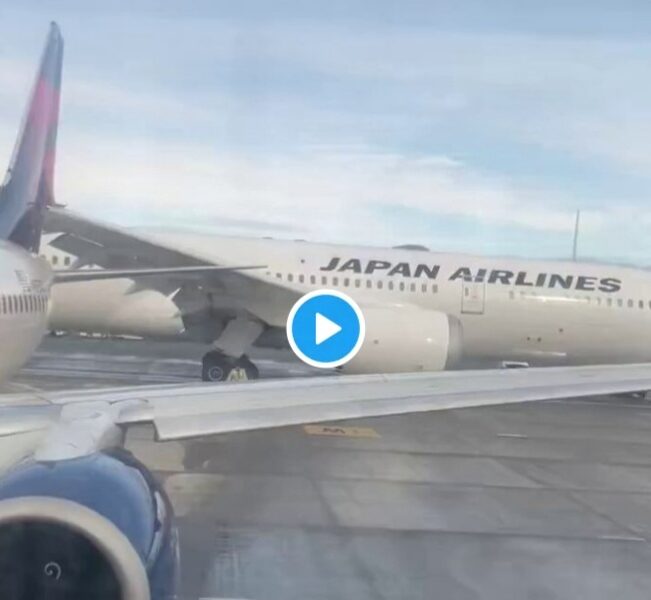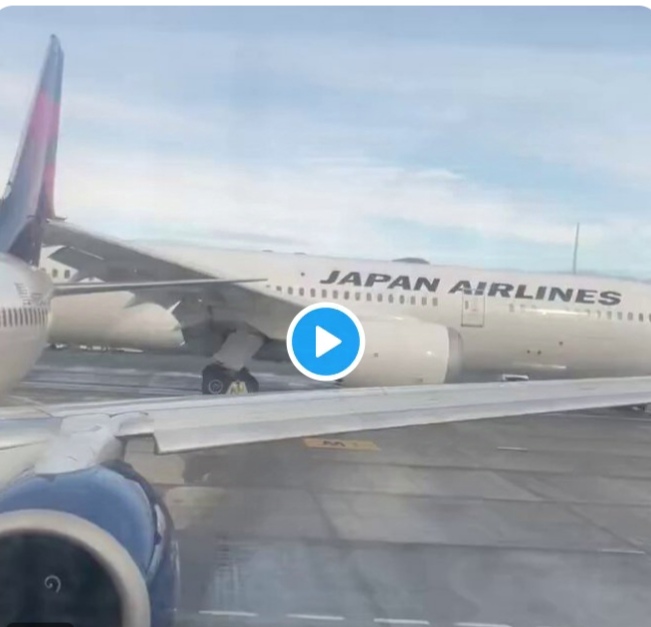
February 5, 2025 – A Japan Airlines aircraft collided with a stationary Delta Air Lines jet at Seattle-Tacoma International Airport, slicing through the tail of the parked plane. The accident, which occurred as the Japan Airlines jet was taxiing, led to significant damage to both aircraft but resulted in no reported injuries.
Incident Details
The incident happened at approximately 10:17 a.m. local time on Wednesday morning. The Japan Airlines Boeing 787-9, arriving from Tokyo, struck the tail of a parked Delta Air Lines Boeing 737-800. According to airport officials, the crash took place on a taxiway between S Concourse and the south airport maintenance hangars.
The collision caused a dramatic scene, with passengers onboard the Japan Airlines flight watching in shock as the aircraft’s wing sliced into the Delta plane. Some travelers shared their experiences on social media, with one passenger posting on X (formerly Twitter):
“So, we were sitting on the tarmac at SeaTac, and another plane ran into us, just casually sliced into our tail. Very scary.”
Despite the alarming impact, emergency responders, including the Port of Seattle Fire Department and police, quickly arrived at the scene. All passengers aboard the Japan Airlines aircraft were safely evacuated, and there was minimal disruption to overall airport operations.
FAA Response and Flight Disruptions
The U.S. Federal Aviation Administration (FAA) issued a statement confirming the details of the crash, saying:
“The right wing of Japan Airlines Flight 68 struck the tail of Delta Air Lines Flight 1921 while the planes were taxiing at Seattle-Tacoma International Airport. The aircraft were in an area that is not under air traffic control.”
As a precautionary measure, the FAA temporarily halted some flights at the airport while an investigation was launched into the cause of the accident. However, Seattle-Tacoma International Airport later confirmed that normal operations resumed shortly after the initial response.
Extent of Damage to Aircraft
Photographs circulating on social media showed extensive damage to the Delta aircraft’s tail section, with its structure visibly compromised. The Japan Airlines plane’s right wing also sustained significant damage, raising questions about repair timelines and possible aircraft replacements.
Delta confirmed that its Boeing 737-800 was scheduled to depart for Puerto Vallarta, Mexico, with 142 passengers onboard. The airline assured affected customers that efforts were being made to rebook them on another flight. A Delta spokesperson stated:
“While in sequence for deicing, the tail of a Delta 737 aircraft reportedly made contact with a wing tip of another airline’s aircraft. There are no reports of injuries for crew or customers on the flight, and we apologize for the experience and delay in travels.”
Japan Airlines has yet to issue a full statement, but the airline is reportedly cooperating with investigators to determine how the incident occurred.
Concerns Over Rising Ground Collisions
This collision is the latest in a series of recent ground incidents involving commercial aircraft. Aviation analysts have pointed to an increase in such occurrences at busy international airports, often attributed to congested taxiways, human error, or operational miscommunications.
Discussions online have drawn attention to a growing trend of similar accidents, though official aviation safety data does not yet confirm a significant rise. Industry experts suggest that enhanced taxiway monitoring and improved communication protocols between air traffic control and pilots may help reduce such incidents.
Comparisons to Recent Air Crashes
The collision comes amid heightened concerns over aviation safety following a devastating accident involving an American Airlines jet and a U.S. Army Black Hawk helicopter on January 29. That incident, which took place near Washington, D.C., resulted in the deaths of all 67 people on board the American Airlines flight.
While the Seattle-Tacoma collision did not result in fatalities, it adds to growing concerns about aviation safety measures and the need for stricter ground control procedures.
What’s Next?
Both Japan Airlines and Delta Air Lines are expected to provide further updates on their respective aircraft’s status in the coming days. Meanwhile, the FAA’s investigation will seek to determine whether pilot error, ground crew miscommunication, or other operational factors contributed to the collision.
Passengers flying through Seattle-Tacoma International Airport are advised to check with their airlines for potential delays or schedule adjustments.
The FAA’s final report on the incident will likely shape future safety protocols to prevent similar accidents from occurring in high-traffic airports.
For now, aviation safety experts urge travelers to remain vigilant and trust that airlines and regulatory bodies will work to ensure that such collisions remain rare occurrences in the industry.