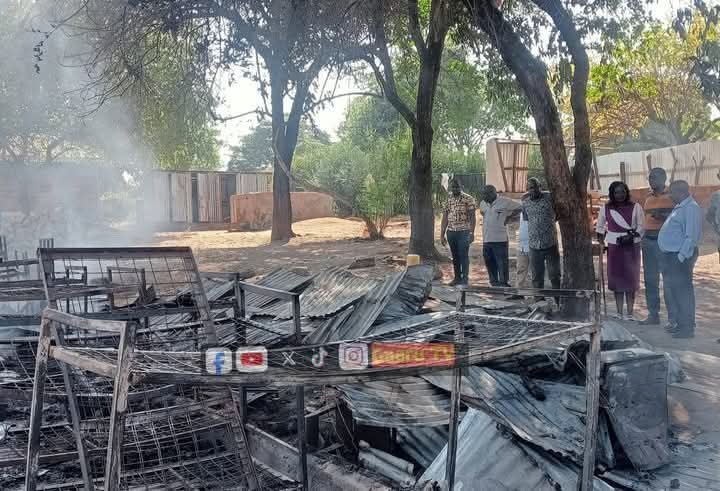
A devastating dormitory fire at Kajiampau Secondary School in Igambang’ombe, Tharaka Nithi County, has left a deep scar on the community, claiming the life of a heroic neighbor and rendering 45 students homeless. This tragic incident, which occurred on Sunday night, highlights the vulnerability of schools in rural areas to disasters and the pressing need for improved safety measures.
The Incident: A Night of Horror
The fire broke out at approximately 9 p.m., quickly consuming the dormitory and leaving little time for intervention. According to witnesses, the blaze spread rapidly, fueled by the dormitory’s contents, which included mattresses and other flammable materials.
The deceased, a local villager, selflessly rushed to the scene in an attempt to save property but tragically lost his life in the process. While the 45 affected students managed to escape unharmed, they lost all their personal belongings, including essential school supplies.
Tharaka Nithi County’s Fire and Rescue Department Manager, Alex Mugambi, confirmed that all students were accounted for but emphasized the extensive damage to the dormitory. “The entire structure was engulfed in flames by the time we arrived. Unfortunately, nothing was salvageable,” he said.
Community Response: A Call for Unity
The tragedy has sparked a wave of support from the local community and leaders. Igambang’ombe MCA, Njeru Ing’ara, visited the site and expressed his condolences to the family of the deceased. He also addressed the dire need for piped water supply and improved firefighting infrastructure in the region.
“This incident is a wake-up call for our county. We need piped water and a fire station near Kathwana County Headquarters to prevent such tragedies in the future,” he remarked.
The affected students are now relying on community goodwill and support from well-wishers to rebuild their lives. The school principal made an emotional appeal for donations, urging stakeholders to step forward and help provide essential items like uniforms, textbooks, and mattresses for the students.
Firefighting Challenges in Rural Areas
The fire exposed the glaring inadequacies in emergency response systems in rural areas. Water scarcity remains a significant challenge, and the lack of a dedicated fire station in the region delayed the firefighting efforts.
Local Ward Administrator David Mugendi, who alerted fire officers immediately after the distress call, commended the collaborative efforts of the fire department and local residents in battling the flames. “Despite our swift response, the lack of water made it nearly impossible to save the dormitory,” he said.
Mugendi highlighted the need for a strategic fire response plan, including the establishment of a fire station and access to water reservoirs near schools and other public institutions.
Investigation Underway
Authorities are currently investigating the cause of the fire. Preliminary reports suggest that electrical faults or negligence could be potential triggers, but no official conclusion has been reached.
Security agencies are working closely with the school administration to determine the root cause and implement preventive measures to avert similar incidents in the future.
The Emotional Toll on Students
The affected students are grappling with the emotional and psychological impact of the tragedy. Losing personal belongings and witnessing the destruction of their dormitory has left many in shock. Teachers and parents are now stepping in to provide counseling and support to help the students cope.
One of the students, visibly shaken, recounted the harrowing experience. “We heard shouts and saw flames engulfing the dormitory. We had to run out quickly, leaving everything behind. It’s devastating to lose everything we owned,” she said.
Leadership and Stakeholder Intervention
Local leaders are urging both government and private sector stakeholders to intervene. MCA Njeru Ing’ara has called for immediate action to rebuild the dormitory and provide assistance to the students.
“It’s heartbreaking to see the destruction and loss. These students are the future of our community, and we must ensure they get the support they need to continue their education,” he said.
The tragedy has also reignited discussions about the importance of fire safety measures in schools. Many institutions in rural Kenya lack basic fire prevention tools, such as extinguishers and smoke detectors, making them highly vulnerable to such incidents.
Recommendations for Improved Safety
To prevent future disasters, experts recommend a comprehensive approach that includes:
- Improved Infrastructure: Installing smoke detectors, fire extinguishers, and fire alarms in all school buildings.
- Water Supply Systems: Ensuring reliable access to piped water in schools and nearby institutions.
- Fire Drills: Conducting regular fire drills to equip students and staff with the knowledge to respond effectively during emergencies.
- Emergency Response Teams: Establishing local emergency response units with adequate training and resources.
- Government Policies: Introducing mandatory safety inspections for school dormitories and other high-risk areas.
National Implications
This tragedy has drawn attention to the systemic issues plaguing rural schools in Kenya. The lack of infrastructure, coupled with limited resources for emergency response, underscores the urgent need for government intervention.
Education stakeholders are now calling for a nationwide review of safety protocols in learning institutions. “This is not an isolated incident. We must address these vulnerabilities to safeguard the lives of our children,” said a representative from the Kenya Union of Post Primary Education Teachers (KUPPET).
Hope Amid Tragedy
Despite the immense loss, the community remains resilient. Parents, teachers, and students have come together to support each other during this difficult time. Fundraising efforts are underway to rebuild the dormitory and replace the students’ lost belongings.
Several well-wishers, including local businesses and NGOs, have pledged support. A local philanthropist, who wished to remain anonymous, donated mattresses and blankets to the affected students. “We cannot undo what has happened, but we can help these students rebuild their lives,” he said.
Conclusion: A Wake-Up Call
The fire at Kajiampau Secondary School is a stark reminder of the importance of disaster preparedness in learning institutions. It highlights the need for collaboration between the government, private sector, and communities to ensure the safety and well-being of students.
As investigations continue and rebuilding efforts begin, the tragedy serves as a call to action for all stakeholders. By addressing the underlying issues, such as water scarcity and inadequate safety measures, we can prevent such heartbreaking incidents in the future.
For now, the focus remains on supporting the affected students and honoring the memory of the brave villager who sacrificed his life to save others.
This incident is not just a local tragedy but a national concern, calling for swift and decisive action to protect the country’s young learners.