Trump Signs Spending Bill, Ending Longest Government Shutdown in U.S. History
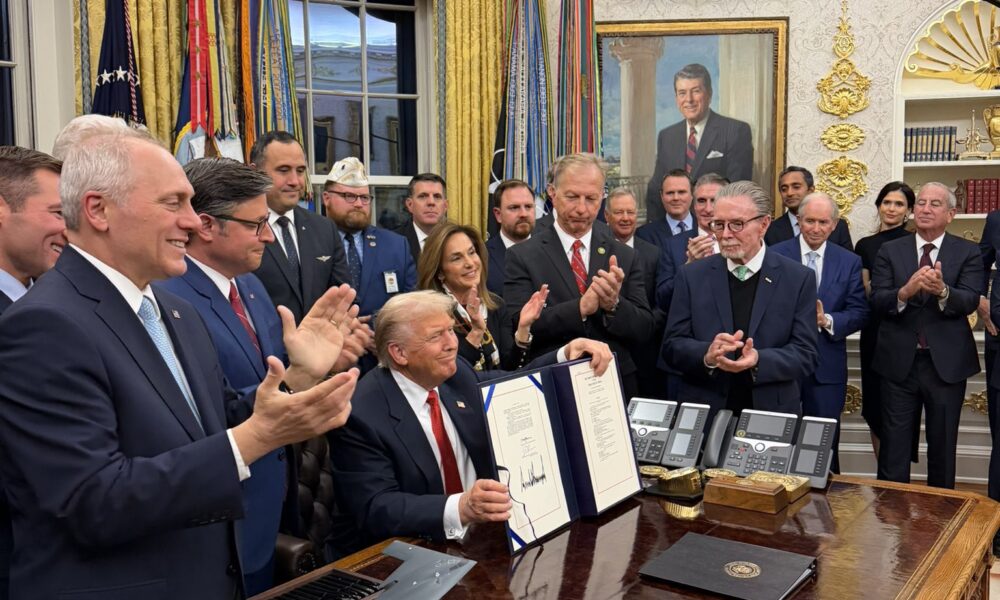
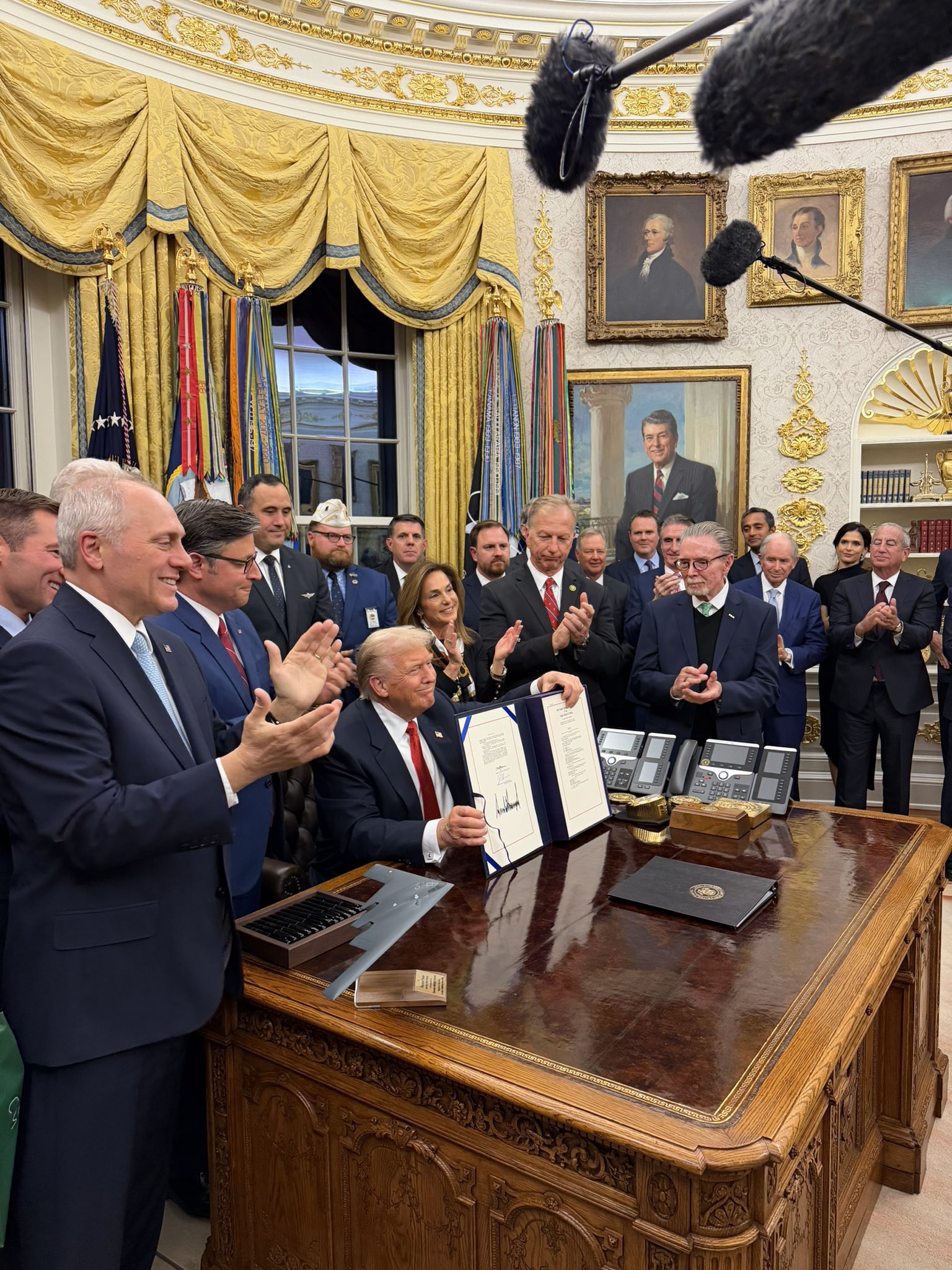
Washington D.C., Nov. 13, 2025 — After 34 days of political gridlock that left hundreds of thousands of federal employees without pay and key national services paralyzed, President Donald Trump on Wednesday signed a bipartisan spending bill to end the longest government shutdown in United States history.
The signing came just two hours after the House of Representatives voted to approve the funding legislation by a narrow 222–209 margin, marking a dramatic conclusion to weeks of intense political standoff between Republicans and Democrats.
The shutdown, which began over disputes about federal health insurance subsidies and budget allocations, crippled several sectors, including air-traffic control, food assistance programs, and federal contracting, while creating deep political divisions across Washington.
Trump’s Signature Ends Historic Standoff
President Trump’s decision to back the measure was key in uniting the Republican-controlled House, which had faced internal pressure to reopen the government amid growing public outrage.
“The American people deserve a government that works,” Trump said during a brief signing ceremony at the White House. “This deal isn’t perfect, but it gets federal workers back on the job and ensures that essential services are running again.”
Despite Trump’s attempt to frame the move as a bipartisan victory, tensions remain high on Capitol Hill. The legislation comes after weeks of failed negotiations, where both parties sought to claim the moral high ground in what had become a national political spectacle.
According to brecorcoder.com, Democrats entered the negotiations emboldened by a string of recent election victories that they believed would give them leverage to extend federal health insurance subsidies set to expire at year’s end.
A Divided Vote and Uncertain Future
The final House vote—222 in favor and 209 opposed—reflected sharp partisan divisions. Most Republicans backed the bill following Trump’s endorsement, while Democrats expressed outrage that the measure failed to secure long-term healthcare funding protections.
House Speaker Mike Johnson, who has emerged as one of Trump’s closest allies in Congress, praised the bill as “a responsible step forward,” but stopped short of promising future votes on Democratic priorities like healthcare subsidies.
“This legislation restores stability,” Johnson said, “but the conversation about spending and entitlements is far from over.”
Democrats, however, accused Republicans of political opportunism. Representative Mikie Sherrill (D–NJ), who recently won election as New Jersey’s next governor, gave an emotional farewell speech condemning what she described as the administration’s “callous disregard” for vulnerable Americans.
“To my colleagues: Do not let this body become a ceremonial red stamp for an administration that takes food away from children and rips away healthcare,” Sherrill said in her final address before resigning from Congress next week.
“To the country: Stand strong. As we say in the Navy, don’t give up the ship.”
Public Anger, Polls Show Blame Divided
Despite the political theatrics, the American public appears to have grown weary of both parties.
A Reuters/Ipsos poll released on Wednesday revealed that 50% of Americans blamed Republicans for the shutdown, while 47% blamed Democrats, underscoring the polarization that has come to define U.S. politics.
Millions of Americans felt the shutdown’s impact firsthand: national parks closed, food assistance programs were halted, airport delays multiplied, and federal paychecks were frozen.
Economists estimate that the shutdown cost the U.S. economy billions of dollars in lost productivity, with some small businesses that rely on government contracts still uncertain when they’ll recover.
Democrats Eye December Vote on Health Subsidies
Although Democrats failed to secure an immediate extension of federal health insurance subsidies, the spending deal sets up a December vote in the Senate to revisit the issue.
However, Speaker Mike Johnson has not committed to bringing such a bill to the House floor, leaving millions of low-income Americans anxious about the future of their healthcare coverage.
Democratic leaders say they plan to leverage public pressure in the coming weeks. “We may have lost this round, but the fight for affordable healthcare isn’t over,” said House Minority Leader Hakeem Jeffries (D–NY).
Analysts note that the shutdown has further strained relations between the two parties, making future negotiations on spending and entitlements even more difficult.
Fallout Extends to Other Controversies
The House’s return from its long recess also reignited other contentious issues, including a pending vote to release all unclassified records related to the late financier Jeffrey Epstein, whose connections to high-profile figures, including Trump, continue to fuel public speculation.
The measure to force the release of those records gained new momentum after Democrat Adelita Grijalva was sworn in to replace her late father, Representative Raul Grijalva of Arizona. Her signature provided the final push needed to bring the issue to a vote.
Within hours of the House vote on the funding bill, Democrats released a new batch of Epstein-related documents, potentially setting the stage for another round of high-stakes political drama.
“This Congress must commit to transparency,” Grijalva said in her first statement as a member of Congress. “The American people deserve to know the full truth.”
The move has put renewed pressure on both Speaker Johnson and President Trump, who have previously resisted calls to declassify certain Epstein-related materials, citing “national security concerns.”
Legal Shield for Senators Over Data Privacy
One of the lesser-known provisions of the spending bill gives eight Republican senators the right to seek damages for alleged privacy violations stemming from the Justice Department’s investigation into the January 6, 2021, attack on the U.S. Capitol by Trump supporters.
The legislation retroactively makes it illegal, in most circumstances, to obtain lawmakers’ phone data without disclosure, and allows those whose data was accessed to sue the Justice Department for up to $500,000 in damages, plus attorneys’ fees.
Critics have described the provision as a “hidden gift” to Trump loyalists in the Senate. Senator Chris Murphy (D–CT) called it “a dangerous precedent that shields politicians from accountability.”
Republicans defended the clause, arguing that it restores privacy protections that were “abused” during the post-January 6 investigations.
Economic Impact and Recovery Efforts
The end of the shutdown brings relief to millions of Americans who depend on government services. Federal employees are expected to receive back pay within the next few days, while agencies like the Federal Aviation Administration (FAA) and the Department of Agriculture (USDA) resume normal operations.
However, economists warn that the damage may linger. According to analysts at the Brookings Institution, the prolonged closure of key agencies could trim as much as 0.2% off GDP growth in the fourth quarter.
Small business owners who rely on federal contracts or loans were hit particularly hard. “We lost nearly a month of revenue,” said Janet Fields, a government contractor in Virginia. “Even though the shutdown is over, the uncertainty remains.”
Air-traffic delays, halted inspections, and slow federal response times also tested public patience, further eroding confidence in government efficiency.
Political Implications for Trump and Congress
For President Trump, the shutdown’s conclusion marks both a victory and a political risk. While he can now claim to have restored order, the public backlash and internal Republican divisions could haunt him as the 2026 midterm elections approach.
Analysts suggest that Trump’s handling of the crisis could either strengthen his image as a dealmaker or reinforce perceptions of chaos and brinkmanship.
Meanwhile, Speaker Mike Johnson faces the difficult task of holding together a fractured Republican majority. The coming months will test his leadership as Democrats push for votes on healthcare, transparency, and ethics reforms.
“This shutdown has been a wake-up call,” said political analyst Dr. Rachel Monroe. “Both parties are walking away bruised, but the real losers are the American people.”
A Nation Exhausted but Moving Forward
As Washington resumes normal operations, the mood among federal employees and the public remains cautiously optimistic. The end of the shutdown provides temporary relief but little assurance against future crises.
“Government shutdowns have become political weapons,” said Professor Mark Shields of Georgetown University. “Until there’s structural reform to prevent them, Americans will continue to pay the price for partisan gamesmanship.”
While neither party emerged as a clear winner, the restoration of government services has been widely welcomed. For millions of Americans, the simple return of stability—paychecks, services, and national confidence—is victory enough.
Still, the shadow of the shutdown looms large over the months ahead. As lawmakers gear up for another round of budget and healthcare battles in December, one truth remains undeniable: the cost of political gridlock is borne not in Congress, but in the homes and workplaces of ordinary Americans.