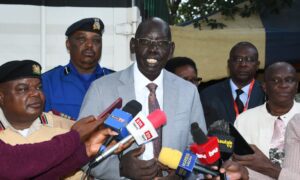
Trans Nzoia Governor George Natembeya has strongly criticized President William Ruto’s decision to eliminate the vetting process for issuing National Identification Cards (IDs) and passports in North Eastern Kenya, warning that the move could have severe security repercussions.
In a viral video, Natembeya did not hold back his concerns, stating that the removal of the vetting process could pave the way for terrorist infiltration. He warned that Kenya might one day find an “Al-Shabaab” member as part of the President’s security detail.
“One day, we are going to have an Al-Shabaab as the President’s Escort,” Natembeya warned.
Natembeya added “No Way to Differentiate Somalis and Foreigners
The former Rift Valley Regional Commissioner argued that scrapping the vetting process would make it impossible to differentiate between Kenyan-born Somalis and those from Somalia.”
“Now, if you allow people to walk in and get IDs without vetting, how will we tell a Somali from Somalia, and a Somali born and bred in Wajir, Garissa, and Mandera, or even in Trans-Nzoia? There’s no difference,” he stated.
Natembeya insisted that the vetting process was not a form of discrimination but a necessary step to safeguard national security.
Natembeya noted ‘This is a Disaster’
The Trans Nzoia Governor directly addressed President Ruto, calling his policy decision a “disaster” with potentially dire consequences.
“This policy decision, Mr. President, is a disaster. The consequences are going to be dire. This is not something that you play cheap populist politics with,” he said.
His remarks reflect growing concerns among leaders about Kenya’s border security, particularly with Somalia, where Al-Shabaab militants have been a persistent threat.
Ruto’s Move Sparks Security Concerns
President Ruto’s government recently removed the vetting process, arguing that it was discriminatory and often delayed the issuance of crucial documents. However, critics, including Natembeya, fear that without proper checks, extremists could exploit the system to gain Kenyan citizenship fraudulently.
Natembeya’s comments have sparked mixed reactions across Kenya. While some Kenyans support his stance, others argue that the vetting process has historically been used to marginalize ethnic Somali citizens.
Security vs. Human Rights: A Delicate Balance
The debate over vetting has long been a contentious issue in Kenya. Many ethnic Somalis have complained that the process was discriminatory, often leaving them stateless for years. However, security experts argue that without proper screening, Kenya could expose itself to severe security risks, especially from groups like Al-Shabaab.
Security analyst George Musamali told K47 Digital News that the government must balance security concerns with the rights of Kenyan citizens.
“We cannot ignore the security risks, but at the same time, we must ensure that genuine Kenyan citizens are not denied their rights based on their ethnicity,” Musamali said.
Government Yet to Respond
As of now, President Ruto’s administration has not issued a formal response to Natembeya’s remarks. However, the debate over national security and the rights of ethnic Somalis is likely to intensify in the coming days.
The removal of vetting for IDs and passports is a significant policy shift, and its long-term impact remains to be seen. With leaders like Natembeya voicing strong opposition, the government may face increasing pressure to reconsider or implement additional security measures.
What Next?
With Kenya’s national security at stake, experts and political leaders will likely continue weighing in on the matter. The question remains: Will President Ruto’s administration revisit its decision, or will the policy remain in place despite the growing concerns?