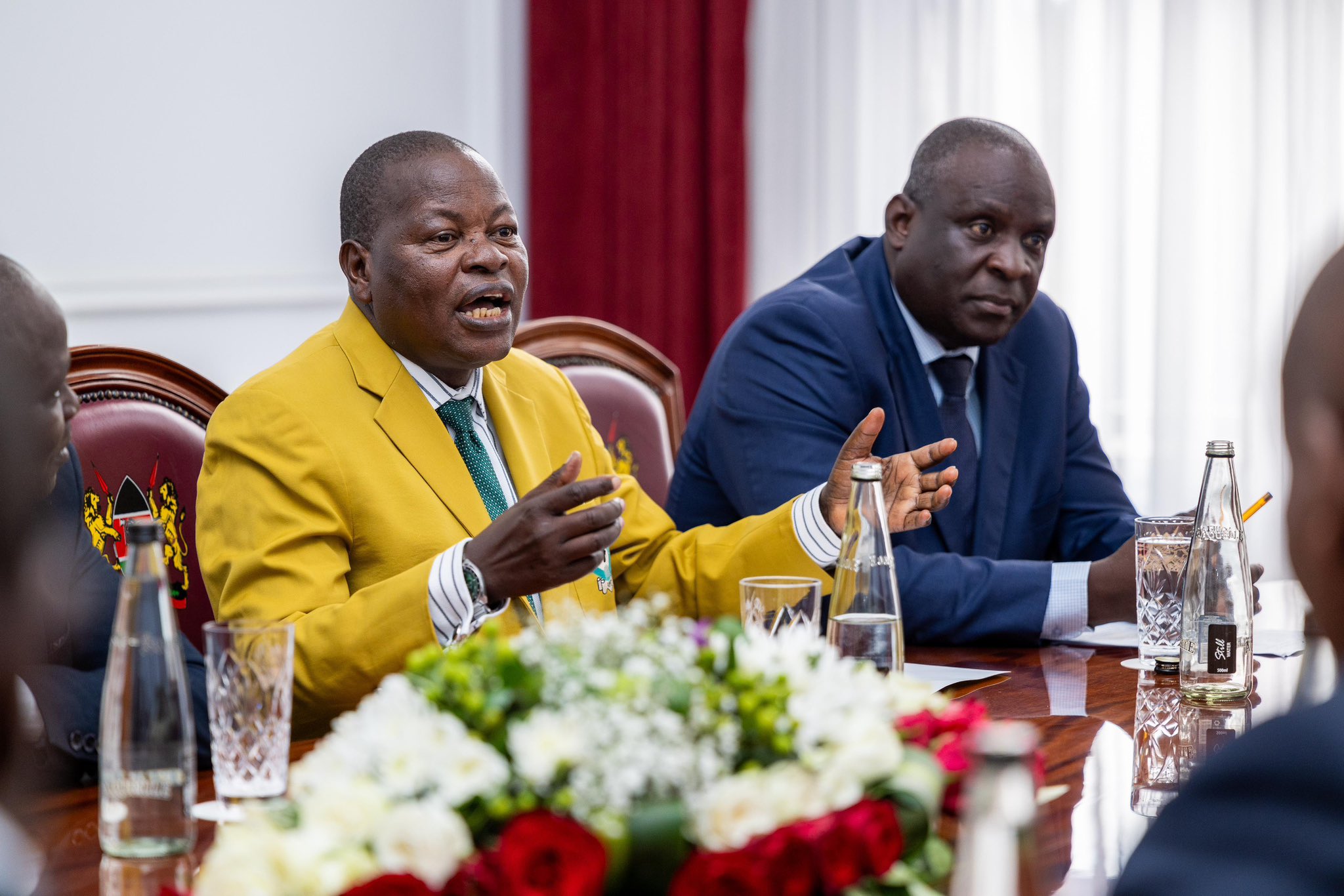
Kenya’s education sector could soon witness a significant structural adjustment if a new proposal by gains support in Parliament. The legislator has announced plans to table a Motion in the National Assembly seeking to transfer Grades 8 and 9 learners from junior secondary schools to senior secondary institutions in a bid to rescue struggling schools and ensure equitable access to education across the country.
The proposal comes amid growing concerns that many senior secondary schools—particularly those categorized as C4 institutions—are facing declining enrollment levels that threaten their sustainability and long-term survival.
Enrollment Crisis Hits C4 Senior Secondary Schools
According to Hon. Milemba, the current transition system has unintentionally created a major imbalance within Kenya’s secondary education framework. Schools classified under C1, C2, and C3 categories have admitted the majority of Grade 10 learners, leaving C4 schools with minimal student populations.
This uneven distribution has placed smaller and rural-based schools in a precarious situation. Many institutions now operate far below capacity despite possessing fully developed learning facilities funded through public investment.
Education stakeholders warn that continued low enrollment could lead to underfunding, staff shortages, or even eventual closure of some schools if urgent policy interventions are not introduced.
“These schools are fighting to survive,” Milemba stated, emphasizing that the situation goes beyond administrative challenges and directly affects communities relying on nearby institutions for accessible education.
Schools Built to Serve Communities
A key argument behind the Motion is the original purpose of public school placement. Senior secondary schools were strategically established to serve surrounding communities, especially in rural and marginalized regions where infrastructure and transport networks remain limited.
In many parts of Kenya, learners must travel long distances to reach well-populated institutions. Poor road networks, high transport costs, and safety concerns make daily commuting impractical for thousands of students.
For families living in remote areas, proximity to a school is not merely convenient—it determines whether a child continues education at all.
Hon. Milemba noted that forcing learners to seek placement far from home undermines education access and increases inequality among students from different socioeconomic backgrounds.
Proposal to Move Grades 8 and 9
To address the imbalance, the legislator proposes relocating one or two junior secondary classes—specifically Grades 8 and 9—to senior secondary schools.
Under the proposal:
- Junior secondary learners would utilize existing senior school facilities.
- Enrollment would increase in underutilized institutions.
- Government infrastructure investments would achieve maximum value.
- Students in remote areas would access education closer to home.
The Motion argues that many senior secondary schools already possess laboratories, libraries, qualified teaching staff, and spacious classrooms capable of accommodating additional learners immediately.
Ironically, some of these schools currently lack Grade 10 classes despite having adequate resources to host hundreds of students.
“This is an underutilization of valuable public resources,” Milemba emphasized.
Making Use of Existing Infrastructure
Over the years, the government has invested billions of shillings in building and equipping secondary schools nationwide. Facilities such as science laboratories, ICT rooms, dormitories, and libraries remain idle in some institutions due to declining admissions.
Education experts say redistributing learners rather than constructing entirely new facilities could save public funds while improving learning environments.
By moving Grades 8 and 9 into senior schools, existing infrastructure would be fully utilized without requiring immediate large-scale capital investment.
The proposal also aligns with ongoing discussions about optimizing education spending amid growing budgetary pressures.
Capitation Debate: Ksh 15,000 vs Ksh 22,000
Another major component of Milemba’s proposal addresses school funding through capitation grants.
Currently, schools receive government funding per learner to support operational costs. However, the MP urged school principals to adopt realistic expectations regarding capitation if the transition plan succeeds.
He proposed a capitation fee of Ksh 15,000 per learner, instead of the Ksh 22,000 currently associated with senior secondary funding.
According to Milemba, insisting on higher funding could discourage government approval of the plan.
“If we insist on Ksh 22,000, the government may not support it,” he warned.
He further appealed to school administrators to avoid imposing additional levies on parents, stressing that affordability must remain central to education reforms.
Relief for Parents and Guardians
Parents across Kenya have increasingly voiced concerns over rising education costs despite the government’s push toward affordable and accessible learning.
Relocating junior secondary learners to nearby senior schools could significantly reduce expenses related to transport, boarding, and accommodation.
Families in rural communities often struggle to sustain education when children must attend distant institutions. The proposed changes could therefore ease financial pressure while maintaining continuity in learning.
Education analysts believe such reforms may also improve student attendance and retention rates, particularly among vulnerable households.
Preparing Schools for Transition
Hon. Milemba called upon principals of senior secondary schools to begin preparing for the possible admission of junior secondary students.
He encouraged administrators to:
- Accept learners under fair and manageable conditions.
- Avoid introducing extra charges.
- Work collaboratively with government agencies.
- Ensure smooth academic integration.
The transition, if approved, would require coordination between the Ministry of Education, Teachers Service Commission, and school management boards to align curriculum delivery and staffing requirements.
Protecting Small Schools from Collapse
One of the strongest motivations behind the Motion is preventing the collapse of smaller schools that play a crucial role in community development.
Closure or weakening of local schools often has ripple effects, including:
- Job losses for teachers and non-teaching staff.
- Reduced local economic activity.
- Increased school dropout rates.
- Community displacement of learners.
By redistributing learners more evenly, the proposal seeks to preserve educational institutions that serve as social and economic anchors within rural communities.
National Education Policy Debate Intensifies
The proposal is expected to spark widespread debate within Kenya’s education sector once presented before Parliament.
Supporters argue that the plan offers a practical and cost-effective solution to emerging challenges under the Competency-Based Curriculum (CBC) transition framework.
Critics, however, may raise concerns about logistical implementation, teacher deployment, curriculum synchronization, and infrastructure readiness in certain regions.
Education policy experts note that successful reform will depend heavily on stakeholder consultation and careful rollout planning.
Legislators Urged to Support Motion
Hon. Milemba has already begun rallying fellow lawmakers to back the Motion when it comes before the National Assembly.
He framed the proposal not as a political initiative but as a national solution aimed at protecting learners, schools, and public investments.
“I am calling upon my fellow legislators to support this Motion when it comes before the House,” he said.
The MP emphasized that equitable access to education must remain a priority as Kenya continues implementing reforms designed to modernize learning systems.
Community Reactions Emerging
Early reactions from education stakeholders indicate growing interest in the proposal.
Some school heads from under-enrolled institutions have welcomed the idea, viewing it as a lifeline for schools struggling with operational sustainability.
Parents in remote regions have also expressed optimism that relocating junior secondary classes could eliminate long daily commutes for learners.
However, teachers’ unions and education planners are expected to scrutinize staffing implications and workload distribution should the Motion pass.
The Bigger Picture: Equity in Education
At its core, Milemba’s proposal highlights a broader issue confronting Kenya’s education system—balancing efficiency with equity.
While high-performing or urban schools continue attracting large student populations, smaller rural institutions risk marginalization despite government investment.
Redistribution of learners could help bridge disparities between regions while ensuring that every child has access to quality education regardless of location.
The debate ultimately raises fundamental questions about how education resources should be allocated in a rapidly evolving system.
What Happens Next?
Once formally tabled, the Motion will undergo parliamentary debate, committee review, and possible amendments before any nationwide implementation.
If approved, the Ministry of Education would likely develop policy guidelines outlining timelines, funding structures, and operational frameworks for transitioning Grades 8 and 9.
For now, attention shifts to Parliament, where lawmakers will determine whether the proposal becomes a transformative education reform or remains a debated policy suggestion.
Conclusion
Hon. Omboko Milemba’s proposed Motion represents one of the most significant education restructuring ideas currently under discussion in Kenya. By seeking to move Grades 8 and 9 into senior secondary schools, the legislator aims to rescue struggling institutions, maximize public investment, and improve accessibility for learners in underserved communities.
As debate builds ahead of its presentation in the National Assembly, the proposal has already ignited national conversation about fairness, efficiency, and sustainability within Kenya’s education system.
Whether Parliament embraces or revises the plan, one reality remains clear: the future of many senior secondary schools—and the students they serve—may depend on decisions made in the coming months.