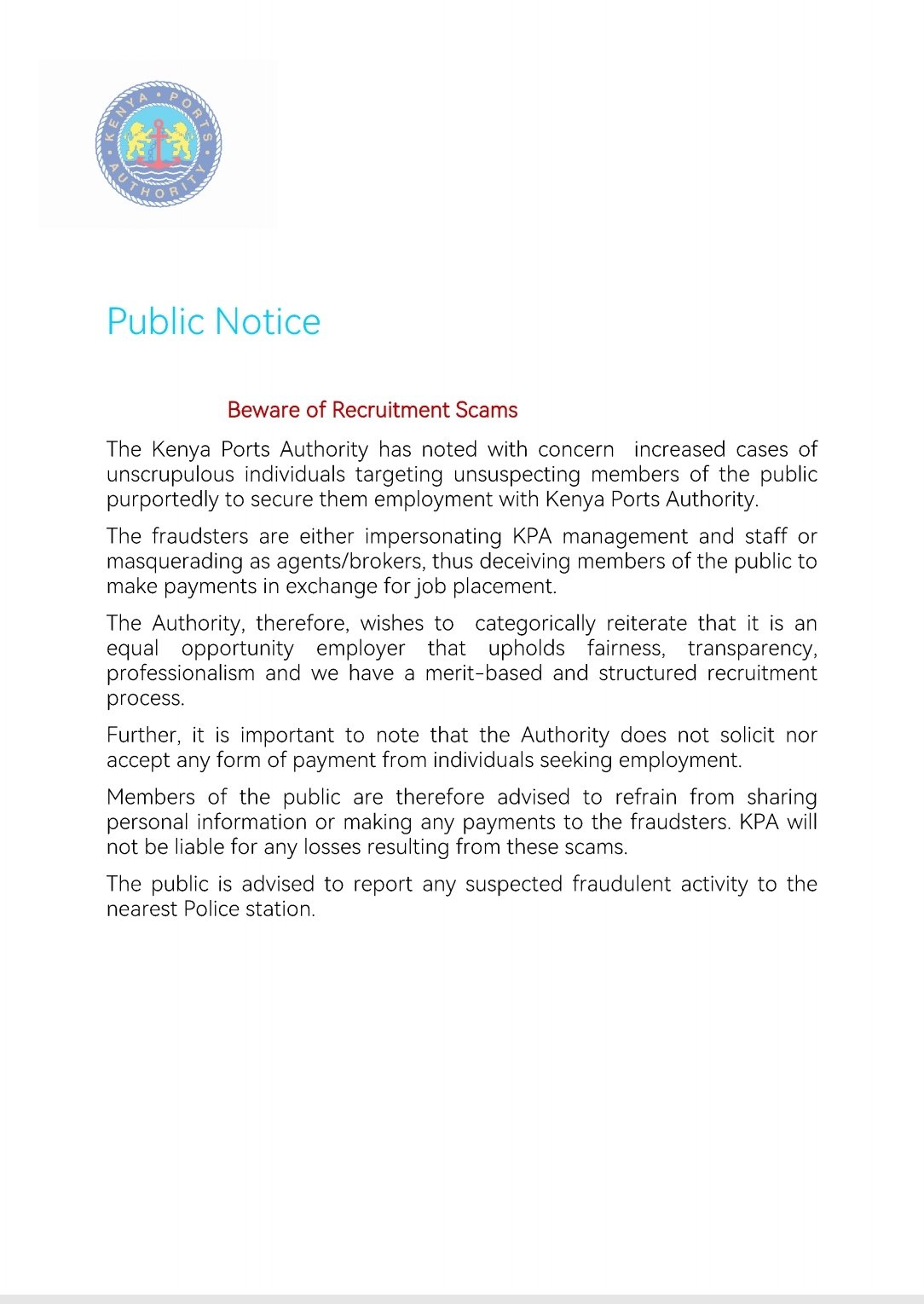
The Kenya Ports Authority (KPA) has issued an urgent and stark warning to job seekers across the nation: criminals are actively impersonating officials to steal money and personal data through elaborate employment scams. This alarming announcement comes as the Authority notes a significant and worrying increase in fraudulent activities targeting desperate citizens hoping to secure coveted positions within the prestigious state corporation.
According to the official alert, unscrupulous individuals are boldly masquerading as KPA management staff or posing as authorized agents and brokers. These fraudsters operate both online and offline, using sophisticated tactics to convince unsuspecting members of the public that they have the inside track to secure them employment. Their ultimate goal is to deceive individuals into making illicit payments in exchange for promised job placements, opportunities that do not exist.
“The Authority, therefore, wishes to categorically reiterate that it is an equal opportunity employer that upholds fairness, transparency, professionalism and we have a merit-based and structured recruitment process,” the statement reads firmly. This is the core message KPA is desperate to communicate. In an era of high unemployment, the vulnerability of job seekers is being exploited mercilessly. The scammers prey on hope, charging fees for fabricated interview slots, fake offer letters, or non-existent training programs required before a supposed placement.
KPA has emphasized a critical and non-negotiable policy: the Authority does not solicit nor accept any form of payment from individuals seeking employment. Any request for money—whether framed as a registration fee, processing charge, security clearance cost, or “facilitation” fee—is an immediate red flag and a definitive sign of a scam. The official recruitment process is entirely free, relying on advertised vacancies, formal applications, and competitive, merit-based assessments.
The ramifications of these scams extend beyond immediate financial loss. The Authority also warned the public to “refrain from sharing personal information” with these criminals. Providing details such as national ID numbers, KRA PINs, bank account information, or copies of personal documents can lead to identity theft, further financial fraud, and severe personal security risks. KPA has explicitly stated it “will not be liable for any losses resulting from these scams,” placing the onus on vigilance and placing the responsibility on the public to verify sources meticulously.
So, how can job seekers protect themselves? First and foremost, all genuine KPA vacancies are advertised through official channels: the KPA website (www.kpa.co.ke) and reputable mainstream media. Recruitment drives are never announced exclusively via social media, WhatsApp, or unsolicited phone calls. Secondly, the entire process is formalized; interactions with unknown “agents” are not part of the procedure. Prospective applicants are encouraged to directly contact KPA’s Human Resource department through official lines listed on their website to verify any suspicious contact.
The Authority has urged anyone who encounters these fraudulent schemes to immediately “report any suspected fraudulent activity to the nearest Police station.” Collective vigilance is key to shutting down these criminal networks. By reporting incidents, victims and those approached can help law enforcement track and apprehend the perpetrators.
This widespread scam highlights a broader issue of transparency in public sector recruitment. While KPA reaffirms its commitment to a structured process, the persistent occurrence of such fraud indicates a gap between official procedure and public awareness. It underscores the need for continuous, aggressive public education campaigns from all major employers, especially state corporations, to repeatedly broadcast their recruitment protocols.
In conclusion, the dream of a stable job should not end in a nightmare of financial ruin and stolen identity. The Kenya Ports Authority’s warning is a crucial reminder that opportunity should never come with a price tag. Job seekers must exercise extreme caution, verify all information through official portals, and remember the golden rule: if someone asks for payment for a job promise, it is always, without exception, a scam.