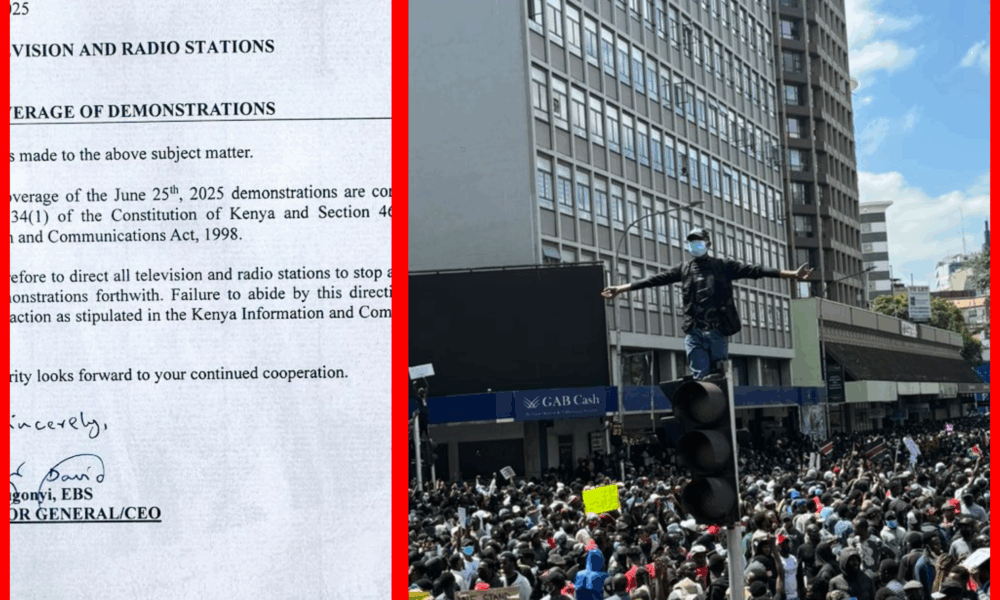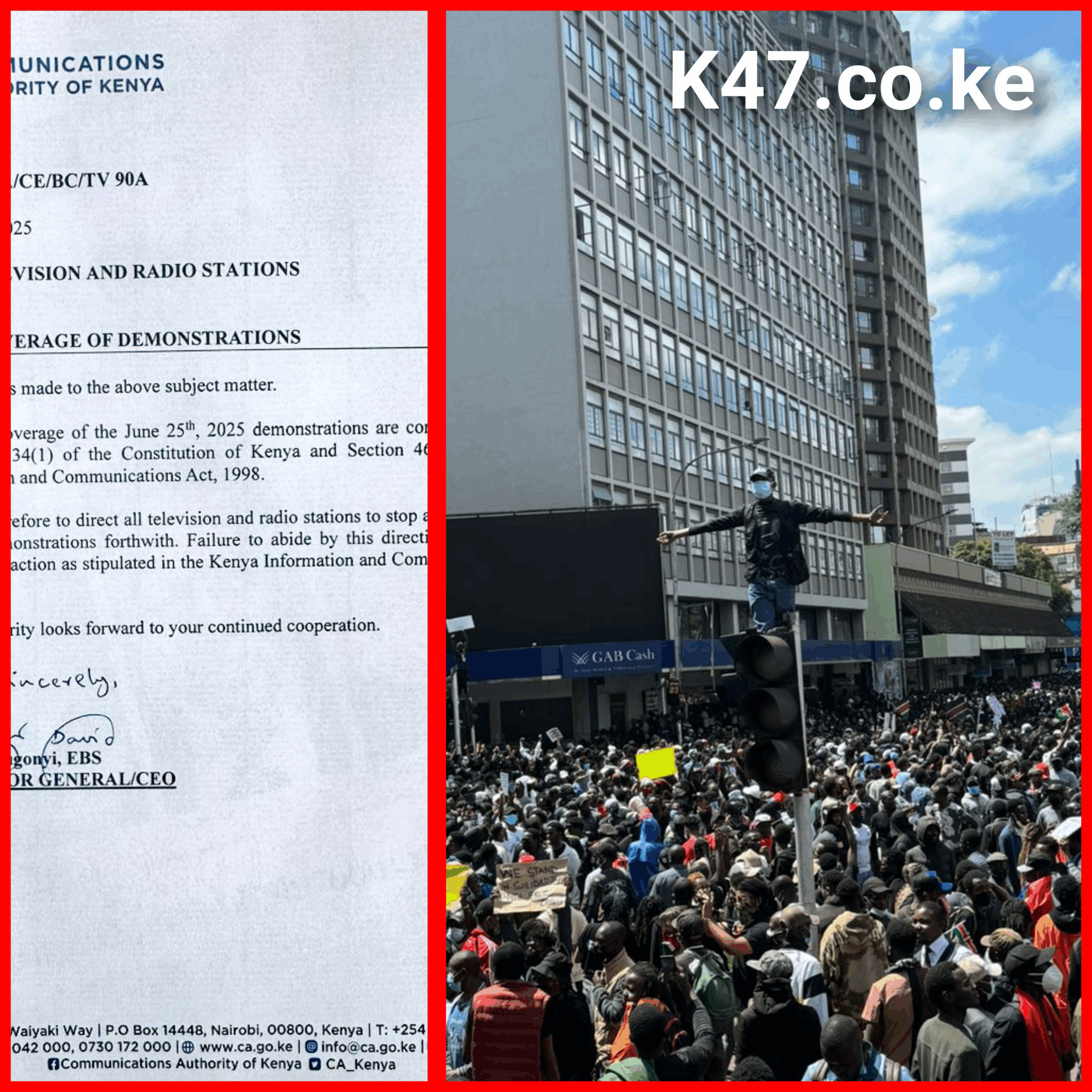
Communications Authority orders TV and radio stations to halt live coverage of demonstrations, citing legal violations.
Nairobi, Kenya – June 25, 2025
Kenya’s Communications Authority (CA) has issued a sweeping directive ordering all television and radio stations to immediately stop live coverage of nationwide demonstrations, sparking concerns over media freedom.
In a letter addressed to broadcasters, the regulator cited violations of Articles 33(2) and 34(1) of Kenya’s Constitution, as well as Section 461 of the Kenya Information and Communications Act, 1998, as the basis for the ban. The move comes amid heightened tensions as protests grip major cities.
Legal Justification or Media Suppression?
The CA’s directive, signed by Director General David Mugonyi, warned that failure to comply would result in “regulatory action” under the law. However, the letter did not specify how the live broadcasts allegedly breached constitutional provisions, raising questions over transparency.
Article 33(2) of Kenya’s Constitution allows limitations on freedom of expression if it incites violence or hate speech, while Article 34(1) guarantees media freedom but permits regulation in public interest. Critics argue the ban appears preemptive rather than evidence-based.
Mixed Reactions from Media and Activists
Media stakeholders have condemned the directive as an attempt to “gag press freedom” during a critical moment.
“This is a dangerous precedent,” said Linus Kaikai, a veteran journalist and media rights advocate. “If live coverage is banned, how will Kenyans know what’s truly happening on the ground?”
Meanwhile, government officials insist the move is necessary to “prevent escalation” of unrest.
Global Context of Media Restrictions
Kenya’s decision mirrors similar actions in other African nations where governments have restricted live protest coverage, often citing public order concerns. In 2023, Nigeria imposed a similar ban during elections, while Zimbabwe blocked social media during anti-government rallies.
What Happens Next?
With broadcasters facing regulatory penalties for non-compliance, the immediate impact could see a shift to delayed reporting or social media updates. However, digital platforms may also come under scrutiny if authorities expand restrictions.
The CA has urged cooperation, but the media faces a dilemma: obey the directive or risk sanctions while upholding journalistic duty.
As tensions rise, all eyes are on whether Kenya’s courts or human rights bodies will challenge the order—and whether blackouts will leave the public in the dark.