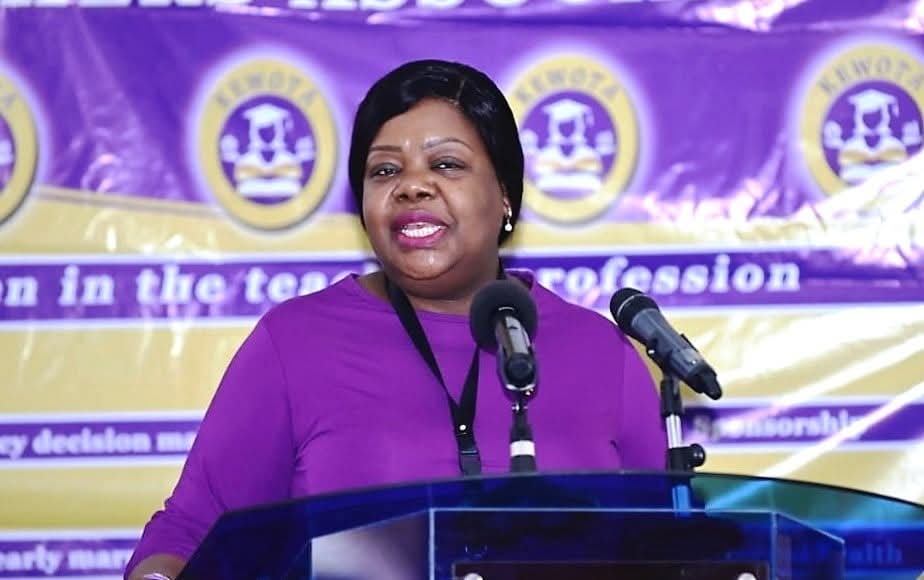
KEWOTA Payroll Scandal: Family Jobs, Millions, and Explosive Allegations
A fresh investigative report by KTN News has ignited a nationwide storm after uncovering what is being described as one of the most disturbing alleged financial scandals involving teachers’ welfare funds in Kenya.
At the centre of the unfolding controversy is the Kenya Women Teachers Association (KEWOTA), a government-recognised body tasked with promoting the welfare of female teachers. Instead of safeguarding teachers’ contributions, however, the organisation now faces serious allegations of nepotism, illegal payroll deductions, and possible financial misconduct involving hundreds of millions of shillings.
The investigation paints a troubling picture of how a welfare association meant to uplift teachers may have been turned into what critics are calling a “family payroll empire.”
How the KEWOTA Scheme Allegedly Works
According to findings cited in the investigation, the alleged scheme revolves around monthly deductions from teachers’ salaries.
Approximately 95,000 teachers are said to contribute KSh 200 per month, deducted directly through the (TSC) payroll system. This translates to an estimated:
- KSh 19 million per month
- KSh 228 million per year
Reports indicate that these deductions have been ongoing for years, with some teachers claiming they never consented to the payments.
Even more concerning are claims that the funds, once collected, were allegedly withdrawn and used in ways that lack transparency and accountability.
CEO Benta Opande at the Centre of the Storm
The spotlight has firmly fallen on , the long-serving CEO of KEWOTA.
Investigative reports suggest that Opande is currently under scrutiny over alleged financial misconduct, including possible misappropriation of funds.
She is also accused of presiding over a system that allegedly prioritised family members and close associates in employment and financial benefits within the organisation.
Despite the gravity of the allegations, Opande has reportedly declined to respond directly, citing her constitutional right to remain silent and accusing sources of blackmail.
Alleged Family Payroll: A Welfare Body Turned Private Enterprise?
One of the most explosive aspects of the scandal is the alleged employment of multiple family members within KEWOTA.
Documents referenced in the investigation claim the CEO’s inner circle includes:
- A son earning about KSh 200,000 per month
- Two daughters earning between KSh 150,000 and KSh 200,000 per month
- A former husband listed as a consultant earning KSh 100,000 per month
- A sister coordinating regional operations
- A niece managing a local office
- A brother serving in a senior management role
Altogether, critics argue this forms a tightly knit family network embedded within the organisation’s payroll system.
Observers say the structure resembles a private enterprise rather than a professional welfare institution.
Treasurer and Associates Also Implicated
The controversy does not end with the CEO.
KEWOTA’s treasurer, , is also alleged to be earning a substantial monthly salary—reportedly around KSh 270,000—with additional payments said to be routed through multiple accounts.
Investigators claim that relatives of senior officials may also appear on the payroll, raising serious questions about governance, accountability, and conflict of interest.
Claims of Ghost Employees and Fake Recruitment Drives
Beyond nepotism, the allegations extend into potentially fraudulent practices.
Reports suggest:
- Some individuals listed on payroll allegedly had no knowledge of their employment
- Fake recruitment drives may have been created to justify withdrawals
- Overpayments to staff were allegedly withdrawn in cash and redirected elsewhere
If proven, these practices would indicate a deliberate effort to obscure financial flows and evade accountability.
Cash Handovers and Alleged Bribery
Perhaps the most alarming claims involve alleged cash transactions meant to influence regulatory oversight.
According to whistleblower accounts:
- Cash payments were allegedly made to officials in strategic positions
- One incident reportedly involved a handover near the
- A TSC official is alleged to have received KSh 100,000 in January 2024
Such allegations raise concerns about possible regulatory compromise, where oversight mechanisms may have been weakened or influenced.
A Long History of Complaints from Teachers
The KEWOTA controversy did not emerge overnight.
Teachers have been raising concerns for years:
- In 2019, dozens of teachers filed court cases over unauthorized deductions
- In 2023, over 170 teachers petitioned leaders to intervene
- Complaints were reportedly lodged with the (EACC)
Despite these efforts, deductions reportedly continued, leaving many teachers frustrated and seeking answers.
KEWOTA’s Response: “Malicious and Defamatory”
In response to the allegations, KEWOTA has issued statements strongly denying wrongdoing.
The organisation maintains that:
- It operates within the law
- Its processes are transparent and accountable
- The allegations are part of a coordinated smear campaign
It has also threatened legal action against individuals and platforms spreading what it terms false information.
However, critics argue that these denials do little to address the detailed claims emerging from the investigation.
The Bigger Picture: Welfare Scheme or Systemic Failure?
The KEWOTA scandal raises deeper questions about governance in welfare organisations across Kenya.
Experts point to systemic challenges where leadership may consolidate control while weakening accountability structures.
In such environments:
- Oversight becomes ineffective
- Decision-making is centralized
- Financial transparency is limited
For a body handling over KSh 228 million annually, the absence of robust independent audits raises serious concerns.
Impact on Teachers: The Silent Victims
At the heart of this scandal are thousands of Kenyan teachers—many of whom earn modest salaries and rely on welfare organisations for support.
For them, the alleged misuse of funds represents:
- Loss of trust
- Financial strain
- Lack of representation
Some teachers claim they only discovered the deductions after closely reviewing their payslips, long after the system had already been implemented.
What Happens Next?
As the scandal gains momentum, pressure is mounting on key institutions, including:
- Parliamentary oversight bodies
So far, no comprehensive public report has been released detailing how KEWOTA funds have been managed over the years.
Investigations are reportedly ongoing, but the lack of official conclusions has only intensified public scrutiny.
Conclusion: A Scandal That Could Reshape Teacher Welfare
The KEWOTA saga is more than just a corruption story—it is a test of accountability in Kenya’s public and quasi-public institutions.
What began as a welfare initiative aimed at supporting women teachers now stands accused of becoming a system that allegedly exploits them.
If the allegations are proven, the implications could be far-reaching:
- Legal consequences for those involved
- Policy reforms in welfare organisations
- Increased scrutiny of payroll deduction systems
For now, one thing is clear: this is a developing story that has captured national attention—and its outcome could redefine how teachers’ welfare funds are managed in Kenya.
This is a developing story. Updates will follow as more information emerges.