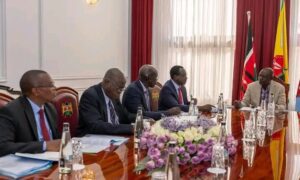
Nairobi, August 27th, 2024: The Ministry of Education is currently monitoring the opening of schools for the third term across Kenya. Cabinet Secretary Ezekiel Machogu announced that field officers have been deployed countrywide since Monday to assess the status of teaching and learning activities, ensuring that learners are actively engaging in educational pursuits despite the recent industrial tensions.
Strike Averted: KNUT’s Decision Restores Calm
This oversight comes on the heels of an essential decision by the Kenya National Union of Teachers (KNUT) to call off their intended strike. The strike was initially proposed in response to unresolved grievances between the union and the Teachers Service Commission (TSC), revolving around salary increments and employment conditions outlined in the 2021-2025 Collective Bargaining Agreement (CBA).
The government, however, swiftly intervened to de-escalate the situation. The National Treasury has since released Ksh. 13.5 billion, which will be used to settle the July and August salary raises for public school teachers. The government has assured the teaching community that all payments under this arrangement will be fully processed by Friday, offering teachers a much-needed sense of security as they focus on their responsibilities.
This substantial financial commitment from the government is not merely a short-term remedy but part of a broader strategy to ensure that industrial harmony is fully restored within the education sector. The TSC has been working “round the clock” to guarantee that teachers’ concerns are not just acknowledged but addressed in a systematic, consultative manner.
New Employment Opportunities for Teachers
The government’s commitment to the education sector does not stop at addressing salary concerns. In a significant boost to the teaching workforce, President William Ruto recently announced plans to employ an additional 20,000 teachers by the end of the year. This ambitious recruitment drive is a direct response to the shortage of staff in public schools, a challenge that has plagued the sector for years and has only worsened as student enrollment numbers continue to rise.
The new teachers will be deployed strategically across the country to ensure equitable distribution of human resources, particularly in understaffed and underserved regions. This development will be a massive relief for public schools, which have struggled with high teacher-to-student ratios that negatively affect learning outcomes.
Additionally, the government has allocated Ksh. 18.7 billion to facilitate the conversion of intern teachers to permanent and pensionable status. The conversion will take effect in January 2025, further cementing the government’s long-term strategy to stabilize the teaching workforce. This move will provide job security to thousands of teachers who have been working on temporary contracts, allowing them to focus on their core responsibilities without worrying about job stability.
Focus on Teachers’ Welfare and National Examinations
The Ministry of Education’s recent statement also emphasized the importance of teacher welfare in achieving industrial peace. The implementation of the second phase of the CBA has been a significant milestone in this regard, and efforts are underway to address any remaining administrative issues through dialogue between the government and the TSC.
The Ministry’s plea to teachers who have not yet resumed work to return to their stations underlines the pressing need to prepare students for the upcoming national assessments and examinations. With only a few months left in the academic year, it is crucial that teachers focus on completing the syllabus for all classes to ensure a smooth transition for students moving between different educational levels.
By reinforcing teacher welfare and stabilizing their conditions, the government aims to provide a conducive environment for both educators and learners, thus securing the future of Kenya’s education system.
Funding Boost for TVET Institutions
The government’s focus on education extends beyond primary and secondary schools to include Technical and Vocational Education and Training (TVET) institutions. TVET plays a critical role in equipping Kenya’s youth with practical skills necessary for employment in various sectors of the economy, particularly in technical fields.
Recognizing the importance of these institutions, the Ministry of Education has committed to ensuring the timely disbursement of resources to guarantee seamless operations. This financial boost will not only help maintain operations in the TVET institutions but will also alleviate the financial burdens on trainees, ensuring that they can continue their studies without disruption.
Ensuring Seamless Operations Across the TVET Sector
TVET institutions have emerged as a crucial component in Kenya’s goal of becoming an industrialized and middle-income economy. These institutions provide hands-on training in diverse fields such as engineering, agriculture, hospitality, and IT, among others. With increased funding, students enrolled in national polytechnics and other TVET centers can now expect enhanced services, better facilities, and more educational resources at their disposal.
The government’s recent measures are designed to ensure that the TVET sector continues to produce highly skilled graduates ready to meet the demands of Kenya’s evolving job market. As part of the government’s broader vision for vocational training, these reforms align with Kenya’s Vision 2030 development agenda.
The Future of TVET Funding
The government’s allocation of funds to TVET institutions underscores its belief in the transformative power of vocational training. Moving forward, the Ministry of Education will continue working closely with stakeholders to ensure that funding is disbursed efficiently and in a timely manner. This proactive approach is designed to create an enabling environment for both students and faculty to thrive.
In addition to government support, TVET institutions are also set to benefit from partnerships with industry players, who have a vested interest in ensuring that graduates are adequately prepared to enter the workforce. These collaborations will further strengthen Kenya’s vocational training system and ensure that it remains responsive to the needs of the economy.
Conclusion: A Stabilized Education Sector
The government’s efforts to stabilize the education sector, from averting a strike to boosting TVET funding, reflect a deep commitment to the country’s future. By addressing the grievances of teachers and ensuring that their concerns are met, the government has not only restored industrial harmony but also reinforced its dedication to quality education for all Kenyan students.
The upcoming recruitment of 20,000 teachers and the conversion of intern teachers to permanent and pensionable status signals a new chapter for the teaching profession in Kenya. These developments will have a lasting impact on the education system, improving both the learning environment for students and the working conditions for teachers.
With ongoing reforms in the TVET sector, Kenya is poised to create a well-rounded education system that caters to both academic and vocational learners, preparing them for the challenges and opportunities of the modern world. The Ministry of Education, under the leadership of Cabinet Secretary Ezekiel Machogu, remains focused on ensuring that every learner, regardless of their level, has access to quality education in a conducive environment.
As the third term progresses, the Ministry will continue to monitor schools closely, providing support where needed to ensure a successful academic year. Similarly, funding for TVET institutions will remain a priority, ensuring that students in these centers receive the resources they need to succeed.
In the coming months, the Ministry of Education is expected to roll out additional measures to further stabilize and strengthen Kenya’s education system, ensuring that it remains a cornerstone of the country’s economic and social development.