By: Benard Obonyo
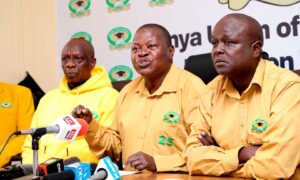
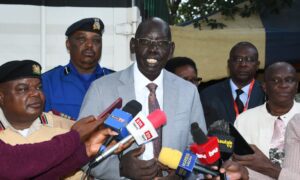
Sixty-one years after gaining independence from British colonial rule, Kenya is still grappling with systemic issues in its education sector. The Teaching Service Commission (TSC) is under fire for its controversial cadre system, which many educators believe perpetuates modern-day slavery. Benard Obonyo, a vocal critic and candidate for the Kenya Union of Post Primary Education Teachers (KUPPET) Vice Chairperson seat, has condemned the TSC’s practices and called for urgent reforms.
A Call for Educational Independence.
As Kenya celebrates over six decades of self-rule, the cry for true independence within the education system remains loud and clear. Obonyo highlights a fundamental issue: the wastage of students in Junior Secondary due to inadequate teaching. Teachers, who are paid meager wages, struggle to provide effective education to their students. The system, burdened by an insufficient number of tutors and poor remuneration, fails to meet the needs of learners.
Privatization and Inequity.
Obonyo criticizes the increasing privatization of education, which has become the norm in Kenya. The proliferation of private schools underscores the government’s failure to provide quality public education. This shift not only widens the gap between the rich and the poor but also undermines the principle of equal opportunity for all students.
The Burden of Bureaucratic Cadres.
The current system of numerous grades that a teacher must pass through to become a principal is a significant point of contention. Teachers must navigate through a labyrinthine progression from B5, C1, C2, C3, C4, to D1, D2, D3, D4, and D5. Obonyo describes this as a form of modern slavery, where teachers endure years of stagnation in their careers for minimal financial gain. For instance, a teacher promoted from C3 to C4 after 15 years in the same grade receives a mere Shs. 433 increment in their basic salary—a situation Obonyo finds laughable and unjust.
Demands for Cadre Reforms.
In his call for reform, Obonyo demands the elimination of certain cadres to streamline the progression for teachers. He advocates for the removal of C4, allowing teachers to move directly from C3 to C5. Similarly, he calls for the elimination of D2, D3, D4, and D5, proposing that all principals fall within the D1 cadre. This, he argues, would simplify the system and reduce unnecessary bureaucratic hurdles.
Obonyo also criticizes the stratification of deputy positions based on school classification, arguing that there is no need for Deputy I, Deputy II, and Deputy III distinctions. He asserts that these officers perform the same work in various stations and should not be segregated. Moreover, he believes that D1 should be accessible to teachers who choose to remain in the classroom rather than pursuing administrative roles. According to him, setting aside specific cadres for administrators only perpetuates inequality and limits career advancement for classroom teachers.
Union Officials and Government Accountability.
Obonyo’s critique extends to union officials, whom he accuses of neglecting teachers’ plights in favor of personal wealth accumulation. He questions the effectiveness and dedication of these officials in advocating for the rights and welfare of teachers.
Moreover, he highlights the inadequacies in the implementation of the Competency-Based Curriculum (CBC) in Junior Secondary schools. Despite existing infrastructure in Senior Secondary schools, Junior Secondary schools lack essential resources such as laboratories and qualified teachers, compromising the quality of education.
The Burden of Low Per Diem Rates.
Another pressing issue is the inadequate per diem rates for teachers. Despite the terms outlined in the signed Collective Bargaining Agreement (CBA), teachers are still signing for paltry sums: Shs. 200 for lunch and Shs. 300 for accommodation. Obonyo’s frustration is palpable as he laments the excessive taxation in the country, which even metaphorically extends to taxing personal aspects of life.
A Plea for Change.
In conclusion, Benard Obonyo’s critique of the TSC highlights significant flaws in Kenya’s education system. His demands for reform underscore the need for a more equitable, streamlined, and supportive environment for teachers. As he campaigns for the KUPPET Vice Chairperson seat, Obonyo’s vision for the future is clear: a system where teachers are fairly compensated, bureaucratic barriers are removed, and the quality of education is accessible to all.