The Teachers Service Commission (TSC) has cautioned Kenyans against a viral recruitment advertisement circulating online, describing it as false and misleading.
The widely shared poster claims that the Commission is conducting a large-scale recruitment exercise for 46,000 teachers on permanent and pensionable terms. According to the document, the vacancies include 6,000 positions for primary schools, 39,350 for junior schools, and 450 for secondary schools.
The poster further outlines alleged qualifications for applicants, including possession of a P1 certificate or a diploma in education, registration with TSC, and references to recruitment targets tied to a previous financial year.
However, TSC has dismissed the claims and clarified that the notice is not authentic.
TSC Distances Itself from the Advertisement
In a public notice shared through its official communication channels, the Commission urged members of the public to ignore the circulating document.
TSC stated that the information contained in the poster is fake and should not be relied upon. The Commission reminded job seekers that all official recruitment information is communicated through its verified platforms, including the TSC website, official Facebook page, and X account.
According to the Commission, any recruitment notice that does not originate from its recognized channels should be treated as suspicious.
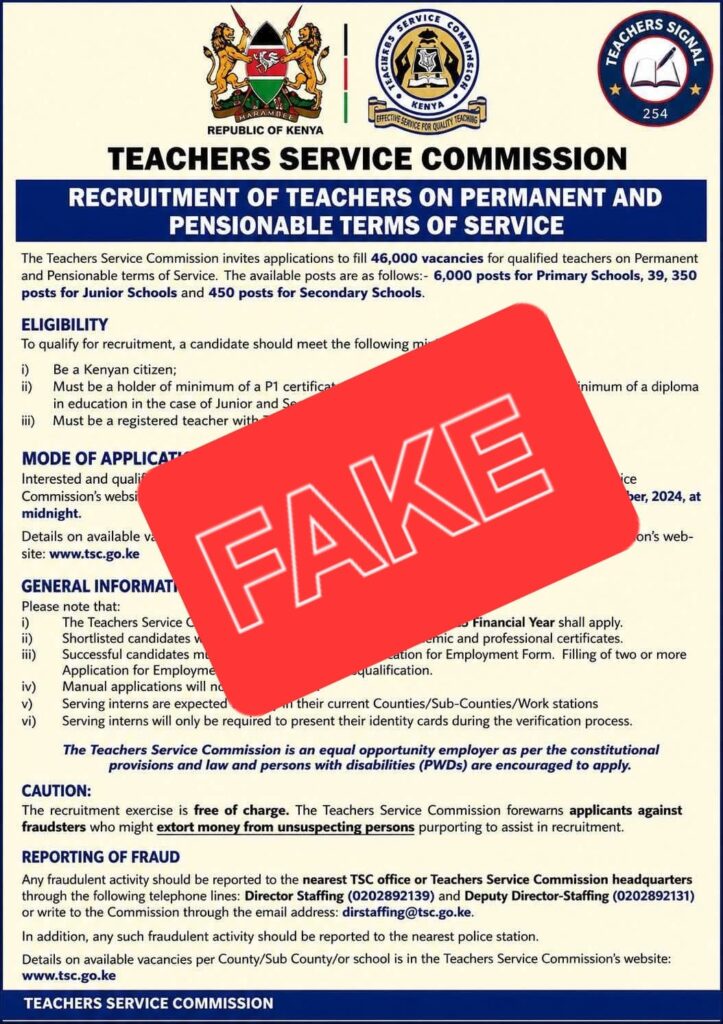
Warning Signs in the Fake Recruitment Notice
Several indicators suggest that the viral poster is fraudulent.
One of the biggest red flags is the claim that TSC is recruiting 46,000 teachers in a single exercise. Such a major recruitment initiative would ordinarily be announced publicly through official statements, budget allocations, and extensive media coverage.
The document also attempts to mimic the language used in legitimate recruitment notices. For example, it states that manual applications will not be accepted. While genuine TSC recruitment is conducted through official online systems, fraudsters often copy such wording to make fake notices appear authentic.
Another questionable claim concerns serving teacher interns, with the poster alleging that they would only need to present national identity cards during verification. TSC has never announced such a simplified verification process through any official communication.
In addition, the document contains a warning section cautioning applicants against fraudsters. Experts note that scammers frequently include such warnings in fake advertisements to create a false sense of legitimacy and gain public trust.
The poster also displays contact details that may appear genuine at first glance. However, TSC advises applicants to verify all contacts through its official website before engaging or submitting any information.
How Recruitment Scammers Target Victims
Cybersecurity specialists say fake job advertisements often follow predictable tactics designed to exploit desperate job seekers.
One common strategy is creating urgency. In this case, the poster includes a strict application deadline, encouraging potential applicants to act quickly without verifying the information.
Fraudsters may also contact applicants later and demand payments disguised as processing fees, interview charges, or shortlisting costs. Although the fake notice claims recruitment is free, scammers frequently introduce payment requests after establishing contact with victims.
Another risk involves the collection of personal documents. Unsuspecting applicants may be asked to submit copies of their academic certificates, identification cards, and professional registration documents to unauthorized email addresses. Such information can then be misused for identity theft and other fraudulent activities.
TSC has consistently maintained that no payments are required at any stage of its recruitment process.
What to Do If You Responded to the Fake Advertisement
Individuals who may have already submitted personal information or sent money in response to the fake recruitment notice are encouraged to act immediately.
The first step is to contact TSC through official channels and report the incident. Applicants should also notify law enforcement authorities, particularly if they suffered financial losses.
Those who shared copies of their identification documents or academic certificates should remain vigilant and monitor for any suspicious activity involving their personal information.
Additionally, members of the public are encouraged to help stop the spread of misinformation by sharing TSC’s official clarification with friends, family members, and online communities.
How to Confirm Genuine TSC Job Vacancies
To avoid falling victim to recruitment scams, job seekers should always verify information before applying.
All legitimate teaching vacancies are published on the official TSC website. Major recruitment exercises are typically accompanied by formal press statements and public announcements from senior Commission officials.
Applicants should also ensure they follow TSC’s verified social media accounts for accurate updates. Any recruitment information shared through unofficial channels should be treated with caution until independently verified.
Most importantly, TSC does not use agents, brokers, or intermediaries to recruit teachers. Applications are submitted directly by candidates through official Commission platforms, and no fees are charged.
Similar Incidents Have Occurred Before
This is not the first time fraudsters have attempted to exploit aspiring teachers using fake recruitment notices.
Over the past few years, several counterfeit TSC advertisements have circulated online, particularly during periods when the education sector was expanding staffing levels to support curriculum reforms and new learning programs.
In some cases, victims lost money after paying fraudulent recruitment fees, while others unknowingly shared sensitive personal information with scammers.
Despite repeated public awareness campaigns by TSC, fake recruitment notices continue to emerge, largely driven by the high demand for teaching opportunities across the country.
Stay Alert and Verify Before Applying
The demand for teaching jobs in Kenya remains high, with thousands of qualified teachers seeking employment opportunities. While TSC continues to recruit teachers and absorb some interns into permanent positions, any major recruitment exercise would be formally announced through official government and Commission channels.
Job seekers are therefore urged to exercise caution whenever they encounter recruitment advertisements on social media platforms, WhatsApp groups, Telegram channels, or other unofficial sources.
Before submitting an application, sharing personal documents, or responding to recruitment messages, always verify the information through TSC’s official communication platforms.
The Commission’s message remains clear: genuine recruitment exercises are free, transparent, and communicated through verified channels. When in doubt, verify first and avoid becoming a victim of fraud.