Massive Rift in ODM as Sifuna Fights Back
Kenya’s political landscape has been thrown into fresh turmoil following the dramatic removal of Nairobi Senator Edwin Sifuna as Secretary General of the Orange Democratic Movement (ODM). The decision, made by the party’s National Executive Committee (NEC) in Mombasa, has sparked a fierce internal battle that could reshape the future of one of the country’s most influential political parties.
Less than 24 hours after the NEC announced his ouster, Sifuna issued a strongly worded statement rejecting the decision outright. He termed the move illegal, unprocedural, and unconstitutional, insisting that he remains the duly elected Secretary General of ODM.
The unfolding crisis has exposed deep divisions within the party and raised broader questions about leadership, succession, party discipline, and the direction ODM will take as the country moves closer to the 2027 General Election.
Why ODM Removed Sifuna
According to ODM’s National Executive Committee, Sifuna’s removal followed concerns over alleged misconduct and what party leaders described as going against official party positions. The NEC said it acted within the party constitution and existing laws, emphasizing that discipline and unity are critical for the party’s stability.
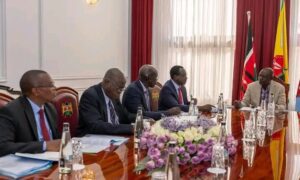
Party insiders indicated that the meeting in Mombasa resulted in a resolution to relieve Sifuna of his duties with immediate effect. In the interim, Deputy Secretary General Catherine Omanyo was appointed to serve in an acting capacity pending further internal processes.
ODM leadership maintained that the decision was purely internal and procedural, dismissing speculation that external political forces influenced the move. Party officials insisted that the NEC’s actions were guided solely by party interests and constitutional provisions.
Sifuna’s Explosive Response
Sifuna did not mince words in his response.
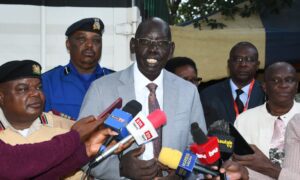
In a detailed public statement, he said he had not been informed of any formal allegations against him, nor had he been invited to respond to any charges. He argued that no lawful organ of the party had subjected him to a disciplinary hearing, making the removal invalid.
He further stated:
- He was never officially notified of misconduct.
- He was not summoned before any disciplinary body.
- The NEC’s actions violated the ODM Constitution and principles of natural justice.
Sifuna framed the dispute as a matter of principle rather than position. He maintained that his opposition to certain political alignments within the party may have triggered the fallout but insisted that dissent within democratic institutions should not be equated with indiscipline.
“I remain the duly elected Secretary General,” he asserted, signaling that he would not step aside quietly.
The Ruto Factor: A Deepening Divide
At the heart of the dispute appears to be a broader ideological and strategic divide within ODM.
Sifuna has publicly opposed any perceived rapprochement between sections of ODM leadership and President William Ruto’s administration. He has consistently maintained that the party must remain firm in its opposition stance rather than align itself with the ruling government.
His critics within the party argue that unity and strategic engagement are necessary in Kenya’s fluid political environment. Supporters of Sifuna, however, believe that compromising the party’s opposition identity risks alienating its core support base.
This ideological tension — between strict opposition politics and pragmatic engagement — appears to have intensified in recent months, especially following the passing of ODM’s longtime party leader, Raila Odinga.
Post-Raila Leadership Struggles
The death of Raila Odinga marked the end of an era for ODM. For decades, Raila’s authority and political influence served as a unifying force within the party, even during moments of internal disagreement.
With his absence, underlying rivalries and strategic disagreements have become more visible.
Sifuna, who served as Secretary General for nearly nine years, positioned himself as a defender of Raila’s legacy and the party’s foundational ideals. In his statement, he emphasized loyalty to the late leader’s principles and warned against turning ODM into what he described as an appendage of external power centers.
Political analysts say that succession struggles in major political parties often surface after the departure of dominant figures. ODM now appears to be navigating that delicate transition period.
Reactions from Party Members and Leaders
The NEC’s decision has triggered mixed reactions within ODM and across Kenya’s political spectrum.
Some leaders have defended the move, arguing that discipline and cohesion are essential for any political party. They maintain that no individual is bigger than the institution and that party structures must be respected.
Others have expressed concern that removing Sifuna could deepen divisions and weaken ODM’s national standing. A section of leaders believes that the dispute should have been resolved through dialogue rather than abrupt action.
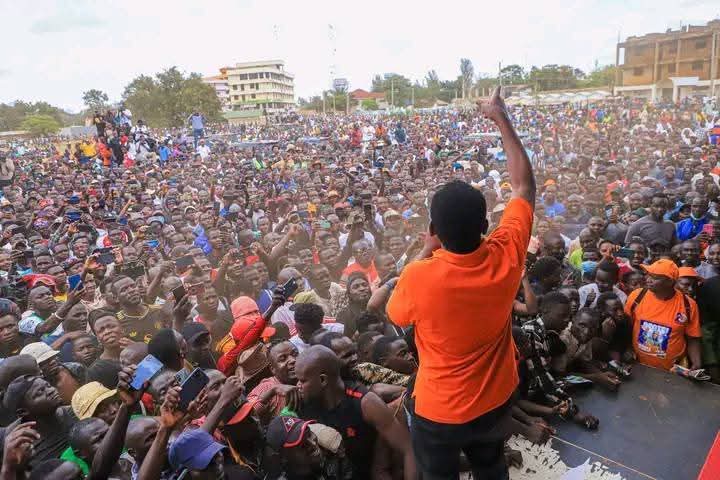
Grassroots supporters have also voiced varied opinions on social media, with some praising Sifuna’s assertive leadership style and others criticizing what they see as public defiance of party decisions.
Is This Headed to Court?
Sifuna has indicated that he is prepared to challenge the NEC’s decision through lawful means. Political observers expect the dispute could escalate to the Political Parties Disputes Tribunal (PPDT) or even to the High Court if internal mechanisms fail to resolve the matter.
Such a legal battle would likely focus on:
- Whether due process was followed.
- Whether the NEC had authority to remove a Secretary General without a formal disciplinary hearing.
- Whether party constitutional provisions were adhered to.
A court challenge could delay ODM’s internal restructuring and prolong uncertainty within the party.
The Bigger Picture: 2027 Calculations
Beyond the immediate drama, the Sifuna ouster could significantly influence Kenya’s political calculations ahead of the 2027 elections.
ODM remains one of the country’s most influential political formations, with a strong presence in several regions. Any prolonged internal wrangles risk weakening its organizational capacity and negotiating power in future coalitions.
If the dispute escalates into a factional split, it could lead to:
- Realignments within the opposition.
- Shifts in regional political loyalty.
- Emergence of alternative political platforms.
Kenya’s politics has historically been shaped by coalition-building and party fragmentation. Observers say the current standoff could mark the beginning of a new phase in opposition politics.
Sifuna’s Message to Supporters
In his statement, Sifuna urged party members to remain calm and steadfast. He emphasized that the fight is about protecting the integrity of the party rather than personal ambition.
He framed the conflict as a struggle to uphold internal democracy, transparency, and adherence to the party constitution. He also reaffirmed his commitment to the ideals he says ODM was founded upon — social justice, accountability, and principled leadership.
“Surrender is not an option,” he declared, signaling readiness for a prolonged battle.
What Happens Next?
Several possible scenarios could unfold:
- Internal Reconciliation – Party leaders could engage in dialogue and reach a compromise before the matter escalates further.
- Legal Intervention – Courts or tribunals could determine the legitimacy of the NEC’s decision.
- Political Realignment – If the dispute becomes irreconcilable, it could trigger a broader realignment within the party or across the opposition landscape.
For now, ODM faces one of its most consequential internal crises in years.
A Defining Moment for ODM
The removal of Edwin Sifuna as Secretary General — and his swift rejection of that decision — represents more than a leadership shuffle. It underscores the challenges ODM faces in redefining itself in a post-Raila era while balancing unity, discipline, and ideological direction.
Whether this episode strengthens the party through institutional clarity or weakens it through division remains to be seen.
What is certain is that Kenya’s political watchers will be closely monitoring every move. The battle lines are drawn, and the outcome could shape the trajectory of opposition politics for years to come.
The drama inside ODM is far from over.