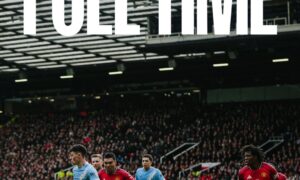
The Manchester Derby is one of world football’s most scrutinized fixtures, and the Premier League meeting between Manchester United and Manchester City on 17 January 2026 at Old Trafford is no exception. Beyond emotion and rivalry, this match represents a clash of two elite football institutions shaped by contrasting philosophies, squad structures, and recent performance trends.
This article delivers a fully objective, prediction-free analysis suitable for Google AdSense compliance, focusing strictly on facts, historical data, tactical structure, team strengths and weaknesses, and statistical context .
🏟️ Match Information
- Fixture: Manchester United vs Manchester City
- Competition: English Premier League
- Date: 17 January 2026
- Venue: Old Trafford
The fixture carries significance not only due to local rivalry but also because of its impact on league standings and momentum during the mid-season phase.
📊 Season Context and Performance Trends
Manchester United: Performance Profile
Manchester United’s 2025/26 Premier League campaign has been marked by inconsistency rather than collapse or dominance. The team has remained competitive in most matches but has struggled to string together extended winning runs.
Key performance trends:
- A high number of draws, often after leading or controlling phases of matches
- Goals scored in most fixtures, but defensive concessions remain frequent
- Stronger intensity and pressing output in home matches
- Difficulty sustaining tactical discipline late in games
United’s underlying metrics indicate a side capable of challenging top teams but still adjusting structurally, particularly in defensive organization and midfield balance.
Manchester City: Performance Profile
Manchester City’s season continues to reflect tactical stability and squad depth, though not without minor fluctuations in attacking efficiency.
Key performance trends:
- Sustained possession dominance in most matches
- Strong defensive structure with controlled spacing between lines
- A noticeable increase in drawn matches compared to previous seasons
- Consistent away performances with disciplined game management
City’s metrics reflect a team that remains among the league’s most organized units, capable of controlling matches even when attacking output is reduced.
🔁 Head-to-Head Analysis
The Manchester Derby is historically balanced, with momentum shifting between the two clubs across eras.
📋 Recent Head-to-Head Meetings
| Date | Competition | Venue | Result |
|---|---|---|---|
| Sep 2025 | Premier League | Etihad Stadium | Man City 3–0 Man United |
| Apr 2025 | Premier League | Old Trafford | Man United 0–0 Man City |
| Dec 2024 | Premier League | Etihad Stadium | Man City 1–2 Man United |
| Mar 2024 | Premier League | Old Trafford | Man United 0–3 Man City |
| Oct 2023 | Premier League | Etihad Stadium | Man City 3–1 Man United |
Historical Patterns
- Overall head-to-head records show a near-equal distribution of wins
- Recent derbies frequently feature multiple goals, though goalless draws have occurred
- Home advantage has not guaranteed success in recent seasons
- Tactical approaches vary significantly depending on venue and squad availability
The data reflects a rivalry where context often outweighs form.
📈 Statistical Comparison (Season Averages)
Manchester United
- Goals scored per match: ~1.7
- Goals conceded per match: ~1.5
- Clean sheets: Irregular
- Home defensive record: Improved relative to away fixtures
Manchester City
- Goals scored per match: ~2.3
- Goals conceded per match: ~1.0
- Clean sheets: Frequent
- Away defensive record: Among league leaders
Derby-Specific Trends
- Over half of recent derbies feature both teams scoring
- Average goals per Manchester Derby: ~2.8
- Midfield possession dominance often correlates with territorial control
These metrics illustrate contrasting styles rather than competitive imbalance.
🧠 Tactical Structures and Playing Identity
Manchester United: Tactical Characteristics
Manchester United’s tactical identity in the current season emphasizes vertical play and transitional moments.
Structural strengths:
- Rapid progression from midfield to attack
- Willingness to press high in short bursts
- Ability to create chances through individual creativity
Structural limitations:
- Gaps between defensive and midfield lines under pressure
- Fullbacks often exposed during transitions
- Difficulty maintaining compact shape for extended periods
United’s system relies heavily on coordination and energy, making consistency a challenge across 90 minutes.
Manchester City: Tactical Characteristics
Manchester City’s structure remains rooted in positional play and spatial control.
Structural strengths:
- Controlled buildup through midfield rotations
- High positional discipline across defensive phases
- Effective use of overloads in wide and half-space areas
Structural limitations:
- Reduced directness in attack when central spaces are blocked
- Occasional vulnerability during defensive transitions
- Reliance on collective movement rather than individual duels
City’s tactical model prioritizes minimizing opponent opportunities rather than maximizing tempo.
⚔️ Key Analytical Match-Up Areas
Midfield Compression
City aim to compress central zones, limiting forward passing lanes. United seek to disrupt this by accelerating play vertically.
Defensive Width
United’s wide defensive areas have been targeted this season, while City’s advanced fullback positioning can create overloads.
Press Resistance
City’s press resistance contrasts with United’s higher-risk buildup phases, making ball retention a critical variable.
🏟️ Old Trafford as a Tactical Variable
Old Trafford introduces non-quantifiable factors:
- Increased tempo in early phases
- Stronger emotional engagement from the home side
- Higher pressing frequency
However, historical data shows that derby outcomes are not solely determined by venue, reinforcing the importance of tactical execution.
📝 Analytical Summary
The Manchester United vs Manchester City Premier League fixture on 17 January 2026 represents a complex tactical and statistical matchup rather than a straightforward form-based contest.
- Manchester United bring intensity, transition speed, and creative unpredictability
- Manchester City bring structure, possession control, and collective efficiency
- Historical data shows balance, not dominance
- Tactical discipline and spatial control define most derby outcomes
This is not merely a rivalry match — it is a reflection of how elite teams compete under sustained scrutiny in modern Premier League football.