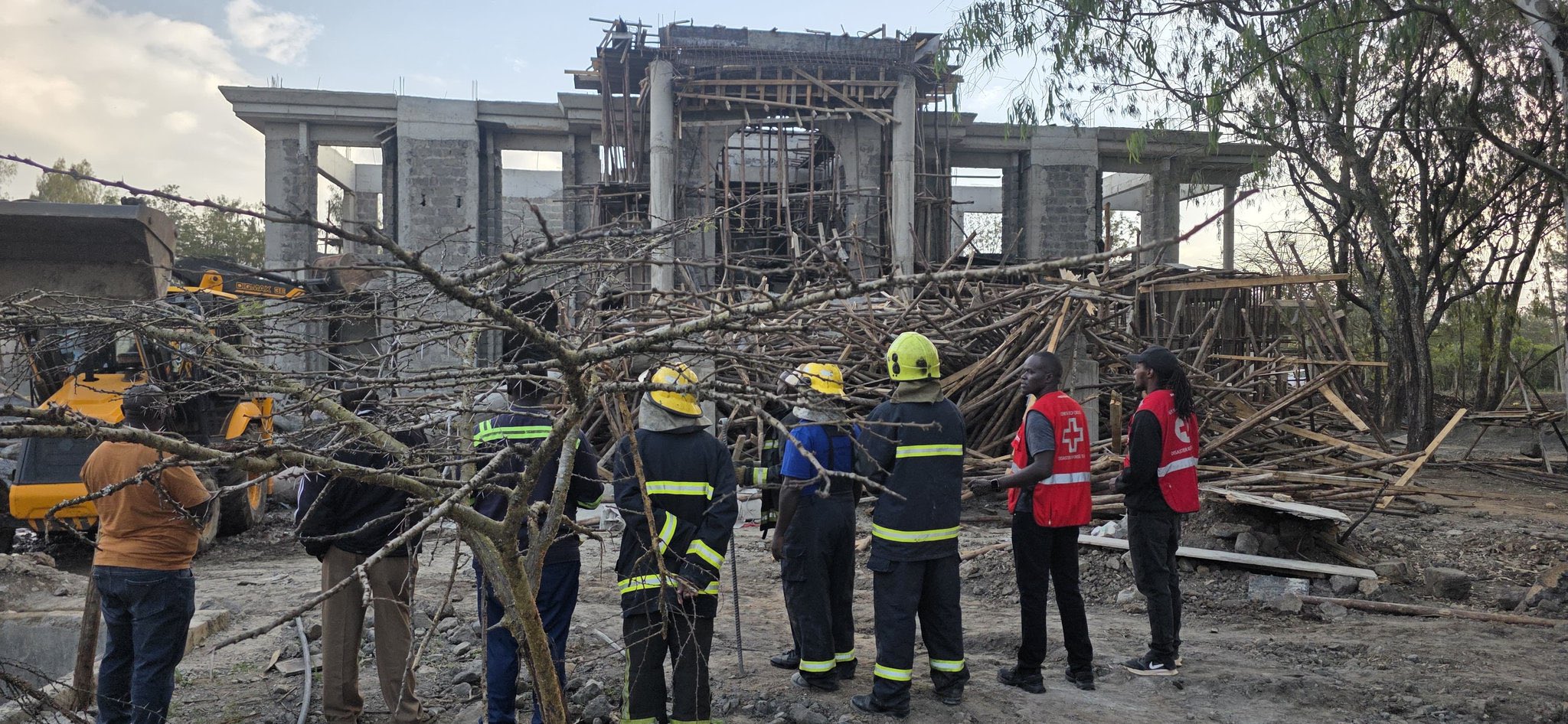
The collapse of a building under construction along Ngong Road has reignited public anger and professional concern over construction safety in Kenya, with industry experts warning that repeated tragedies point to deep-rooted systemic failures rather than isolated accidents.
In a strongly worded statement issued on Sunday, the Association of Construction Managers of Kenya (ACMK) described the incident as part of a worrying pattern of preventable disasters, calling for urgent reforms, stricter enforcement of building regulations, and accountability for those responsible.
The building collapsed on Saturday, 10 January 2026, near Karen Community Church along the busy Ngong Road corridor in Nairobi. While official casualty figures had not been fully confirmed at the time of publication, the incident occurred just days after another deadly collapse in South C, Nairobi, compounding public fears over the safety of construction sites across the country.
“Not accidents, but failures”
In its press release dated 11 January 2026, ACMK rejected the notion that the growing number of building collapses in Kenya can be attributed to bad luck or unforeseen circumstances.
“Building collapses are not accidents,” the association said. “They are the direct result of systemic failure, breakdowns in professional ethics, regulatory enforcement, and construction integrity.”
The association warned that the increasing frequency of such incidents risks creating a dangerous sense of normalisation, where public outrage briefly flares before fading—only to be replaced by grief following the next disaster.
“This cycle of headlines, public statements and temporary outrage must end,” ACMK said, adding that vague explanations and empty promises from authorities were no longer acceptable.
Families left grieving
The Ngong Road collapse has once again placed construction safety under intense scrutiny, particularly in Nairobi, where rapid urban development has led to a surge in high-rise residential and commercial projects.
ACMK extended its condolences to the families of victims, the injured and all those affected, acknowledging the profound human cost behind structural failures.
“Our hearts are with you in this moment of grief and loss,” the statement said.
For many Kenyans, the tragedy has struck a familiar chord. Over the past decade, dozens of buildings—many of them residential—have collapsed across the country, often in low- and middle-income areas, killing workers and residents and leaving families homeless.
Calls for accountability
Central to ACMK’s statement is a demand for transparent and decisive accountability. The association insists that responsibility must be traced across the entire construction chain, from developers and contractors to regulatory officials and licensed professionals.
“Those responsible, whether developers, contractors, regulatory officials or professionals, must be identified and held fully liable under the law,” the statement said.
Industry experts argue that while Kenya has building codes and professional standards in place, enforcement remains inconsistent, allowing unsafe practices to flourish.
Shortcuts during design, procurement and construction stages—often driven by cost-cutting or corruption—are cited as recurring factors in structural failures.
“To all stakeholders in the construction industry: shortcuts and compromises at any stage of development betray the public trust and endanger lives,” ACMK warned.
Regulatory failure under spotlight
The association also turned its focus on regulatory bodies and county governments, accusing them of failing in their oversight responsibilities.
The continued proliferation of “illegal, unapproved, and non-compliant construction sites,” ACMK said, is evidence of severe enforcement gaps.
“Ignoring these sites is not passive oversight,” the statement added. “It is active negligence that gambles with innocent lives.”
Under Kenya’s devolved system of government, county authorities are responsible for approving building plans and conducting inspections. However, critics say limited resources, political interference and corruption have weakened the effectiveness of oversight mechanisms.
Residents living near construction sites often complain of buildings going up rapidly, sometimes at night or without visible safety measures, raising questions about whether proper approvals and inspections have been conducted.
A national safety crisis
ACMK framed the Ngong Road collapse as a national issue requiring urgent attention at the highest levels of government.
“The time for half-measures is over,” the association said. “Kenya must now treat the safety of its built environment as a fundamental national priority.”
Among its key demands are mandatory involvement of qualified professionals at all project stages, from design to completion. The association argues that projects often bypass certified construction managers and engineers, increasing the risk of structural failure.
It also called for strengthened and transparent enforcement of the building code, with “real consequences” for violations—a move many Kenyans say is long overdue.
Push for audits and whistleblower protection
In a bid to prevent future disasters, ACMK urged the government to carry out a national audit of ongoing high-risk construction projects as well as existing buildings deemed to be in poor condition.
Such an audit, it said, could identify dangerous structures before they fail, potentially saving lives.
The association also highlighted the need for whistleblower protection, noting that unsafe practices often go unreported due to fear of retaliation.
Construction workers and junior professionals, in particular, may be aware of compromised standards but feel powerless to speak out, especially where powerful developers or officials are involved.
Public confidence eroding
The repeated collapse of buildings has steadily eroded public confidence in Kenya’s construction sector, despite its importance to the country’s economic growth.
The industry plays a critical role in job creation, housing provision and infrastructure development. However, experts warn that continued failures could undermine investor confidence and worsen the housing crisis if people fear living in newly built structures.
ACMK said it remains committed to restoring trust through professionalism, accountability and collaboration with government agencies, professional bodies and the public.
“We stand ready to collaborate with the government, professional bodies, and the public to enforce professionalism, ensure accountability, and restore faith in our nation’s built environment,” the statement said.
Who is ACMK?
In notes accompanying the press release, ACMK described itself as a professional body bringing together Construction Project Managers and Construction Managers across Kenya.
The association says it plays a key role in promoting leadership, professionalism and excellence within the construction industry, working with government agencies, developers and other professionals.
Its stated aim is to regulate and streamline construction and project management practices through the creation of codes of conduct, standard procedures and strict pre-qualification of members.
By speaking out following the Ngong Road collapse, ACMK has positioned itself as a vocal advocate for reform at a time when public pressure for accountability is mounting.
Waiting for official response
As of publication, there had been no detailed public statement from county authorities or national regulators outlining the cause of the Ngong Road collapse or confirming whether arrests or investigations had been initiated.
Past incidents have often been followed by promises of inquiries, though prosecutions have been rare—a pattern that has fuelled public scepticism.
For families affected by the latest collapse, the priority remains rescue, recovery and answers. For the wider public, the incident has become another symbol of a system many believe is failing to protect lives.
As Kenya continues to urbanise at speed, the question raised by ACMK’s statement is increasingly stark: how many more lives must be lost before safety, professionalism and accountability become non-negotiable in the country’s construction industry?