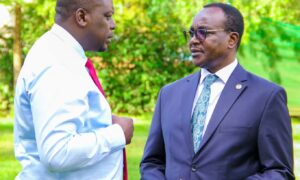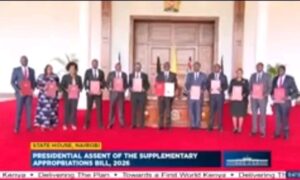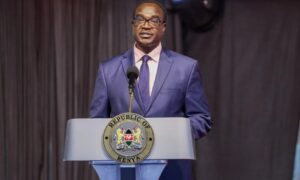
The Kenyan government has just dropped a financial bombshell in the education sector, releasing a staggering Ksh. 44.2 Billion to kickstart the 2026 academic year. In a major press statement from the Office of the Cabinet Secretary for Education, Dr. Julius Migos Ogamba, EBS, the Ministry has outlined critical updates on school reopening, Grade 10 placements, and a monumental disbursement of capitation funds, all set against the backdrop of the constitutional right to free and compulsory basic education.
Academic Calendar Kicks Off Amidst Major Financial Injection
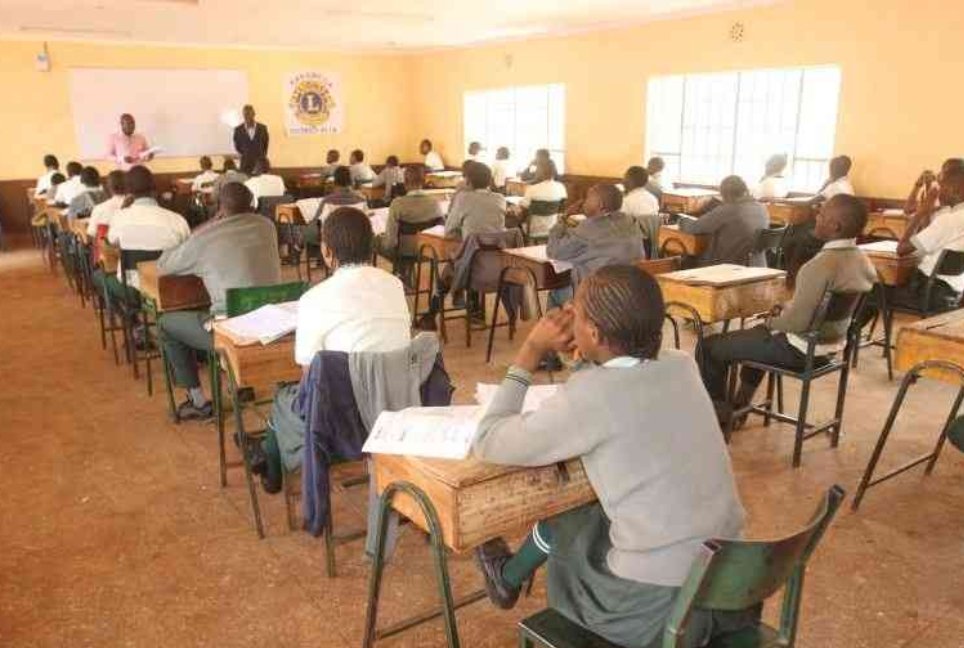
As the Christmas and New Year festivities conclude, the Ministry of Education has confirmed that all basic education schools are expected to re-open for Term One on Monday, 5th January, 2026. This reopening will be closely monitored by the Ministry’s field officers under the guidance of Regional and County Directors of Education to ensure strict adherence to the national academic calendar. This marks a decisive start to the year, emphasizing the government’s commitment to maintaining educational continuity and structure.
However, the most jaw-dropping element of the announcement is the unprecedented financial commitment. The government, in a move to ensure a “seamless conduct of school activities,” has released Ksh. 44,245,066,500.85 (Forty-Four Billion, Two Hundred and Forty-Five Million, Sixty-Six Thousand, Five Hundred Shillings and Eighty-Five Cents) for Term One alone. This colossal sum is designed to cover capitation for learners across all public basic education institutions, fundamentally underwriting the cost of education for millions of Kenyan children.
Breaking Down the Billion-Shilling Allocation: Where is the Money Going?
Transparency is key in such a large disbursement. The Ministry has provided a clear breakdown of how this historic amount has been apportioned, demonstrating a strategic allocation across different educational tiers:
- Free Primary Education: Ksh. 3,703,074,646.10
- Free Day Junior School Education: Ksh. 14,459,193,520.00
- Free Day Secondary Education: Ksh. 26,082,798,334.75
- TOTAL: Ksh. 44,245,066,500.85
This distribution highlights a significant investment in the junior and senior secondary levels, which aligns with the ongoing implementation of the Competency-Based Curriculum (CBC) and the critical transition phases for learners. The allocation to Free Day Secondary Education is particularly substantial, making up nearly 59% of the total release, signaling a focused effort on retaining learners through to completion of basic education.
Grade 10 Placements: A Second Chance for Students
Beyond the finances, the Ministry addressed the highly sensitive process of Grade 10 placements for Senior School. The first revision was completed on 29th December 2025, with joining instructions for placed learners available on the placement portal (www.placement.education.go.ke) since 30th December.
Acknowledging the anxieties and unique circumstances of families, the Ministry has announced a critical window for review. From 6th to 9th January 2026, parents, guardians, and learners will have a further opportunity to apply for a review of their placement. This process is designed for those with “legitimate and verifiable grounds” to seek reconsideration of their initial or revised placement.
In a crucial detail, the statement clarifies that requests for further review can be initiated through the learner’s current Junior School or at the Senior School of interest. This provision offers a direct channel for appeal. However, all such requests must be formally submitted by the Head of the Institution through the official placement portal, ensuring the process remains regulated and consistent with Ministry protocols. This structured review aims to “ensure unhindered access to education and enhance optimal utilization of available resources.”
Senior School Fees Clarified: No Changes, Capitation Secure
In a move to quell any uncertainty or potential for exploitation, the Ministry issued a separate circular on 2nd January 2026, explicitly affirming that fees payable by learners in senior schools remain unchanged. Furthermore, the government has committed to continuing its capitation support at the established rate of Ksh. 22,244 per learner per year.
This clarification is vital. It serves as a direct instruction to school management and a reassurance to parents. The statement ties this commitment directly to Article 53 of the Constitution of Kenya, which enshrines every child’s right to free and compulsory basic education. By locking in the fee structure and guaranteeing state capitation, the government is attempting to build a stable financial framework for the pivotal Senior School phase.
A Stern Warning Against Misappropriation and Illegal Levies
With great financial power comes great accountability. The Cabinet Secretary did not mince words in directing school heads and principals on their responsibilities. They are mandated to ensure the “prudent use of these public resources entrusted to their care for the benefit of learners.”
The statement includes a stern and unambiguous warning: school administrators must “desist from imposing any extra levies or fees.” The Ministry promises to “deal firmly with any verified cases of misappropriation of resources and the imposition of extra levies or fees.” This strong language is clearly intended to deter the all-too-common practice of unofficial fee demands that often place an unbearable burden on families and contravene the principle of free basic education.
The Bigger Picture: Commitment to Education as a Public Good
The timing and scale of this announcement are profoundly significant. Releasing funds before the term begins is a logistical masterstroke aimed at preventing the perennial delays that have historically crippled school operations at the start of a term. It allows schools to plan, procure necessities, and ensure that learning begins in earnest from day one.
The specific mention of Grade 10 learners reporting starting 12th January 2026 indicates a coordinated approach, giving schools a week after general reopening to specifically prepare for the new Senior School cohort. This cohort represents the future of Kenya’s skilled workforce, and their smooth transition is a national priority.
This massive financial injection is more than just a budgetary line item; it is a statement of political and social priority. In a challenging economic climate, allocating such a vast sum to education demonstrates a tangible commitment to human capital development. It is an investment in stability, opportunity, and national future-proofing.
Challenges and Expectations on the Ground
Despite the optimistic tone of the press release, the true test lies in implementation. Key challenges remain:
- Efficiency of Disbursement: Will the funds reach every school in a timely manner, especially those in remote areas? The efficiency of the financial pipeline from the National Treasury to individual school accounts will be closely watched.
- Absorption Capacity: Do schools have the systems and accountability structures to absorb and utilize these funds effectively and transparently? Prudent management is easier said than done.
- Vigilance on Illegal Fees: The Ministry’s warning must be backed by a robust, accessible, and responsive monitoring and grievance-redressal mechanism. Parents need a safe way to report violations without fear of retaliation against their children.
- Placement Review Process: The four-day window for placement reviews is short. The system must be robust enough to handle a potential surge in applications and render fair, timely decisions to avoid disrupting learners’ reporting schedules.
Conclusion: A Defining Moment for Kenyan Education
The Ministry of Education’s press statement dated 2nd January 2026 is arguably one of the most consequential education announcements in recent years. By combining the practicalities of the academic calendar with the dynamite of a Ksh. 44.2 Billion release and clear policy directives on fees and placements, the government is attempting to set a definitive, confident tone for 2026.
The message is clear: education is non-negotiable, its funding is prioritized, and its management must be clean and learner-centric. As schools gates swing open on January 5th, and as Grade 10 learners prepare for their new journey beginning January 12th, all stakeholders—parents, teachers, officials, and citizens—will be observing whether the reality on the ground matches the promise on this paper. The success of this initiative will be measured not just in shillings disbursed, but in classrooms functioning, teachers teaching, and learners learning without financial hindrance. The 2026 academic year has begun with a resounding financial commitment; the task now is to translate that commitment into transformative educational outcomes for every Kenyan child.