The Ethics and Anti-Corruption Commission (EACC) has scored yet another major victory in its fight against fraud in public service after securing a conviction against Mr. Joseph Kihara Kaburugu, an official who attempted to fraudulently secure employment at Nairobi City Water and Sewerage Company Ltd. using a forged academic certificate.
The case has sparked renewed debate about the prevalence of fake academic qualifications in Kenya’s public institutions and the consequences awaiting those who attempt to rise in rank or gain employment through fraudulent means.
How the Case Began
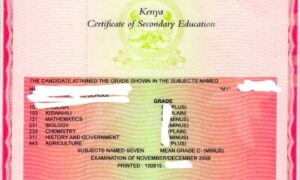
According to the EACC, investigations were launched after suspicions emerged regarding the authenticity of academic documents presented by Mr. Kaburugu. He had submitted a forged Diploma Certificate in Sports Science Management, allegedly from Jomo Kenyatta University of Agriculture and Technology (JKUAT).
After thorough verification, it was established that the certificate was not genuine and had been crafted to mislead the employer. The forged document was intended to help Mr. Kaburugu gain undue advantage by securing a job at Nairobi City Water and Sewerage Company Ltd., a critical utility provider responsible for water supply and sewerage management in Kenya’s capital.
Prosecution and Court Proceedings
Once the investigations were concluded, the EACC forwarded the case file to the Director of Public Prosecutions (DPP). The DPP reviewed the evidence and approved criminal charges against Mr. Kaburugu, including forgery and uttering a false document.
On January 21, 2025, the accused was arraigned before Chief Magistrate Hon. Harrison Barasa at the Milimani Anti-Corruption Court. At the time, Mr. Kaburugu denied all charges, forcing the prosecution to proceed with a full trial.
During the hearing, the prosecution tabled evidence proving that the diploma certificate was not issued by JKUAT. Witnesses from the university testified that no such certificate existed in their records. The EACC further provided forensic evidence that revealed clear signs of document forgery.
The Court’s Verdict
On September 30, 2025, the Anti-Corruption Court delivered its verdict. Chief Magistrate Harrison Barasa found Mr. Kaburugu guilty of uttering a false document, contrary to Section 353 of the Penal Code.
However, the court acquitted him of the forgery charge under Section 215 of the Criminal Procedure Code, noting that the prosecution had not proven beyond reasonable doubt that Mr. Kaburugu was the actual author of the forged certificate. The judge emphasized that while the creation of the document could not be linked directly to him, the evidence clearly showed that he knowingly presented the fake certificate to deceive his potential employer.
Sentencing
On October 2, 2025, the court handed down the sentence. Mr. Kaburugu was ordered to pay a fine of Ksh 100,000 or, in default, serve one year imprisonment.
The sentencing sends a strong warning to individuals who might consider using forged documents to advance their careers in public institutions. The fine, though relatively modest compared to the scale of corruption cases in Kenya, carries symbolic weight as part of the country’s broader fight against fraud and unethical practices.
EACC’s Stand
In a statement following the ruling, the EACC reaffirmed its commitment to protecting the integrity of public service. The commission emphasized that cases such as this highlight the importance of vigilance in recruitment processes within government agencies and state-owned corporations.
The EACC noted that public service must remain a domain where qualifications and merit, not fraud and deceit, determine who secures employment. The commission warned that more investigations are underway targeting individuals who have used fake certificates to gain employment or promotions in both national and county governments.
Fake Academic Papers in Kenya – A Growing Concern
The case of Mr. Kaburugu is not isolated. Over the past decade, Kenya has witnessed a surge in the number of people presenting fake academic papers in a bid to secure jobs or promotions. The problem has become so widespread that several state agencies, including the Kenya National Qualifications Authority (KNQA), have introduced systems to verify academic documents before they are accepted for official purposes.
In some cases, even senior government officials and politicians have been accused of using fake degrees or certificates. The scandal surrounding fake papers has eroded public trust in institutions and raised concerns about the quality of service delivery, particularly when unqualified individuals occupy critical positions.
Education experts warn that beyond employment fraud, the use of fake papers undermines the value of genuine academic qualifications and discourages hard work among students. Employers, especially in government, have therefore been urged to adopt stringent verification mechanisms before hiring.
Implications for Public Service Recruitment
The conviction of Mr. Kaburugu is expected to have ripple effects across public institutions in Kenya. Recruitment officers are likely to tighten checks to ensure only genuine certificates are considered.
The ruling also sets a precedent that courts are willing to punish individuals who attempt to secure public positions through fraudulent means, even if they are not directly proven to be the forgers of the documents.
For Nairobi City Water and Sewerage Company Ltd., the case serves as a reminder of the importance of strict vetting of employees. As one of Nairobi’s most vital utilities, the company’s credibility depends on having qualified and ethical staff to manage water distribution and sanitation services for millions of residents.
Public Reactions
The conviction has generated debate among Kenyans on social media, with many praising the EACC for its diligence in pursuing the case. Some citizens, however, argued that the fine imposed was too lenient and that harsher penalties would have served as a stronger deterrent.
Civil society groups have also weighed in, calling for a comprehensive audit of staff credentials across all public institutions. They insist that the fight against corruption must go beyond financial scandals to include academic fraud, nepotism, and other unethical practices that compromise service delivery.
Conclusion
The case of Joseph Kihara Kaburugu underscores a critical lesson for all Kenyans: dishonesty in pursuit of employment will eventually catch up with the perpetrators. While he managed to present a forged certificate in the hope of gaining employment, the justice system, aided by the vigilance of the EACC, ensured accountability.
As Kenya continues to grapple with issues of corruption, fraud, and integrity in public service, this conviction serves as a milestone and a stern warning. The message is clear—fraudulent actions, no matter how small, will not go unpunished.
The EACC’s victory against Mr. Kaburugu is more than just a legal win; it is a symbolic statement that integrity must remain at the heart of Kenya’s public service.