Teachers’ Union Warns of Unprecedented Strike Over Medical Cover Changes
Kenya’s education sector is facing the possibility of a nationwide teachers’ strike, after the Kenya Union of Post Primary Education Teachers (KUPPET) issued a stern warning to the government against terminating the existing Minet-managed medical insurance scheme and replacing it with a universal Social Health Authority (SHA) system.
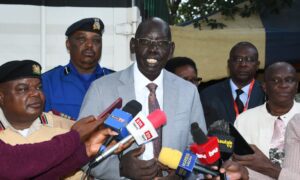
KUPPET Secretary-General Akelo Misori on Thursday said any unilateral decision to scrap the MKL Minet cover without consulting teachers would trigger the “mother of all strikes” in the education sector.
The warning comes amid growing tensions between teachers and government agencies over policy decisions perceived as disregarding their welfare and contractual rights.
Background: The Minet Medical Scheme at the Heart of the Dispute
The existing Minet Teachers’ Medical Scheme, run by MKL Minet under contract with the Teachers Service Commission (TSC), is part of the 2025–2029 Collective Bargaining Agreement (CBA) between the union and the government.
This contract — which runs until November 30, 2025 — guarantees teachers comprehensive health coverage tailored to their professional needs. Misori insists that any attempt to dismantle the arrangement without union consent would be a violation of the CBA and an unfair labour practice under Kenyan law.
“Not a Token, Not a Favour — A Right”
Speaking during a press briefing in Nairobi, Misori made his union’s position clear:
“The Teachers Medical Scheme is not a token. It is not a favour. It is a right secured through a transparent, painful, and lengthy negotiation process that culminated in the 2025–2029 CBA. Any attempt by the government to dismantle it unilaterally is a gross violation of the law and a betrayal of the very people who sustain the country’s education system.”
Misori’s statement underlines KUPPET’s stance that the government’s plan to merge teachers into the Social Health Authority (SHA) system fails to recognise the specialised needs of educators.
What the Government is Planning — and Why Teachers Are Concerned
The Ministry of Health is reportedly working to integrate public service workers into a broad universal healthcare system under SHA. However, no official communication has been issued to teachers or their unions about how this will affect their current arrangements.
According to Misori, KUPPET only learned of the planned transition from MKL Minet to SHA through media reports, sparking anger and frustration among members.
“Teachers were not consulted on this matter,” Misori said. “Consider this a threat if you must, but it reflects our firm position.”
SHA vs. Minet: Key Differences That Could Affect Teachers
Under the MKL Minet scheme:
- Teachers have access to specialised medical care tailored to their professional risks.
- The cover is funded through consolidated medical allowances, which teachers previously received directly.
- Dependents and chronic conditions are included in the benefits.
Under SHA:
- Teachers would be grouped with the general public in a one-size-fits-all scheme.
- Specific provisions for teacher-related health risks may be lost.
- Waiting times and access to specialised facilities could worsen.
Misori questioned why other public service groups — including Parliament, the Judiciary, and universities — have retained their specialised medical covers, while teachers are being asked to forfeit theirs.
The Historical Struggle for Teachers’ Medical Benefits
KUPPET’s defence of the Minet cover is rooted in a long history of negotiations and struggles for fair healthcare benefits. Misori recounted that teachers first had coverage under IOMINET, later under Minet, before moving to the current MKL Minet arrangement.
In each transition, he argued, teachers were not adequately involved, leading to questions about where medical allowances have gone and who authorised the changes.
“Someone must explain where our medical allowances went, and who authorised these transfers without our participation. Teachers must be involved in decisions regarding their healthcare,” Misori emphasised.
Union’s Legal and Strategic Leverage
The 2025–2029 CBA is not just a policy document — it’s a binding legal agreement. If the government proceeds with changes to the medical scheme without KUPPET’s consent, the union could mount a legal challenge in addition to industrial action.
Possible avenues include:
- Labour court injunctions to block the transition.
- Filing for violation of the Labour Relations Act and the Employment Act.
- Leveraging the International Labour Organization (ILO) conventions on consultation and collective bargaining.
Misori hinted that if pushed, KUPPET could mobilise over 300,000 members for what he called the “mother of all strikes” — a mass action likely to paralyse the education system nationwide.
Economic and Social Implications of a Teachers’ Strike
A nationwide teachers’ strike would have severe consequences for Kenya’s education sector and economy.
Impact on Students:
- Disruption of classes in primary and secondary schools.
- Interruption of syllabus coverage ahead of national exams.
- Potential delays in the school calendar.
Impact on Economy:
- Financial losses due to school closures.
- Increased pressure on parents for alternative childcare.
- Strain on the political capital of the government.
The prospect of such disruption makes the government’s next move critical in preventing a full-blown crisis.
Why Teachers Say SHA Isn’t Enough
KUPPET argues that the SHA’s universal approach overlooks occupational health risks specific to teachers, such as:
- Vocal cord strain from prolonged speaking.
- Mental health issues linked to classroom stress.
- Musculoskeletal disorders from long hours of standing or marking.
Teachers also point out that SHA’s coverage limits access to certain private facilities, a benefit currently available under Minet.
Public Service Double Standards?
Misori openly challenged what he called “double standards” in government policy:
“We are the largest cadre in the public service and among the highest contributors to the national health pool. Yet we are being treated like second-class citizens. Universities, Parliament, the Judiciary, they all retain specialised cover. Why not teachers?”
The union sees this as a matter of equity and fairness, not just healthcare.
Lack of Dialogue and Transparency
One of the most alarming points raised by KUPPET is the absence of official communication from both the TSC and the Ministry of Health.
Without formal engagement, the union believes the move to SHA is being fast-tracked without accountability.
“Under the current scheme, we gave up our medical allowance. That money previously enabled teachers to purchase private insurance on the open market. It was consolidated into a pool to fund this comprehensive scheme, but even that is now at risk,” Misori said.
Political and Policy Context
The push towards SHA is part of the government’s broader universal healthcare reforms, a key agenda of President William Ruto’s administration. The SHA is meant to streamline healthcare access for all Kenyans, but unions like KUPPET argue that specialised cadres within the public service require tailored benefits.
This tension reflects a larger policy dilemma:
- Should universal systems treat all citizens equally?
- Or should specialised professions retain their negotiated privileges?
Possible Scenarios Ahead
If the government proceeds without engaging KUPPET:
- Immediate Court Action — KUPPET could seek an injunction.
- Nationwide Strike — Disrupting learning in all public schools.
- Public Demonstrations — Teachers taking to the streets, as Misori warned.
If the government engages KUPPET:
- Negotiations could lead to either retaining Minet until 2025 or integrating teachers into SHA with tailored provisions.
KUPPET’s Broader Demands on Teacher Welfare
Beyond healthcare, KUPPET is calling for:
- Review of teacher workloads under the new education frameworks.
- Fair compensation in line with inflation and cost of living.
- Increased capitation funding for schools.
“Only the other day, we were asking for dialogue on the capitation of allowances and the new education frameworks. Now they’re coming for our health. This cannot stand,” Misori said.
Public Reaction and Stakeholder Positions
While teachers largely support KUPPET’s stance, parents and education stakeholders are concerned about the potential disruption. Some suggest mediation by the Ministry of Labour to avoid escalation.
Civil society groups have urged the government to prioritise dialogue over confrontation, warning that strained relations between teachers and the state could affect broader education reforms.
Conclusion: A Looming Showdown
The confrontation over the Minet medical scheme versus SHA is more than just an administrative change — it is a test of labour rights, collective bargaining, and the government’s approach to universal healthcare.
If the government presses forward without KUPPET’s involvement, the resulting strike could become one of the largest in Kenya’s education history.
For now, all eyes are on the Ministry of Health, the TSC, and the Office of the President to see whether they will open dialogue or risk plunging schools into crisis.