Introduction
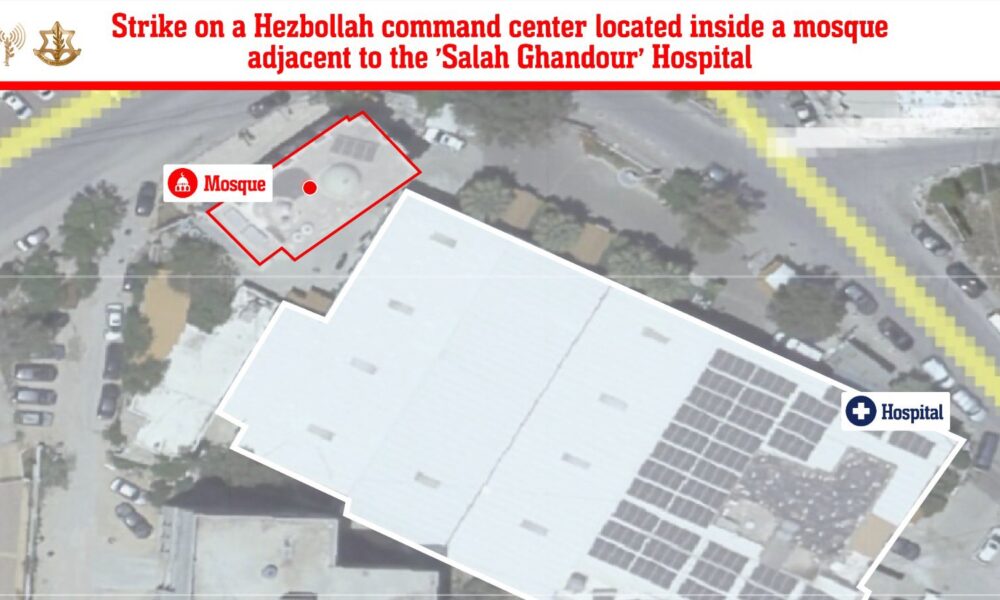
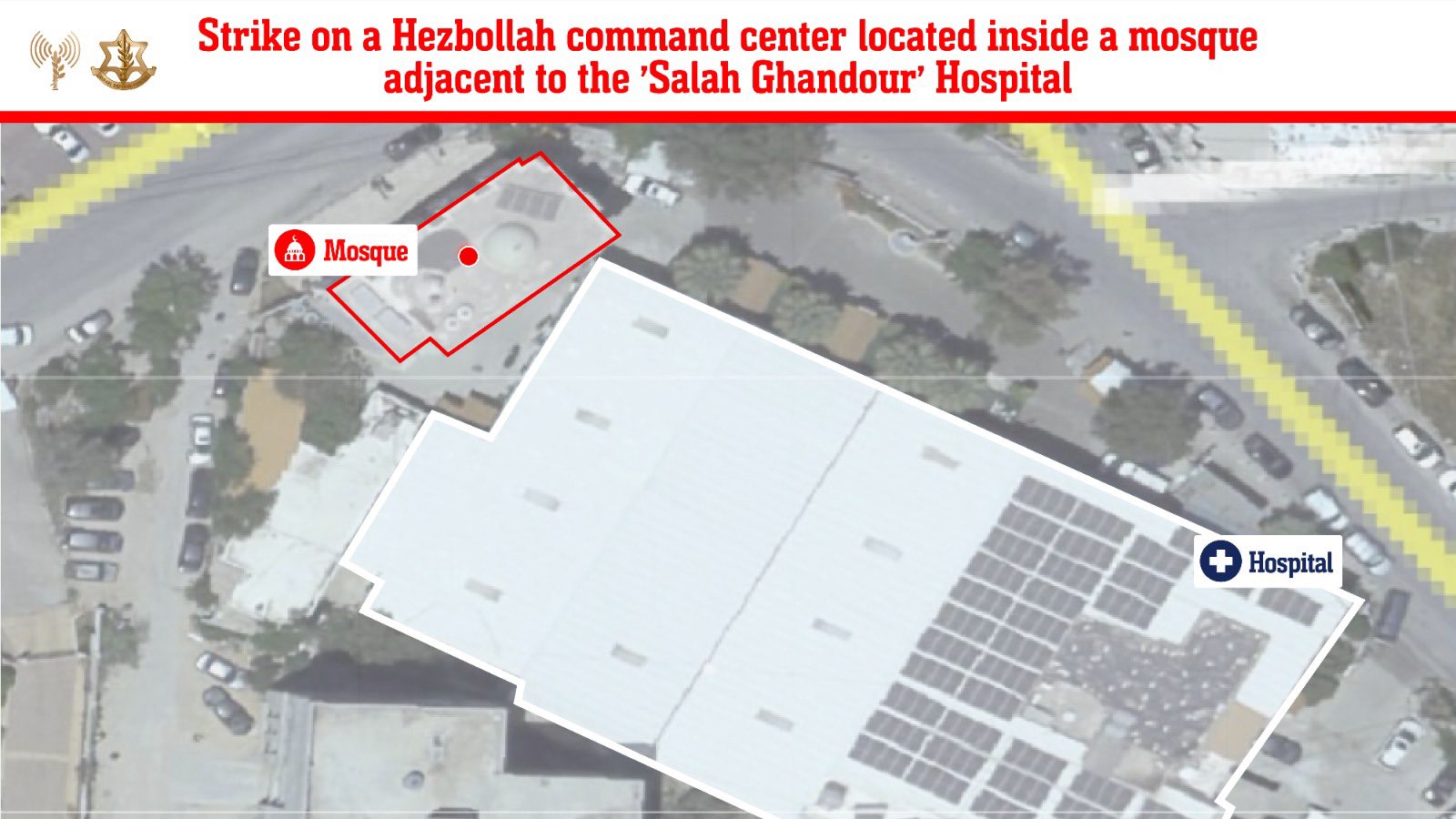
In a dramatic turn of events, the Israeli Air Force (IAF) conducted a targeted airstrike on Hezbollah terrorists operating out of a command center near the Salah Ghandour Hospital in southern Lebanon. The strike, which took place within a mosque adjacent to the hospital, is part of Israel’s ongoing efforts to dismantle Hezbollah’s terror networks while attempting to minimize civilian casualties. The Israeli Defense Forces (IDF) have consistently emphasized their commitment to protecting innocent civilians, a priority starkly contrasted with Hezbollah’s controversial use of civilian infrastructure for military activities.
The announcement of the strike came via the X platform, where the IDF explained its rationale, underlining Hezbollah’s repeated violations of international laws of armed conflict by using hospitals and other civilian facilities as operational centers.
Background of the Hezbollah-Israel Conflict
The decades-long conflict between Hezbollah, a powerful Shiite militant group based in Lebanon, and Israel has been marked by intermittent skirmishes, proxy warfare, and full-scale conflicts. Hezbollah, backed by Iran, has maintained a strong presence in southern Lebanon, using the region to launch attacks on Israel. Over the years, Hezbollah has been accused of blending its military assets with civilian infrastructure, a strategy aimed at shielding its fighters and equipment from Israeli strikes, while amplifying the potential for civilian casualties.
Israel, for its part, has launched numerous military campaigns targeting Hezbollah, aiming to dismantle the group’s operational capabilities. The IDF’s most recent strike on Hezbollah operatives underscores the complexities of this ongoing conflict and the growing international concern over the humanitarian toll it is taking.
The IAF’s Strike on the Command Center
The IAF strike on Hezbollah terrorists operating from within a mosque near the Salah Ghandour Hospital is the latest in a series of operations aimed at preventing terrorist activities from within civilian infrastructure. The IDF, in its statement on X, stressed that it had taken all necessary precautions to minimize harm to civilians. Notices were sent to residents, and conversations were held with significant parties in the villages where Hezbollah had reportedly been using hospitals for military purposes.
This approach by the IDF aligns with its longstanding policy of warning civilians in conflict zones, a tactic often lauded for its humanitarian intent. However, the decision to target a mosque near a hospital inevitably raises questions about the potential for civilian casualties, particularly given Hezbollah’s known tactic of embedding itself within civilian areas.
The IDF emphasized in its statement that Hezbollah’s use of hospitals and mosques as cover for military operations constitutes a grave violation of the laws of armed conflict. International humanitarian law prohibits the use of civilian infrastructure for military purposes, and the IDF’s strike appears to be an effort to enforce these laws in a conflict that often sees such norms disregarded.
Humanitarian Concerns and International Response
The targeting of civilian infrastructure, even when used for military purposes, remains a deeply controversial issue in international law. Under the Geneva Conventions, warring parties are required to take every possible precaution to avoid civilian harm. While Israel claims that Hezbollah’s tactics leave it with no choice but to strike, critics argue that such actions, even with warnings, place civilian lives at unacceptable risk.
International organizations, including the United Nations and various human rights groups, have long called for greater restraint in conflicts where civilians are likely to be affected. Southern Lebanon, in particular, has been a flashpoint for such concerns due to its densely populated areas and the deep integration of Hezbollah’s military infrastructure with civilian life.
The IDF’s insistence that it warned residents and attempted dialogue with key village figures demonstrates an effort to comply with these international norms. However, the proximity of the strike to a hospital highlights the challenges of maintaining these standards in real-world military operations.
Hezbollah’s Use of Civilian Infrastructure
Hezbollah’s use of civilian infrastructure as cover for its military operations has been a consistent feature of its strategy. This tactic not only complicates Israel’s military response but also serves as a form of psychological warfare. By embedding its fighters and weapons in civilian areas, Hezbollah forces Israel to make difficult choices—either refrain from striking, which allows Hezbollah to continue its operations unimpeded, or risk international condemnation by attacking sites where civilians may be present.
The IDF’s latest strike is a clear statement that it will not allow Hezbollah to use these tactics with impunity. By targeting a command center within a mosque, Israel is sending a message that it views any Hezbollah activity, regardless of location, as a legitimate target.
IDF’s Efforts to Avoid Civilian Harm
In its statement, the IDF reiterated that it is making “great efforts to prevent harming uninvolved civilians and civilian infrastructure.” This is not the first time Israel has taken such a stance. During previous conflicts, the IDF has implemented similar measures, such as using phone calls, leaflets, and even text messages to warn civilians in advance of military strikes.
Despite these efforts, civilian casualties have occurred in past operations, leading to widespread criticism from international human rights organizations. However, Israel maintains that its actions are in line with international law, and that any civilian deaths are the direct result of Hezbollah’s cynical use of civilian areas for military purposes.
Conclusion
The Israeli airstrike on Hezbollah terrorists operating within a mosque adjacent to the Salah Ghandour Hospital underscores the complexities of modern warfare, particularly in conflict zones where militant groups are deeply entrenched in civilian life. While the IDF has taken steps to minimize civilian casualties, the proximity of the strike to a hospital raises difficult questions about the balance between military necessity and humanitarian concerns.
As the conflict between Israel and Hezbollah continues to escalate, the international community will likely be watching closely, particularly with regard to the protection of civilians. For now, Israel’s message is clear: it will not tolerate Hezbollah’s use of civilian infrastructure as a shield for terrorist activities, even if that means targeting sites near hospitals and other sensitive locations.