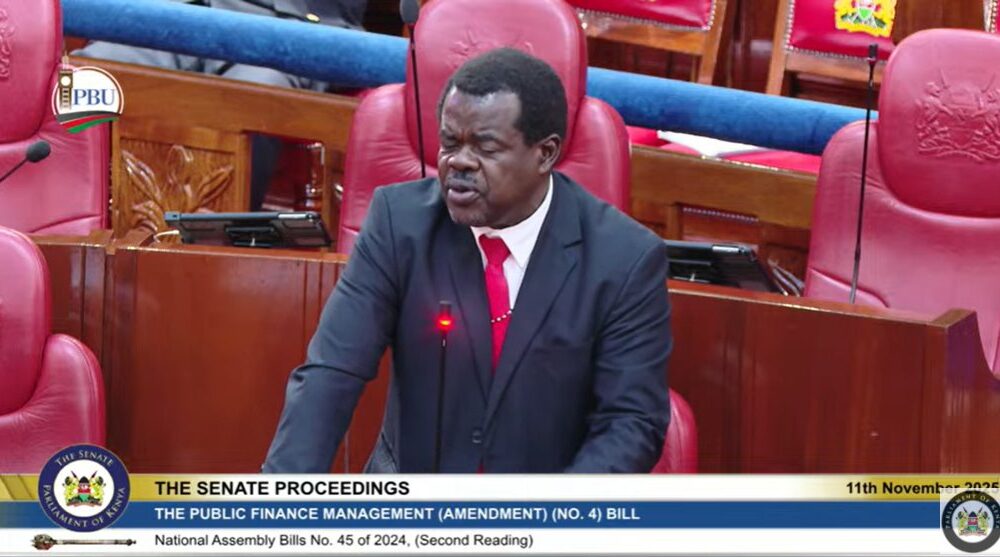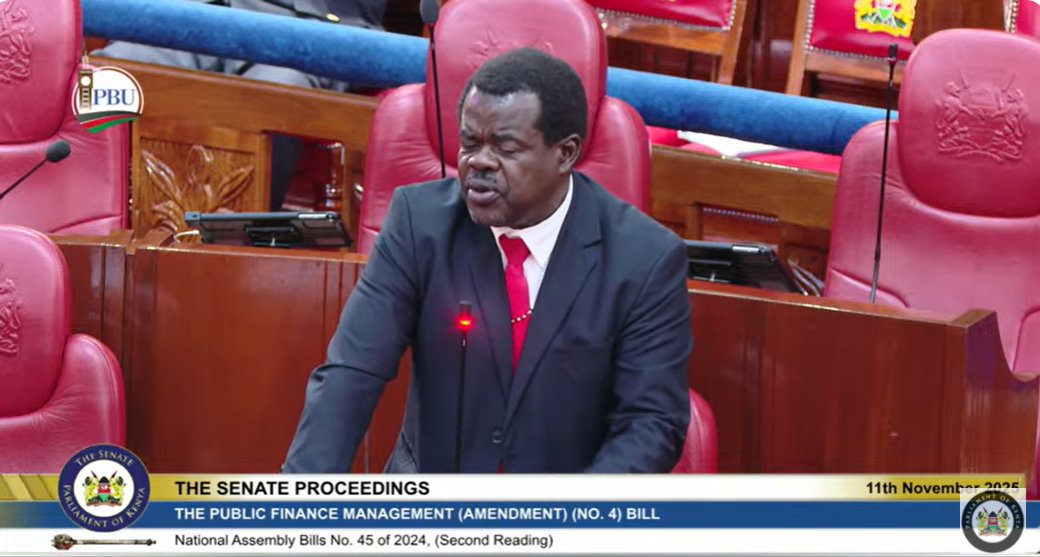
NAIROBI, Kenya – A political earthquake is shaking Kenya’s electoral landscape following a powerful constitutional petition filed by Busia Senator Okiya Omtatah Okioti, a man long known for taking on the country’s most entrenched institutions—and winning. The petition, formally registered as Constitutional Petition No. E757 of 2025, targets the very backbone of Kenya’s presidential results system: the IEBC National Tallying Centre.
If successful, the petition could completely dismantle Kenya’s familiar election-night drama, eliminate the Bomas-based verification system, and permanently alter how presidential results are tallied, declared, communicated, verified, and contested. In short—it could rewrite the rules of Kenya’s democracy.
Omtatah argues that the Constitution of Kenya 2010 already defines, with total clarity, where the final presidential result must be determined: the constituency level. Not at the county level. Not at the national tallying centre. Not by the IEBC Chairperson. And certainly not through lengthy verification rituals that have often led to disputes, delays, and public confusion.
His central thesis is simple but revolutionary:
The National Tallying Centre has no constitutional foundation, and the IEBC Chairperson has no legal power to verify or alter presidential results.
Instead, Omtatah wants Kenya to return to full constitutional compliance by anchoring finality, transparency, and trust at the constituency level—where the people vote, where counting occurs publicly, and where returning officers make binding declarations.
What follows is a deep dive into the petition, its arguments, its constitutional stakes, its potential to transform elections, and the political shockwaves it is already sending across the country.
The Heart of the Petition: Final Results Belong to the Constituencies
At the center of Omtatah’s legal battle is a straightforward reading of Articles 86 and 138 of the Constitution. He argues that these articles lay out an election structure that requires no national verification, no second tallying, and no override powers for the IEBC Chairperson.
The Constitution provides a clear and sequential chain:
- Votes are cast at polling stations, counted, and captured on Form 34A.
- Polling station results are taken to the constituency, where the Constituency Returning Officer tallies all the Form 34As and prepares Form 34B.
- The Constituency Returning Officer declares the final constituency result for the presidential election.
- The IEBC Chairperson has a narrow role—collating all constituency results and declaring the national winner.
The Constitution deliberately uses words like counted, tallied, verified, and declared at the polling station and constituency levels—but when describing the IEBC Chairperson, the Constitution uses only “collate” and “declare.”
To Omtatah, this language signals a constitutional firewall:
The IEBC Chairperson may not verify or retally constituency totals. Their work is strictly clerical, mathematical, and administrative—not investigative or adjudicative.
This interpretation is the bombshell at the core of the petition.
If the constituency results are final, Omtatah argues, then:
- The County Returning Officer has no legal role in presidential elections.
- The National Tallying Centre is unnecessary and unconstitutional.
- The IEBC Chair cannot re-tally or question constituency results.
- Sections of the Elections Act and Election Regulations granting such powers must be struck down.
The petition accuses the IEBC of creating an illegal parallel system that has powered election disputes for years.
The Current IEBC System: A “Parallel, Unconstitutional” Verification Structure
Omtatah dedicates a significant portion of his petition to attacking the existing legal and administrative framework that governs presidential tallying. This framework is rooted in:
- Section 39 of the Elections Act
- Regulation 83(2) of the Elections (General) Regulations
These provisions require multiple layers of re-verification and re-tallying—first at the county level, and then at the national tallying centre.
Omtatah describes the system as a “parallel verification chain” that directly contradicts constitutional architecture.
Key flaws he points out include:
1. Treating constituency results as provisional
Instead of accepting constituency results as final declarations, the IEBC system subjects them to further verification, effectively downgrading them to provisional status.
2. Creating unnecessary, unconstitutional officers
County Returning Officers and national tallying officials perform duties the Constitution assigns to Constituency Returning Officers alone.
3. Giving the IEBC Chairperson illegal powers
Regulation 83(2) allows the Chairperson to verify, reject, alter, or confirm results—powers Omtatah says do not exist within Article 138(10).
4. Enabling opacity, manipulation, and drama
He argues that by centralizing verification at Bomas, the IEBC creates windows for:
- delays,
- political interference,
- secret negotiations,
- unexpected alterations, and
- confusion for the public.
Omtatah blames this centralized process for the infamous “Bomas chaos” that has characterized every election cycle since 2013.
Why Omtatah Believes This System Violates the Constitution
The petition lays out a detailed constitutional argument structured around several themes:
1. Violation of the Finality Principle
Omtatah’s strongest argument is that the Constitution gives finality to constituency results.
Any law or regulation that suggests constituency results are provisional, subject to verification by higher offices, is unconstitutional.
2. Illegal Expansion of IEBC’s Powers
He asserts that the IEBC Chairperson and County Returning Officers have been illegally empowered by:
- Regulation 83(2)
- Section 39(1C)
- Section 39(1G)
According to the Constitution, the Chairperson should not verify—only collate.
3. Violation of Article 35: Public Right to Information
Omtatah argues that the IEBC relies too heavily on online portals to share results—even though:
- millions of Kenyans lack reliable internet access,
- many constituencies lack public notice boards,
- media houses are not encouraged to freely publish results as soon as they are declared.
Omtatah says this information bottleneck is unconstitutional.
4. Transparency Concerns
He links the centralized structure to historical and repeated election controversies. By concentrating power at a single centre, the IEBC inadvertently creates opportunities for manipulation.
The petition insists that results declared openly at hundreds of constituency centers across the country guarantee more transparency and limit the risk of electoral fraud.
The Respondents: Who Omtatah is Taking to Court
The petition ropes in some of Kenya’s most powerful institutions:
- IEBC – for operating an unconstitutional results structure.
- IEBC Chairperson – for exercising powers the Constitution does not grant.
- Attorney-General – for failing to advise Parliament appropriately.
- National Assembly & Senate – for passing unconstitutional electoral laws.
- Katiba Institute – admitted as an interested party due to its expertise in constitutional interpretation.
This lineup demonstrates the gravity of the petition—not only is Omtatah challenging IEBC’s operations, but also the legislative framework that supports them.
What Omtatah Wants the High Court to Declare
The petition seeks sweeping legal and operational reforms, including:
- Declare the National Tallying Centre unconstitutional for presidential elections.
- Declare Sections 39(1C) and (1G) of the Elections Act unconstitutional.
- Outlaw Regulation 83(2) for granting verifying powers to the IEBC Chair.
- Reduce the IEBC Chairperson’s role to mathematical collation only.
- Abolish county-level presidential verification.
- Make constituency-level results final and binding.
- Compel IEBC to post results publicly at every constituency and physically—not only digitally.
- Allow media houses to report constituency results in real time.
- Quash the entire structure that enables Bomas-style verification.
If granted, the orders would force IEBC to design a radically simplified, decentralized presidential results platform before the next general election.
How This Petition Differs from the Maina Kiai Case
Many Kenyans recall the 2017 Maina Kiai case, which established the supremacy of polling station results. However, Omtatah argues that the Supreme Court stopped short of confronting the National Tallying Centre’s legality.
The Maina Kiai decision:
- focused on Forms 34A and 34B,
- affirmed polling station results as primary,
- addressed constituency roles indirectly.
But it did not challenge the existence of Bomas, nor did it strip the IEBC Chairperson of verification authority.
Omtatah’s petition goes further by demanding:
- elimination of centralized verification,
- removal of county-level involvement,
- strict enforcement of constituency finality,
- constitutional clarity on the Chairperson’s narrow role.
This makes Omtatah’s petition the most direct assault on Kenya’s centralized presidential tallying process in modern history.
The Stakes: What Kenya Stands to Gain—or Lose
If the court agrees with Omtatah, Kenya will undergo the largest electoral process overhaul since the 2010 Constitution was adopted.
Potential Benefits of Abolishing the National Tallying Centre:
1. Greater Transparency
290 constituencies announcing final results in public forums would:
- decentralize power,
- reduce chances of manipulation,
- spread responsibility across the country.
2. Faster Presidential Results
Media houses could:
- record results as they emerge,
- compile national totals,
- project winners hours after polls close.
This would effectively end the multi-day suspense that has often created instability.
3. Reduced Political Tensions
With no Bomas drama:
- political parties would lose a major flashpoint,
- IEBC would face reduced pressure,
- the national mood would remain calmer.
4. Stronger Public Trust
Kenyans would see results announced live in their constituencies, not behind closed doors at a national centre.
Potential Challenges Critics May Raise
Opponents of the petition may argue:
- verification is needed to catch constituency-level mistakes,
- a central tallying centre ensures uniformity,
- 290 returning officers may have varying levels of competence or integrity,
- decentralization could make monitoring harder.
The High Court must now decide:
Does the Constitution prioritize efficiency and centralized verification, or finality and local transparency?
Conclusion: A Case That Could Redefine Kenya’s Democracy
Omtatah’s petition is not a simple legal exercise—it is a direct confrontation with a deeply entrenched electoral tradition that has shaped Kenya’s politics for over a decade. By challenging the legality of the National Tallying Centre and the powers of the IEBC Chairperson, Omtatah is forcing Kenya to choose between two visions of democracy:
- A centralized model, where power is concentrated in Nairobi, or
- A decentralized, constituency-driven model, rooted in the purest interpretation of the Constitution.
If the petition succeeds, Kenya may never again witness the theatrical chaos, political confrontation, and national anxiety that have defined the Bomas tallying process.
Instead, the power to determine a president would rest—clearly and firmly—where the Constitution intended:
In the constituencies where the people cast their votes.
As Kenya awaits the High Court’s ruling, one thing is clear:
This case is not just about tallying procedures.
It is about restoring the sovereignty of the people and the integrity of the Constitution.