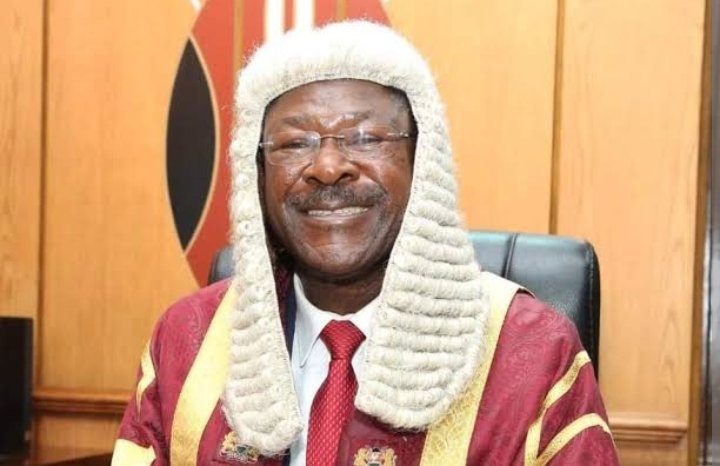
In a devastating blow to the nation, a tragic road accident at Malaha Junction along the Webuye–Kitale Highway has claimed the lives of 15 Kenyans, leaving more than 21 others nursing serious injuries in various hospitals. The horrific crash, which occurred in the early hours of Tuesday, March 10, 2026, has sparked outrage and grief across the country, with National Assembly Speaker Moses Wetang’ula leading calls for urgent action against reckless drivers and demanding a complete overhaul of Kenya’s transport sector regulations.
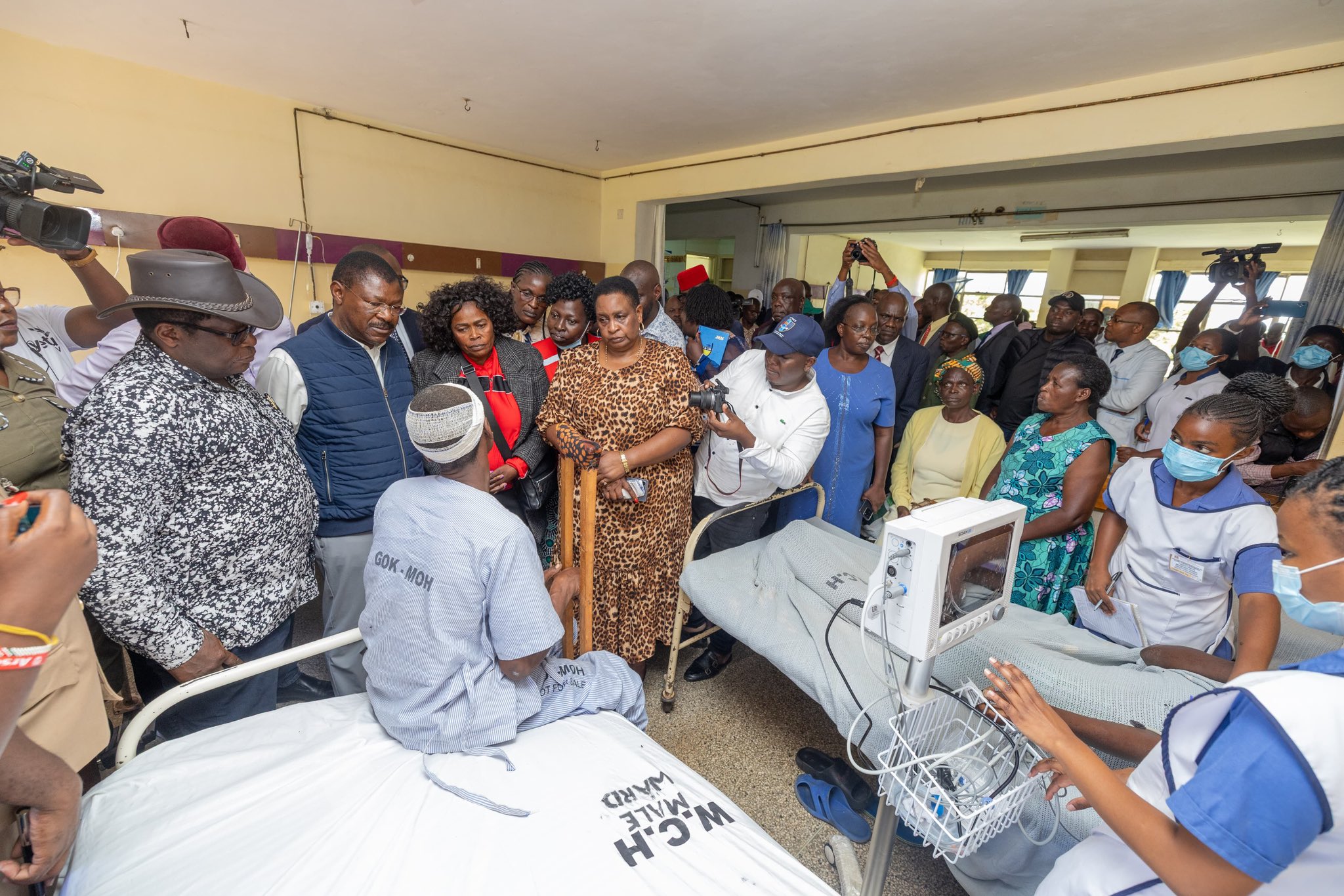
Speaking on Wednesday after visiting the crash victims in Bungoma County, a visibly emotional Speaker Wetang’ula condemned the tragedy in the strongest terms possible. “We strongly condemn the reckless truck driver responsible for the tragic accident at Malaha Junction in Webuye Sub-County, Bungoma, which claimed 15 lives,” Wetang’ula declared. “More than 21 people are currently admitted to various hospitals, with two requiring urgent specialised treatment, and arrangements have been made for their referral.”
How the Tragic Events Unfolded
The sequence of events that led to this catastrophic loss of life reads like a nightmare scenario that road safety experts have long warned about. According to police reports and witness accounts, the tragedy began around 9:45 p.m. on Monday, March 9, when two motorcycles collided head-on along the busy highway near Malaha area.
Both riders, who were reportedly not wearing helmets, died instantly from the impact of the collision. As is common in such situations, members of the public rushed to the scene to assist the victims and assess the damage. What happened next would transform a minor accident scene into what witnesses later described as a “scene from hell.”
A Mercedes-Benz trailer travelling from Kitale towards Webuye lost control and ploughed directly into the crowd of bystanders who had gathered at the accident site. The heavy truck ran over several pedestrians, killing 10 people instantly and leaving many others with critical injuries. The death toll later rose to 14 as four more victims succumbed to their injuries while receiving treatment at Webuye Sub-County Hospital. Subsequent updates confirmed that the final death toll had reached 15, with six members of one family and three from another household among the deceased.
Western Region Traffic Police Commander Walter Cheboren confirmed that the driver of the trailer fled the scene immediately after the crash, abandoning the wrecked vehicle and the victims. Authorities have since launched investigations to trace and apprehend the suspect.
Government Responds with Support for Victims
Speaker Wetang’ula announced that both the national government and the Bungoma County Government have stepped in to provide comprehensive support to the affected families and survivors. “President Dr. William Ruto has assured government support to the bereaved families, while the County Government will cater for the medical expenses of all those injured,” Wetang’ula stated.
This commitment from the highest levels of government brings some relief to families grappling with sudden loss and unexpected medical bills. The President himself had earlier mourned the victims, posting on social media: “Our condolences to the families of the victims of the horrible accident in Webuye, Bungoma County, that occurred last night. May God give strength to the affected families to bear with the loss. We also wish speedy recovery to those injured.”
Two of the injured patients require urgent specialised treatment, and arrangements are already underway to transfer them to facilities equipped to handle their complex medical needs. The remaining survivors continue to receive treatment at Webuye County Hospital and other nearby health facilities.
Funeral Arrangements and Memorial Service
To coordinate burial arrangements for the 15 victims, a funeral committee has been formed with representation from both national and county leadership. The committee will be led by Webuye East MP Hon. Martin Wanyonyi Pepela and Bungoma Woman Representative Hon. Catherine Wambilianga. They will be joined by Deputy Governor H.E. Pst. Janepher Chemtai Mbatiany and Members of the County Assembly in overseeing the arrangements.
A special mass has been scheduled for Monday, March 16, 2026, in Webuye Town to pray for the departed souls and wish a quick recovery to those still receiving treatment. The interdenominational service is expected to bring together political leaders, religious figures, and community members to mourn together and support the bereaved families during their time of deepest sorrow.
The Malaha Junction: A Known Blackspot
The Malaha Junction along the Webuye–Kitale Highway has long been identified by motorists and safety advocates as a high-risk section of road. The highway serves as one of western Kenya’s busiest and most hazardous routes, with heavy trucks, long-distance buses, public service vehicles, and boda bodas sharing narrow stretches that often lack proper safety controls.
The junction has previously been flagged due to heavy traffic volumes and the frequent high-speed vehicles that traverse the area. Despite repeated warnings and calls for intervention, the necessary safety measures have not been adequately implemented, leaving road users vulnerable to tragedies like Monday night’s crash.
Prime Cabinet Secretary Musalia Mudavadi has specifically called on the Kenya National Highways Authority to urgently identify and address blackspots along the nation’s highways. “I call on the Kenya National Highways Authority to urgently identify and address blackspots along our highways, install clear warning signage and strengthen road safety awareness,” Mudavadi said.
A Nation in Mourning: Rising Death Toll on Kenyan Roads
Monday night’s tragedy at Malaha Junction was not an isolated incident but part of a disturbing trend of rising road fatalities across Kenya. Police data indicates that the Webuye crash increased to 21 the number of people killed in separate accidents across the country on that single day. The victims included 14 pedestrians, six riders, and a passenger, while at least 28 others were left with serious injuries in the various crashes nationwide.
The broader statistics paint an even grimmer picture. Kenya recorded a major rise in road accidents in 2026, with 398 people killed in January alone—an 11 percent increase compared with January of the previous year. Police data also shows 854 crashes occurred in the first 30 days of 2026, up from 850 during the same period in 2025.
Pedestrians and motorcyclists remain the most affected groups, with 143 pedestrian deaths and 102 motorcyclist deaths recorded in January alone. Close to 5,000 people were killed in separate accidents throughout 2025, highlighting the persistent and growing danger on Kenyan roads.
Officials have identified speeding, reckless overtaking, and drunk driving as the leading causes of road accidents across the country. Mechanical failures from poorly maintained vehicles, including worn tyres and faulty brakes, have also been identified as significant contributors to the growing number of crashes. Poor road conditions such as potholes, confusing signage, and inadequate lighting further compound the danger.
The Economic Toll of Road Carnage
Beyond the immeasurable human cost, road accidents exact a devastating economic toll on Kenya. According to a March 2026 report from the Ministry of Health and the National Council on the Administration of Justice, road accidents cost Kenya approximately Ksh48.5 billion every year.
Separate government estimates show that Kenya loses approximately Ksh450 billion annually—nearly 5% of GDP—due to lost productivity, long recovery periods, permanent disabilities, property damage, insurance payouts, vehicle repair costs, and disruptions to supply chains.
Road crashes also overwhelm the public health system, filling emergency units and trauma wards across major hospitals. Many victims are young and economically active, meaning accidents remove skilled workers from the labour market and push families into long-term financial hardship due to sudden medical bills and loss of income.
Speaker Wetang’ula’s Three-Pronged Call to Action
In his statement following the Webuye tragedy, Speaker Wetang’ula issued a clear and urgent call to action directed at three key institutions responsible for road safety in Kenya.
To NTSA: Remove Dangerous Drivers from Roads
“The National Transport and Safety Authority must act swiftly to ensure such dangerous drivers are removed from our roads,” Wetang’ula demanded. This directive comes at a critical moment, as NTSA has been working to strengthen its enforcement capabilities. Just on the day of the accident, the authority unveiled an Instant Fines Traffic Management System that will automatically detect traffic offences and send violation notifications to motorists via SMS.
The authority has also been developing comprehensive new regulations. In June 2025, NTSA published proposed rules requiring mandatory inspections for all vehicles older than four years, and for all commercial, school, and public service vehicles. The proposed Traffic Rules relating to drink driving would formally prescribe and enforce legal alcohol limits for drivers, permitting the use of breathalyzers and allowing for license suspension or revocation for repeat offenders.
The National Transport and Safety regulations for commercial vehicles aim to raise standards by requiring licensing for operators and drivers, limiting driver working hours to a maximum of eight hours, and mandating safety equipment such as speed governors and underride guards. These regulations, once fully implemented, would require two drivers for long-distance journeys exceeding the stipulated hours.
To the Judiciary: Treat Road Offences Seriously
Speaker Wetang’ula also directed his message to the courts, urging magistrates and judges to treat road safety offences with the gravity they deserve. “Our courts must also take the growing recklessness on our roads seriously; those who endanger lives must face the full force of the law,” he stated.
“I urge our courts to pay attention to what is happening in our society. If you do not deserve to be on the roads, then keep off. If you are on the road and fail to pay attention, then you deserve punishment,” Wetang’ula emphasized. This call reflects growing frustration among leaders and the public that lenient penalties have failed to deter dangerous driving behaviour.
To Parliament: Tighten Transport Sector Regulations
Finally, the Speaker turned to his fellow lawmakers with a clear legislative agenda. “To Members of Parliament, we must tighten the rules and regulations governing the transport sector,” Wetang’ula declared. This call to action suggests that Parliament may consider amendments to existing transport laws to close loopholes, strengthen penalties, and enhance the regulatory framework governing commercial vehicles and driver conduct.
Other Leaders Join the Call for Action
Speaker Wetang’ula’s sentiments have been echoed by leaders across the political spectrum. Prime Cabinet Secretary Mudavadi stressed that NTSA, working closely with traffic police, must intensify enforcement to remove unroadworthy vehicles from our roads and hold those responsible accountable. “Every life matters, and together we must act decisively to prevent such tragedies on our roads,” Mudavadi said.
Westlands Member of Parliament Tim Wanyonyi expressed deep sorrow following the tragedy and urged motorists to exercise caution, particularly at known accident blackspots and busy junctions. “This tragedy is a sobering reminder of the fragility of life. I urge all road users to exercise extreme caution and vigilance,” he said.
What Must Change: The Path Forward
As Kenya mourns the 15 lives lost at Malaha Junction, the nation must confront uncomfortable questions about why such tragedies continue to occur with alarming regularity. The Webuye crash followed a familiar pattern: a minor accident draws a crowd, a heavy vehicle loses control, and multiple lives are extinguished in an instant.
Several concrete measures could help prevent future tragedies:
Immediate installation of warning signs and traffic calming measures at known blackspots like Malaha Junction would alert motorists to danger and encourage reduced speeds in high-risk areas.
Enhanced enforcement of existing regulations, particularly those governing truck driver working hours and vehicle maintenance, would remove unsafe drivers and vehicles from roads.
Public education campaigns targeted at both drivers and pedestrians could discourage gathering at accident scenes and promote safer behaviour around highways.
Swift and certain punishment for drivers who cause fatalities would send a clear message that reckless driving carries severe consequences.
Conclusion: Honoring the Dead by Protecting the Living
The 15 Kenyans who perished at Malaha Junction were mothers, fathers, children, breadwinners, and beloved community members. Six members of one family perished together, while three from another household were also among the dead. Their lives cannot be restored, but their deaths can serve as a catalyst for the change that Kenya’s roads so desperately need.
Speaker Wetang’ula’s call for action from NTSA, the courts, and Parliament represents a comprehensive approach to addressing the road safety crisis. The institutions he has challenged must now respond with the urgency and seriousness that the situation demands.
A special mass will be held on Monday, March 16, 2026, in Webuye Town to pray for the departed souls and wish quick recovery to those still receiving treatment. As the nation gathers to mourn, the challenge remains to ensure that such tragedies become increasingly rare rather than disturbingly routine.
The truck driver responsible for this carnage remains at large, and authorities continue their investigations to bring him to justice. His capture and prosecution will be an important first step toward accountability, but the broader transformation of Kenya’s road safety culture will require sustained commitment from leaders, institutions, and every road user.
As Prime Cabinet Secretary Mudavadi aptly stated: “Every life matters, and together we must act decisively to prevent such tragedies on our roads.” The 15 souls lost at Malaha Junction deserve nothing less.