7 July 2025 – Chants of “Ruto Must Go” and “Mwizi!” echoed through several towns and cities across Kenya on Monday, as the 2025 Saba Saba protests swept the nation with scenes of widespread defiance, civil unrest, and heavy-handed police response.
The protests, marking the 35th anniversary of the original 1990 Saba Saba pro-democracy movement, were reignited by the frustration of a new generation of Kenyans. Calls for President William Ruto’s resignation, anger over corruption, alleged police brutality, abductions of activists, and deepening economic hardship fuelled the demonstrations that paralysed major parts of the country.
Ngong: Clashes and Chants as Protesters Overwhelm Police
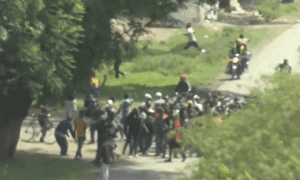
Ngong town in Kajiado County turned into a battleground by mid-morning as protesters clashed with anti-riot police. Eyewitnesses described a chaotic atmosphere, with demonstrators chanting “#RutoMustGo” while burning tyres and setting up barricades.
Despite the heavy police deployment, demonstrators overpowered law enforcement officers, forcing them to retreat towards Kibiko. Protesters jeered at the fleeing officers, shouting for them to stand their ground, while social media erupted with images and footage of a town engulfed in confrontation.
“We are tired. We want change,” one protester shouted amid plumes of tear gas.
Kitengela: Gunshots, Smoke, and Unyielding Protesters
In Kitengela, gunfire rang out early in the day as police attempted to disperse demonstrators with tear gas and what several residents alleged were live bullets. Protesters, however, repeatedly regrouped and returned to the streets, defying intimidation.
The town’s central area saw thick smoke from burnt tyres, as crowds engaged in running battles with law enforcement. “This is not just a protest — it’s a revolution,” said a university student who had joined the demonstration.
Kiambu and Githurai: Running Battles, Strategic Marches
In Kiambu town, similar scenes of unrest were witnessed, with protesters locking horns with anti-riot police in prolonged clashes.
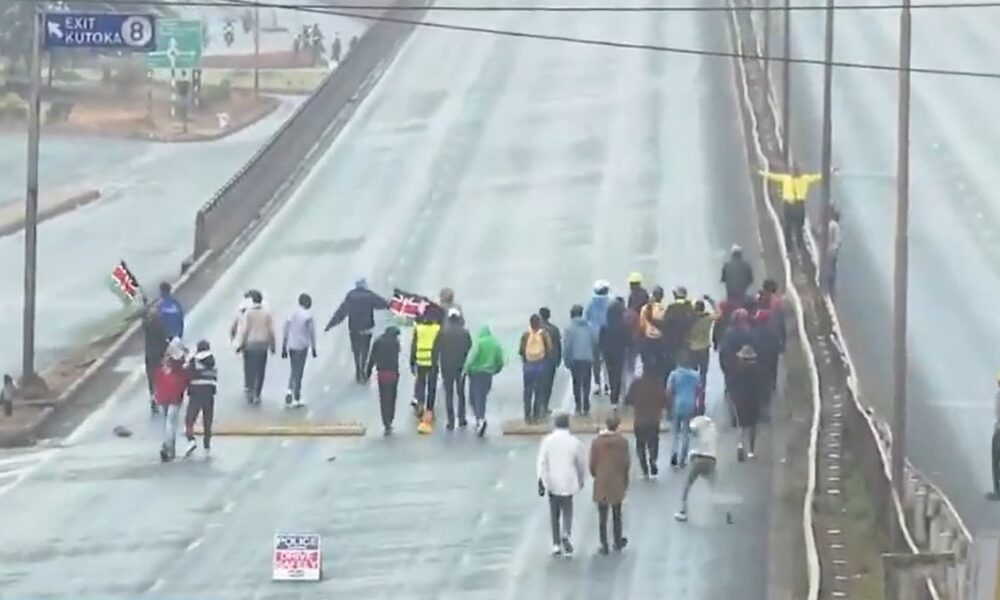
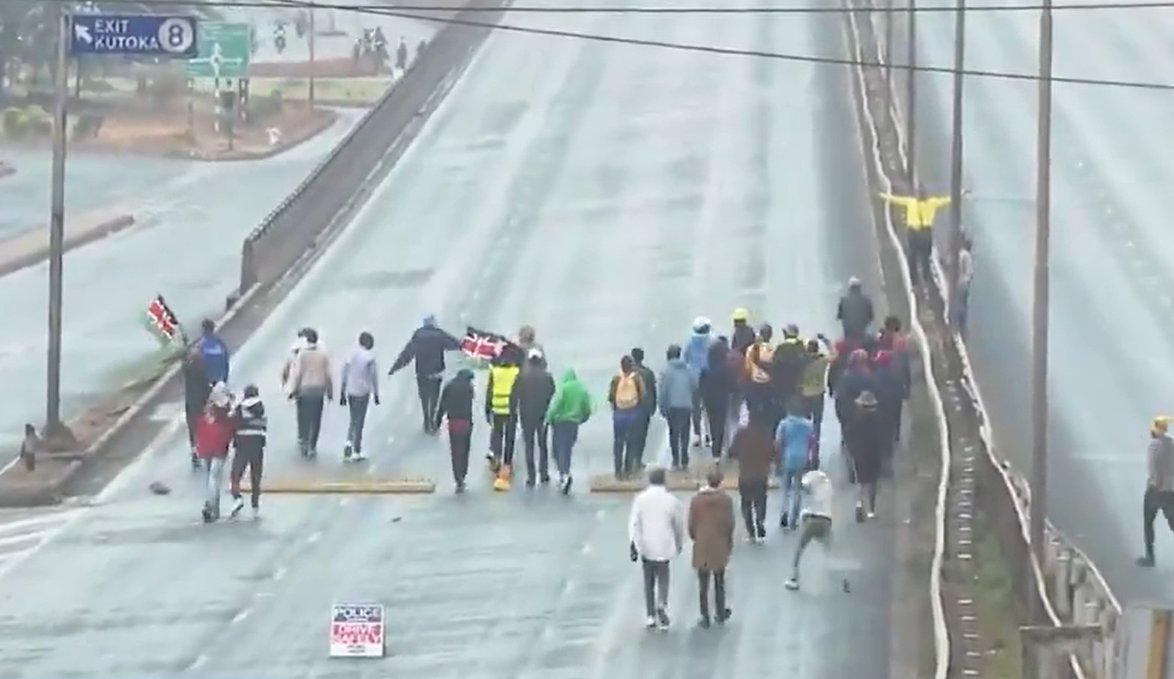
Along Thika Superhighway, a large group of demonstrators was seen marching past security barricades in Githurai. Despite the presence of law enforcement, they continued their journey toward the Nairobi Central Business District, determined to make their grievances heard.
Mwea, Kirinyaga: Major Highways Blocked
In Mwea, Kirinyaga County, protesters occupied the busy Nairobi-Meru highway, causing major disruptions to transportation.
This coordinated action was seen as part of a wider strategy to draw national attention to the ongoing economic and political grievances held by many Kenyans. Farmers, boda boda riders, and youth groups all participated in the blockade.
Kisii: Peaceful But Passionate
In Kisii town, the protests began on a peaceful note. Protesters carried placards and banners, calling for reforms and justice. Despite a strong police presence, there were no immediate reports of violence or arrests.
Residents expressed their discontent with the government over the high cost of living and allegations of state-sponsored abductions.
Kiserian: Police Retreat Amid Unrelenting Crowds
The situation turned dire in Kiserian, where protesters managed to overpower anti-riot officers after intense confrontations.
According to local residents, officers were forced to retreat to the town’s police station, having been overwhelmed by the growing and determined crowd. Later in the afternoon, officers were again seen attempting to disperse demonstrators using teargas and water cannons.
Protesters, however, held their ground, waving Kenyan flags and chanting slogans critical of the government.
Rongai: Protests and Play
In an unusual twist, residents of Ongata Rongai took advantage of the empty Magadi Road to play football. Social media was flooded with images of young people turning the tense protest day into a rare moment of unity and creativity.
However, tensions soon escalated when police fired live rounds to disperse demonstrators, with reports of a stray bullet piercing the roof of a residential home and landing on a bed. Fortunately, no injuries were reported in the incident.
Pipeline, Embakasi: Live Ammunition in Residential Areas
In Nairobi’s densely populated Pipeline estate in Embakasi, residents reported intense confrontations between police and protesters.
Witnesses said officers used both teargas and live ammunition, creating panic in residential blocks. Videos circulated online showed frightened residents, including children, fleeing as clouds of tear gas wafted through narrow alleyways.
One man recounted, “They were shooting even where there were no protesters. Children are crying. People are hiding in their homes. It’s terrible.”
Nakuru: Protesters Outsmart Police
In Nakuru, protesters surprised law enforcement by avoiding the city centre and staging demonstrations in multiple parts of town. The decentralised nature of the protests stretched police resources thin and allowed groups to remain mobile and unpredictable.
“It’s like they knew where the police would be,” said a taxi driver who witnessed the events. “They kept moving around. Police didn’t know where to go.”
Eldoret: Armed Goons, Intimidation, and Fear
Disturbing reports emerged from Eldoret, where armed individuals believed to be pro-government goons patrolled streets to intimidate residents and suppress the protests.
Witnesses reported that police ignored these groups, allowing them to operate openly. The incident added to growing concerns about the use of hired gangs to silence dissent.
Kangemi: One Dead as Crackdown Intensifies
In Nairobi’s Kangemi area, one person was confirmed dead following confrontations between demonstrators and police.
Human rights groups have condemned the excessive use of force, especially in residential areas. “Killing protesters is a blatant violation of human rights,” one civil society leader said.
Nairobi: Abductions, Disappearances, and Unmarked Vehicles
In the capital, tensions reached a boiling point when witnesses reported seeing plain-clothed officers abducting protesters.
A particularly alarming incident occurred near Mogas Filling Station along Jogoo Road, where a young man was roughed up and bundled into an unmarked black Subaru Outback. The car sped off, leaving shocked onlookers in fear.
According to protest leaders, this was not an isolated incident. Similar abductions were reported in satellite towns around Nairobi, including Kiserian, Ngong, Kitengela and Ongata Rongai.
Human rights organisations have condemned the use of unmarked vehicles and masked officers, describing it as a return to tactics associated with Kenya’s darkest political chapters.
Protest Roots: Saba Saba’s Enduring Legacy
The term “Saba Saba” — Swahili for “Seven Seven” — refers to the original 7 July 1990 pro-democracy demonstration led by figures such as Kenneth Matiba and Charles Rubia.
While the 1990 protest was aimed at ending the one-party state under President Daniel arap Moi, today’s protest movement is fuelled by youth disillusionment, economic inequality, joblessness, and perceived political arrogance by those in power.
Saba Saba 2025 has now become more than a symbolic event — it is a rallying cry for real and urgent change.
What Sparked the Current Protests?
Several factors have combined to ignite public anger:
- Rising cost of living: With inflation climbing and the price of basic commodities skyrocketing, many Kenyans say they are struggling to survive.
- Alleged corruption: Accusations of large-scale embezzlement involving public officials continue to anger the public.
- State brutality: A surge in reports of police shootings, abductions, and torture of activists has provoked widespread condemnation.
- Youth unemployment: With many graduates unable to find jobs, hopelessness has become a common sentiment.
- Political arrogance: Some officials have publicly dismissed public outcry, further infuriating already disenfranchised citizens.
Government Response
So far, government officials have remained largely silent about the events of Saba Saba 2025. No major address has been made by President Ruto or top security officials.
Interior Ministry sources indicated that operations would continue to “restore order”, while denying allegations of live ammunition use or abductions. Independent verification of these claims remains ongoing.
The Role of Social Media
This year’s Saba Saba was heavily coordinated through social media platforms. Hashtags such as #SabaSaba2025, #RutoMustGo, and #77NiNumbers dominated trends across Kenya and the diaspora.
Activists and journalists used real-time updates to expose abuses, mobilise crowds, and provide safety alerts to those on the ground. The viral nature of the posts helped keep the pressure on the government and attracted global attention.
Public Outrage and International Concern
Civil society organisations have called for immediate investigations into police conduct and the alleged abductions.
“There must be accountability,” said one Nairobi-based human rights lawyer. “This country cannot go back to the days of political disappearances and extra-judicial killings.”
Meanwhile, observers from regional and international watchdogs have expressed concern over Kenya’s deteriorating democratic space. There are fears that the current tensions could spiral if dialogue is not initiated soon.
The Way Forward
Protesters and civil rights groups have issued several demands to the government, including:
- An end to police brutality.
- Immediate release of abducted activists.
- Resignation or accountability of officials linked to corruption.
- Restoration of economic dignity for Kenyans through sound policy reforms.
- A genuine national dialogue with youth leaders, clergy, and opposition figures.
With the Saba Saba 2025 protests being the most widespread since the anti-Finance Bill protests of June, it is clear that a significant segment of Kenya’s population is demanding structural reform and genuine leadership change.
As the dust settles on Monday’s demonstrations, the question remains: will the government listen.