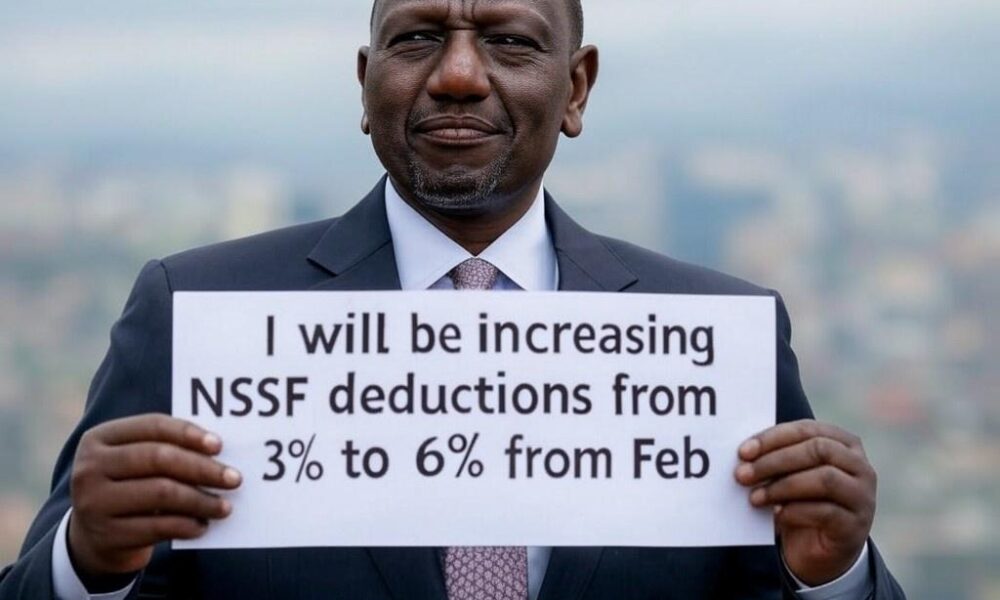
Kenyan employees and employers are bracing for increased NSSF contributions as the government implements revised NSSF new rates starting February 1, 2025. These changes aim to boost retirement savings but are expected to strain already tight household budgets.
New NSSF Contribution Rates Overview
According to business daily, under the revised NSSF rates for employees, deductions will rise significantly, with both employees and employers required to contribute equally.
- Minimum contribution: Ksh 480 (up from Ksh 420)
- Maximum contribution: Ksh 3,840 (up from Ksh 2,160)
- Employees earning Ksh 50,000: Contribution set at Ksh 3,000
- Employees earning Ksh 72,000 and above: Contribution capped at Ksh 4,320
The NSSF contribution rates adjustment also increases the lower income limit from Ksh 7,000 to Ksh 8,000, while the upper income limit rises from Ksh 36,000 to Ksh 72,000.
Long-term Adjustments to NSSF Contribution Rates
The changes will not stop at 2025. Another adjustment is scheduled for February 2026, where:
- The lower earnings limit will rise to Ksh 9,000.
- The upper limit will be pegged at three times the national average earnings, estimated at Ksh 108,000.
These adjustments are expected to ensure that NSSF contributions align with rising national income and inflation trends.
Impact on Employees’ Payslips
For salaried employees, the increased NSSF contribution will add to an already heavy burden of statutory deductions. Below is a breakdown of typical deductions from a Kenyan employee’s payslip:
- 6% NSSF contribution
- 4% Pension contributions
- 2.75% NHIF contribution rates
- 1.5% Housing levy
- 35% PAYE (Pay As You Earn)
In total, salaried employees face a staggering 49.25% deduction from their gross pay before receiving their net salary.
Financial Strain on Low and Middle-Income Earners
While the goal of increasing NSSF contribution rates is to improve retirement benefits, many Kenyans view this adjustment as a double-edged sword. For low-income earners, every shilling counts, and higher deductions could mean harder choices between essentials like food, education, and healthcare.
Employers are also feeling the pinch, as they must match every shilling contributed by their employees, increasing operational costs significantly.
Transparency Concerns Surrounding NSSF Funds
Despite higher NSSF contribution rates, concerns about mismanagement and corruption remain widespread. Kenyans are growing increasingly frustrated with repeated scandals and a lack of accountability regarding public funds.
Preparing for the New NSSF Rates
As the implementation date approaches, both employees and employers must prepare:
- Review salary structures to accommodate the increased deductions.
- Plan for reduced disposable income and adjust household budgets accordingly.
- Employers should update payroll systems to comply with the new NSSF rates for employees.
Final Thoughts
The NSSF new rates aim to provide better social security benefits for Kenyan workers in retirement. However, the financial burden on both employees and employers cannot be ignored. Coupled with rising NHIF contribution rates and other statutory deductions, the average Kenyan payslip will feel significantly lighter come February 2025.
For sustainable success, the government must ensure NSSF funds are managed transparently and used solely for their intended purpose—improving the financial security of Kenyan retirees.