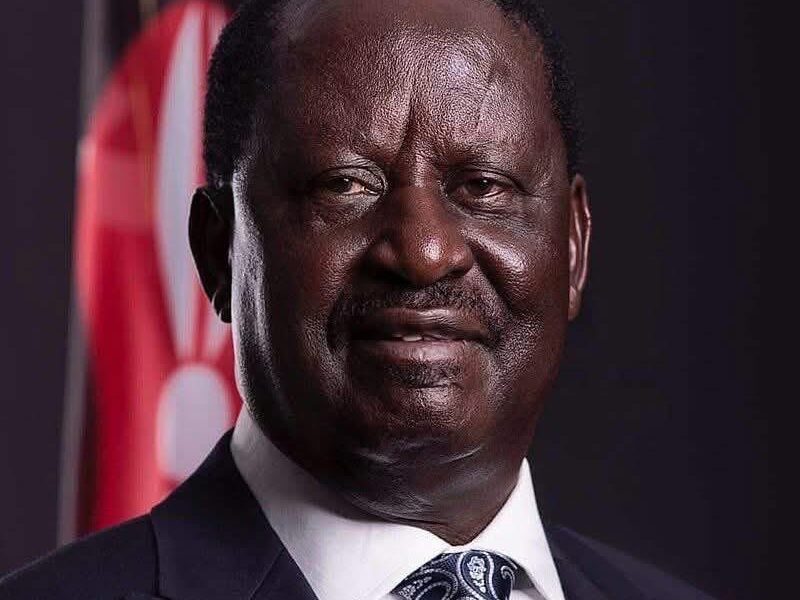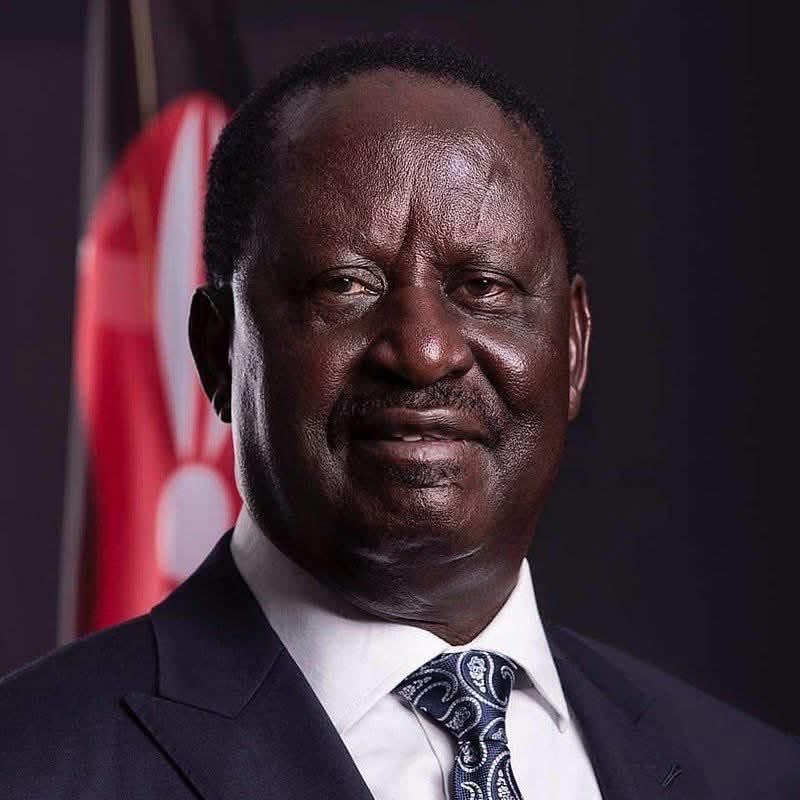
Kenya is mourning the death of one of its most influential and resilient political leaders, Raila Amolo Odinga, who passed away on October 15, 2025, at the age of 80. His death marks the end of a historic era in Kenya’s political journey—an era defined by courage, sacrifice, and an unyielding fight for democracy.
Raila Odinga, often called “Baba” by his supporters, dedicated over five decades of his life to politics, reform, and governance. His passing has sparked an outpouring of grief across the country and beyond, with tributes flowing from heads of state, political allies, former rivals, and millions of Kenyans whose lives he touched.
Early Life and Education
Raila Amolo Odinga was born on January 7, 1945, in Maseno, Kenya. He was the son of Kenya’s first Vice President, Jaramogi Oginga Odinga, and Mary Juma Odinga. Raised in a family of political consciousness and intellectual curiosity, Odinga pursued his education both locally and abroad.
He studied mechanical engineering at the Technical University of Magdeburg in East Germany, where he was deeply influenced by the global movements for justice and equality that shaped his political ideology.
Political Journey and Imprisonment
Raila Odinga’s entry into politics was marked by defiance and resilience. He became a symbol of resistance during Kenya’s one-party rule, particularly after being detained without trial for his alleged involvement in the 1982 coup attempt.
He spent nearly nine years in detention under harsh conditions, emerging as one of the most vocal proponents of democracy and human rights in Kenya. Despite persecution, he remained steadfast in his belief that Kenya deserved a multiparty democracy.
His resilience paid off in the early 1990s when Kenya finally embraced plural politics. Odinga co-founded the Forum for the Restoration of Democracy (FORD) alongside other reformists, including his father, Jaramogi.
Role in Kenya’s Democratic Transition
Raila Odinga played a pivotal role in shaping modern Kenyan democracy. He served in various capacities, including as Member of Parliament for Lang’ata, Minister for Energy, Minister for Roads, Public Works, and Housing, and later as Prime Minister from 2008 to 2013.
His tenure as Prime Minister was part of the historic Grand Coalition Government formed after the disputed 2007 election, which led to post-election violence that claimed over 1,000 lives. Despite the tragedy, Odinga’s leadership helped steer the nation back toward peace through dialogue and reconciliation.
Political Legacy and Presidential Campaigns
Odinga’s political career was defined by persistence. He ran for the presidency five times—in 1997, 2007, 2013, 2017, and 2022—each time emerging as a top contender. Though victory eluded him, his campaigns reshaped Kenya’s political discourse and amplified calls for transparency and electoral justice.
He was instrumental in the 2010 Constitution of Kenya, which introduced significant governance reforms, devolution, and enhanced civil liberties. His unwavering advocacy for constitutionalism and institutional reform earned him global recognition.
Personal Life
Raila Odinga was married to Ida Odinga, a renowned educator and activist. Together, they raised four children: the late Fidel, Rosemary, Raila Jr., and Winnie Odinga. His family life was deeply intertwined with his political career, often serving as a reflection of his values—resilience, unity, and service to the people.
Death and Tributes
Odinga’s passing was confirmed by close family sources and later by government officials, who described him as a “towering figure in Kenyan politics.” The government has since declared a period of national mourning, with flags flown at half-mast across the country.
President William Ruto, in his statement, called Odinga “a statesman who shaped Kenya’s democratic destiny.” Former President Uhuru Kenyatta said Odinga’s name would “forever be etched in the nation’s conscience as a fighter for justice and equality.”
Condolences have also poured in from regional and international leaders, including those from the African Union, the United Nations, and the Commonwealth, all recognizing his immense contribution to peace and reform in Africa.
Top 20 Life Lessons from Raila Odinga
- Resilience conquers all — No matter how long it takes, persistence outlasts oppression.
- Sacrifice for justice is never in vain — True reformers endure pain for the good of others.
- Forgiveness is power — After decades of rivalry, Odinga still chose dialogue over revenge.
- Education empowers vision — His time in Germany shaped his worldview and leadership style.
- Leadership is service — Odinga constantly emphasized serving the people over self-interest.
- Courage defines legacy — He faced imprisonment but never compromised his ideals.
- Unity builds nations — Odinga’s efforts in coalition governments proved that compromise heals divisions.
- Democracy is a daily struggle — Freedom must be defended continuously.
- Good governance starts with accountability — He called for institutional reforms long before they became mainstream.
- Family is the foundation of leadership — His family stood by him through political storms.
- Vision transcends elections — Though he never became president, his ideas transformed governance.
- Reconciliation is not weakness — His handshake with political rivals promoted national healing.
- Mentorship matters — He inspired a new generation of leaders across Africa.
- Legacy is built, not inherited — Despite being a son of a vice president, he earned his own respect.
- Truth survives propaganda — Odinga’s name outlived countless political smear campaigns.
- Peace is the ultimate victory — He valued peace over political triumph.
- Boldness attracts destiny — His courage to challenge systems defined his path.
- Loyalty to principles outshines popularity — He stood by his convictions even when unpopular.
- Change is never instant — Progress requires time, patience, and faith.
- A true leader dies, but their spirit never fades — Odinga’s vision for a just Kenya will continue to inspire generations.
Raila Odinga’s death leaves behind an unfillable void in Kenyan politics. His name will forever stand as a symbol of endurance, reform, and patriotism—a man who gave everything to the dream of a united and democratic Kenya.